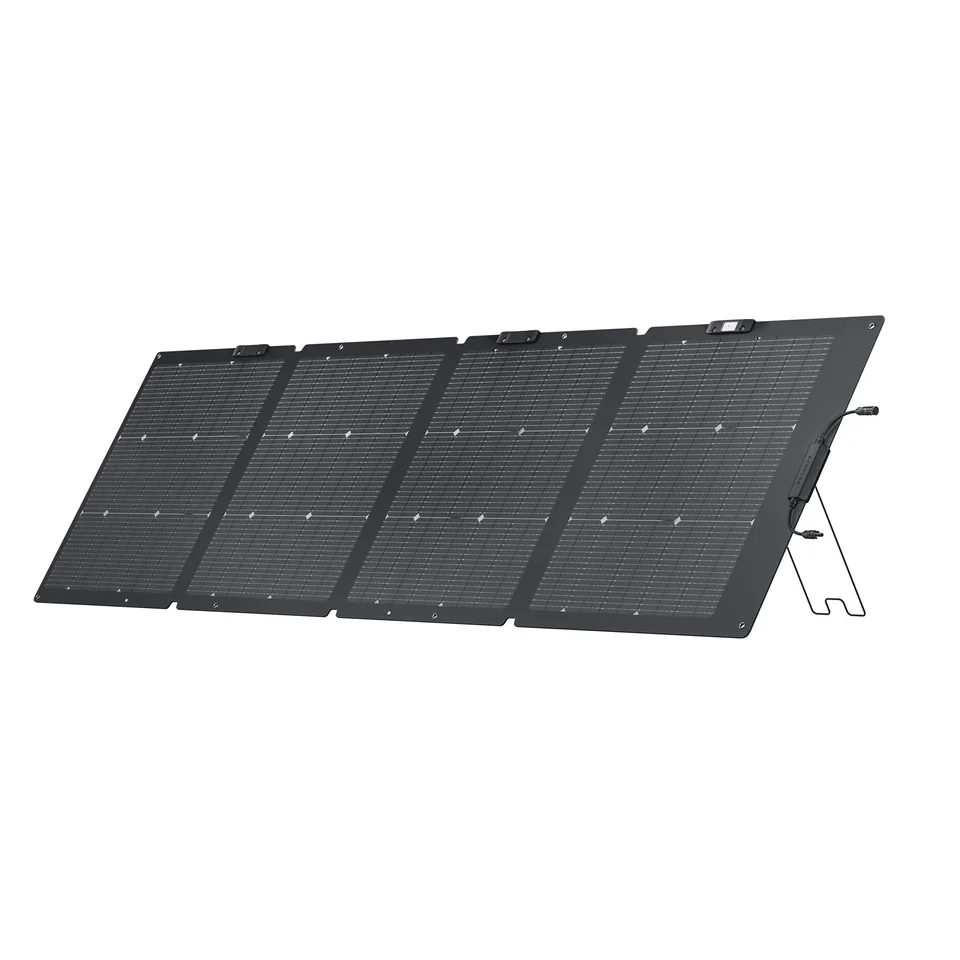
A panel can only deliver what the power station will accept, so read the station's solar spec first. It has three numbers. The watt ceiling caps how much solar the station takes in: 220 W on the EcoFlow RIVER 3 Plus, 400 W on the Jackery Explorer 2000 v2 (two DC8020 ports), 600 W on the Anker SOLIX C1000 Gen 2, and 1,000 W on the EcoFlow DELTA 3 Plus (two 500 W ports). A single 200 to 220 W panel fills the RIVER's ceiling; the bigger stations have room for two or more.
The voltage window matters more than people expect. The DELTA 3 Plus lists 11 to 60 V per port, the Anker up to 60 V, and the Jackery 16 to 60 V at up to 12 A per port. A panel's open-circuit voltage, printed on its label as Voc, must stay below that ceiling, and it rises on cold mornings. The EcoFlow NextGen 220W is a low-voltage panel at 21.5 V, so two in series come to about 43 V. Anker lists its original 400 W PS400 at 57.6 V, close enough to 60 V that a cold morning leaves little margin, and two in series would be far over it.
02Plan on 80 to 90 percent of the label
A panel's rating comes from standard lab conditions, and real sun is less generous. OutdoorGearLab measured 12 panels at the same time under the same sky: the best folding panels delivered 83 to 88 percent of their ratings, and three budget panels sold with bags of adapters managed 56 to 72 percent. Angle, heat, haze and clouds all take a further share. Use a measured figure, not the label, when you work out charge times.
These are hours of strong, direct sun before charging losses, so treat them as best cases. If you are still choosing the station, our guide to how many watt-hours you need sizes it for a fridge, a CPAP or an outage, and our best portable power stations list compares the four stations above.
03Connectors: XT60, DC8020, MC4 and the cables in between
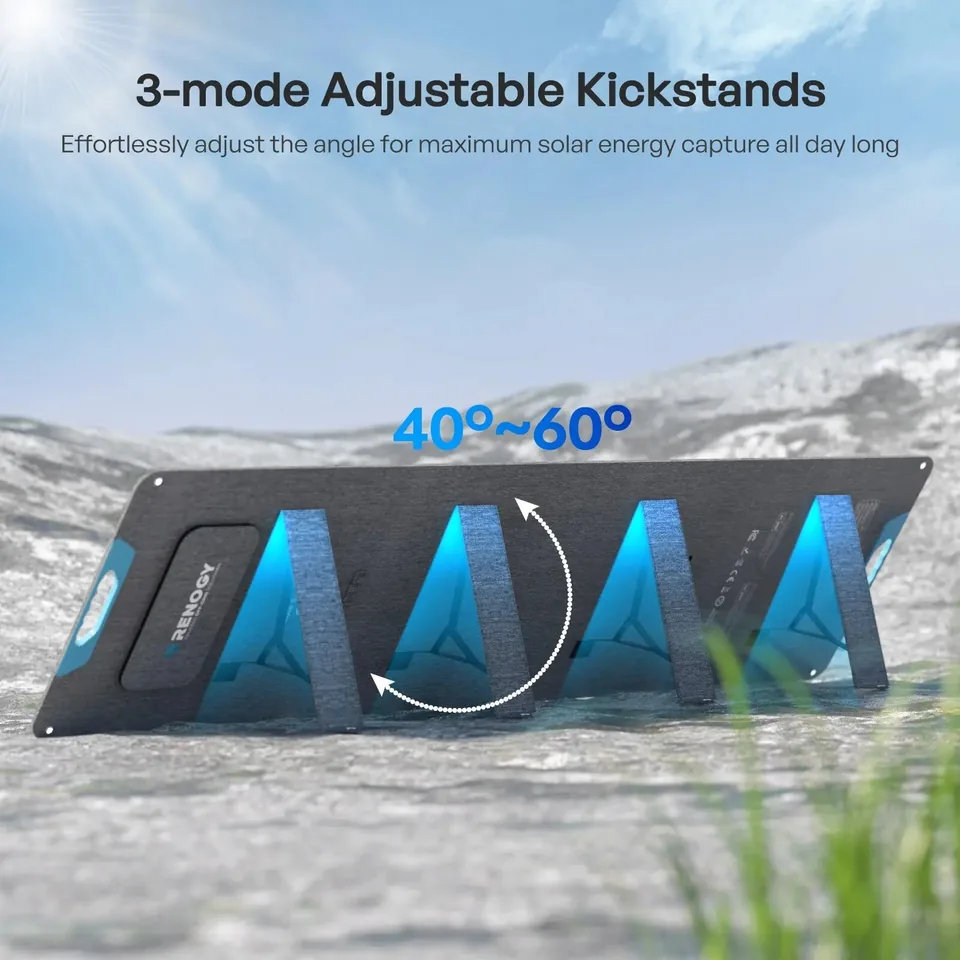
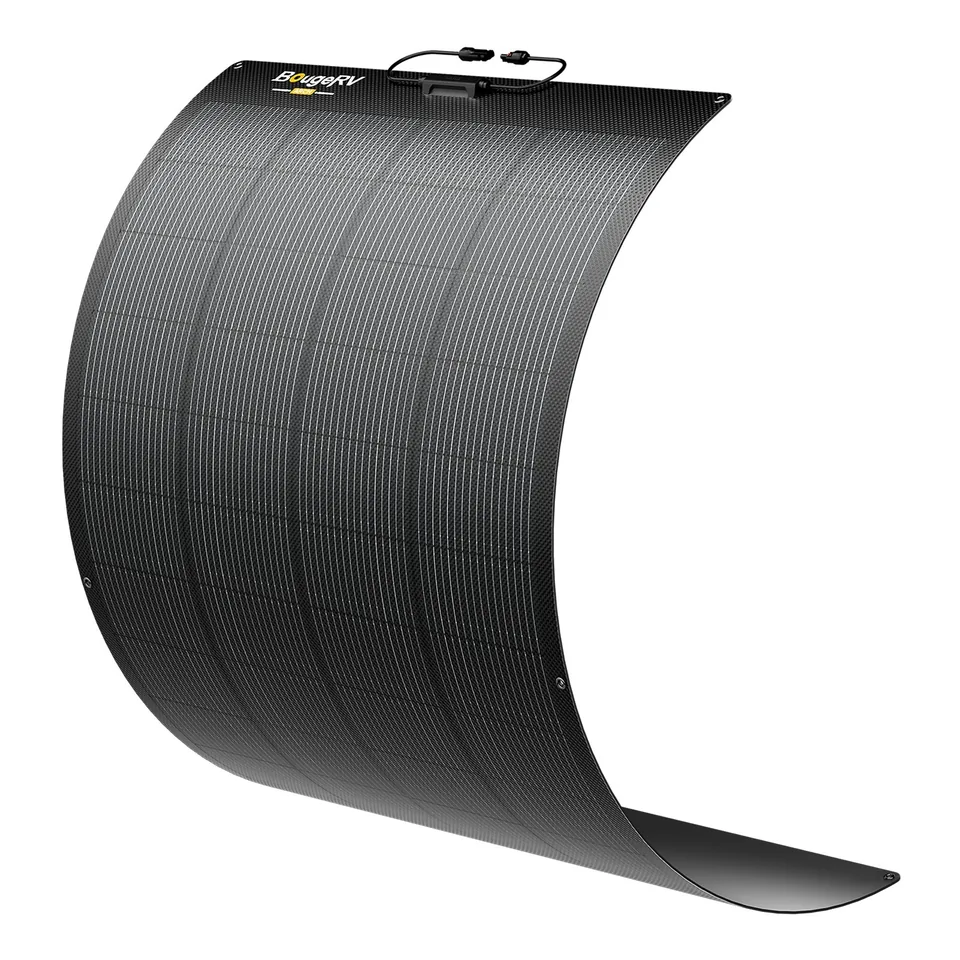
Most panels end in MC4 plugs, the solar industry's standard, while many portable stations use their own inputs. EcoFlow and Anker stations generally take XT60-type solar plugs, which is why both brands pack an XT60 cable with their panels. Jackery Explorers use DC8020, with DC7909 on older models, and Goal Zero's Boulder 200 uses its own HPP plug. A panel with bare MC4 leads, such as the Renogy or the BougeRV, needs a short MC4 adapter for your station.
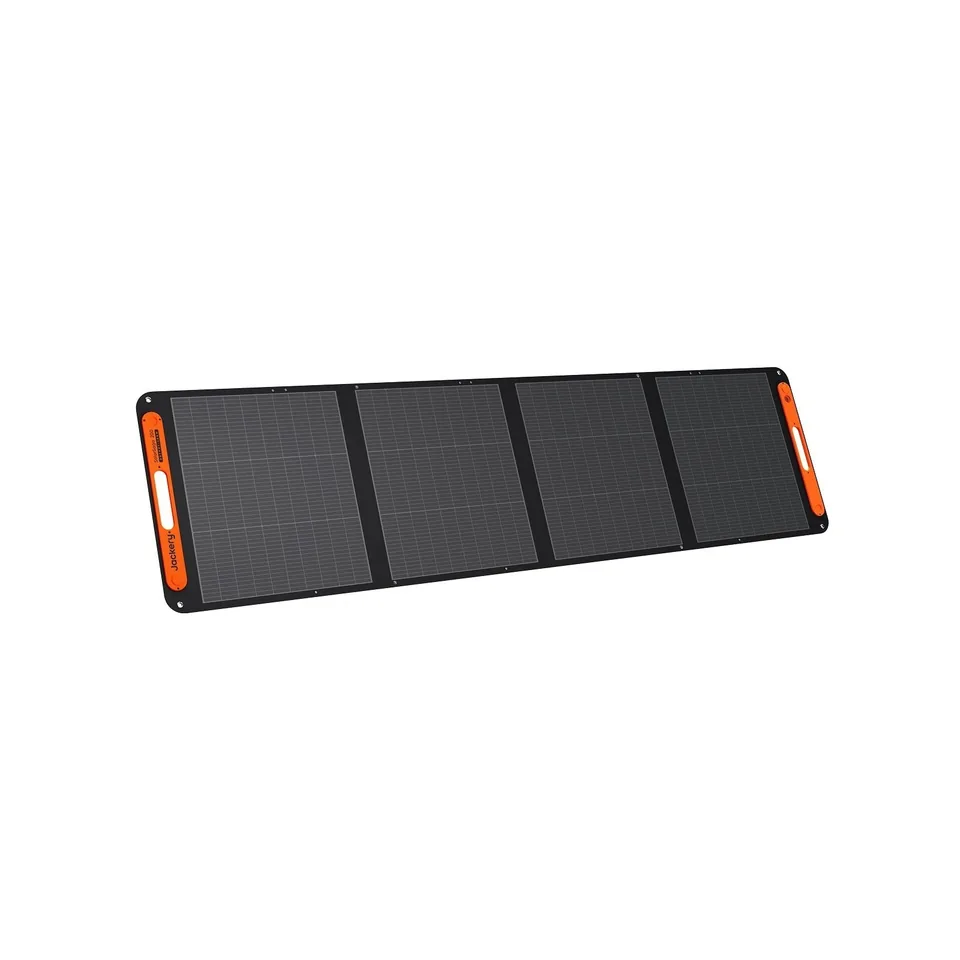
Matching brands saves that step: the EcoFlow plugs into EcoFlow stations with the included cable, and the Jackery SolarSaga 200W plugs into a Jackery. Do not buy a weak panel because it ships with six adapters; buy the panel for its output and the right cable once.
04Weight, wind and weather
The folding 200 W panels on our list weigh 14.2 to 16.5 lb on OutdoorGearLab's scale, and the flexible BougeRV weighs 6.6 lb. Lighter is easier to carry and easier to knock over: OutdoorGearLab watched the Jackery blow over in a strong gust, so stake or weight any panel in an exposed spot. IP65, the Renogy's rating, means dust-tight and protected from splashing; IP68, on the other three, means sealed against immersion in the maker's test. Connectors are another matter, and OutdoorGearLab noted the EcoFlow has no cover over its plugs. Warranties run from one year on the EcoFlow to five on the BougeRV.
05Bifacial: when the back side helps
The EcoFlow and the Jackery have cells on both faces. EcoFlow rates the rear of its panel at 175 W, but that figure needs bright light bouncing up from below: pale sand, snow or concrete, with the panel raised off the ground. Over grass, dirt or a dark deck, the rear adds little. Treat bifacial as a bonus, not a reason to pay more.