Image: EcoFlow
EcoFlow · Portable power station
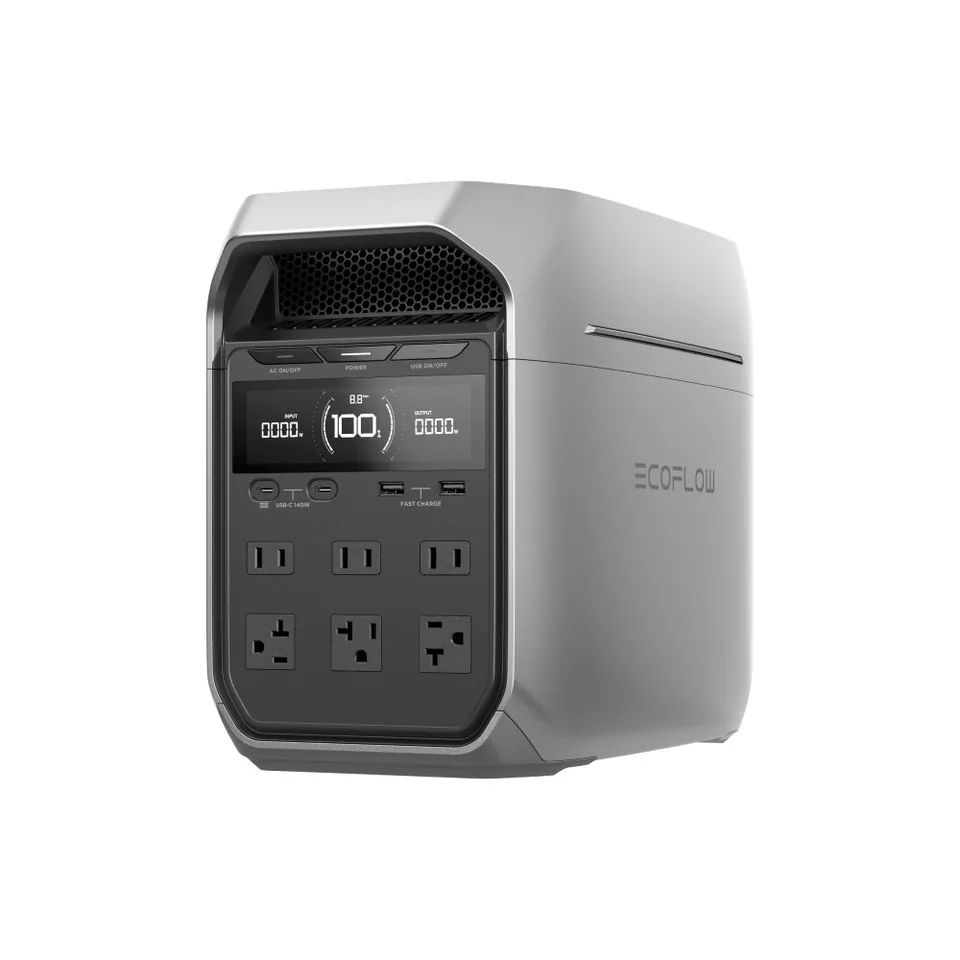
EcoFlow DELTA 3 Plus Portable Power Station (1024Wh)
The most balanced 1 kWh station: quick enough to work as a UPS, refilled in under an hour, and the only 1 kWh pick on our list with an extra-battery port. Buy it unless you need more than 1,800 W or the lightest possible box.
Ad disclosure: we earn a commission on Amazon links, at no cost to you. It never decides our picks. How this works
Photos
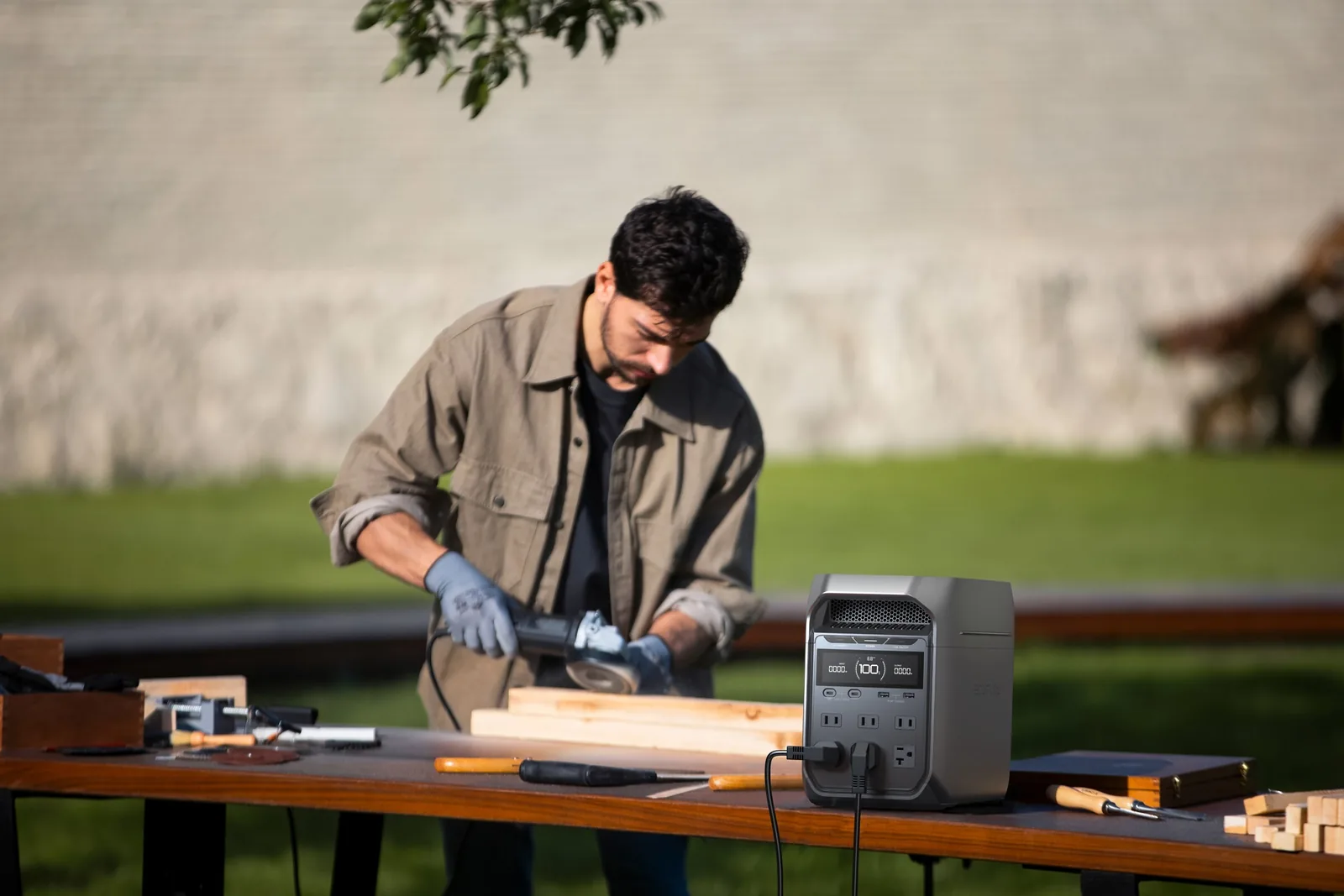
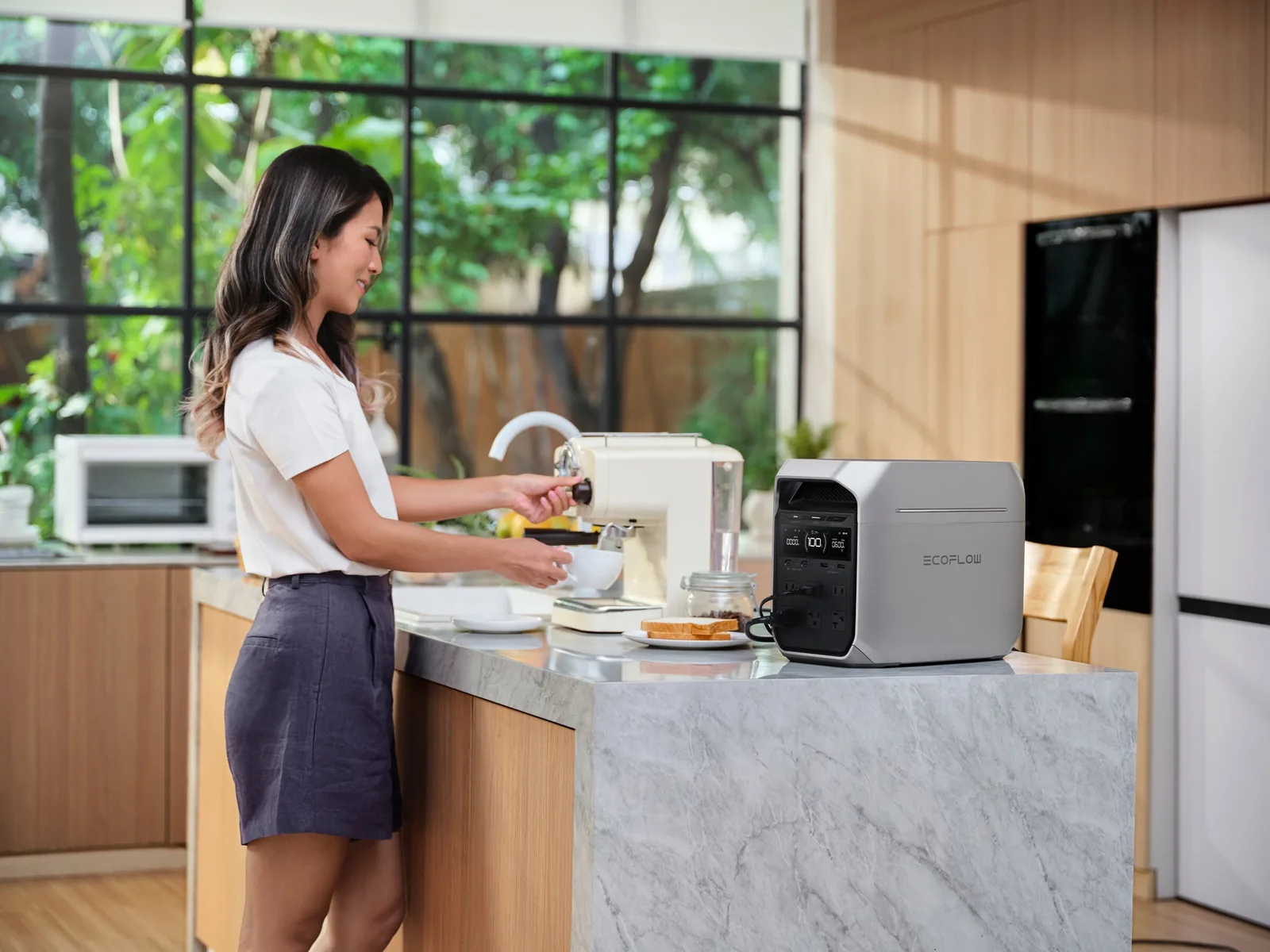
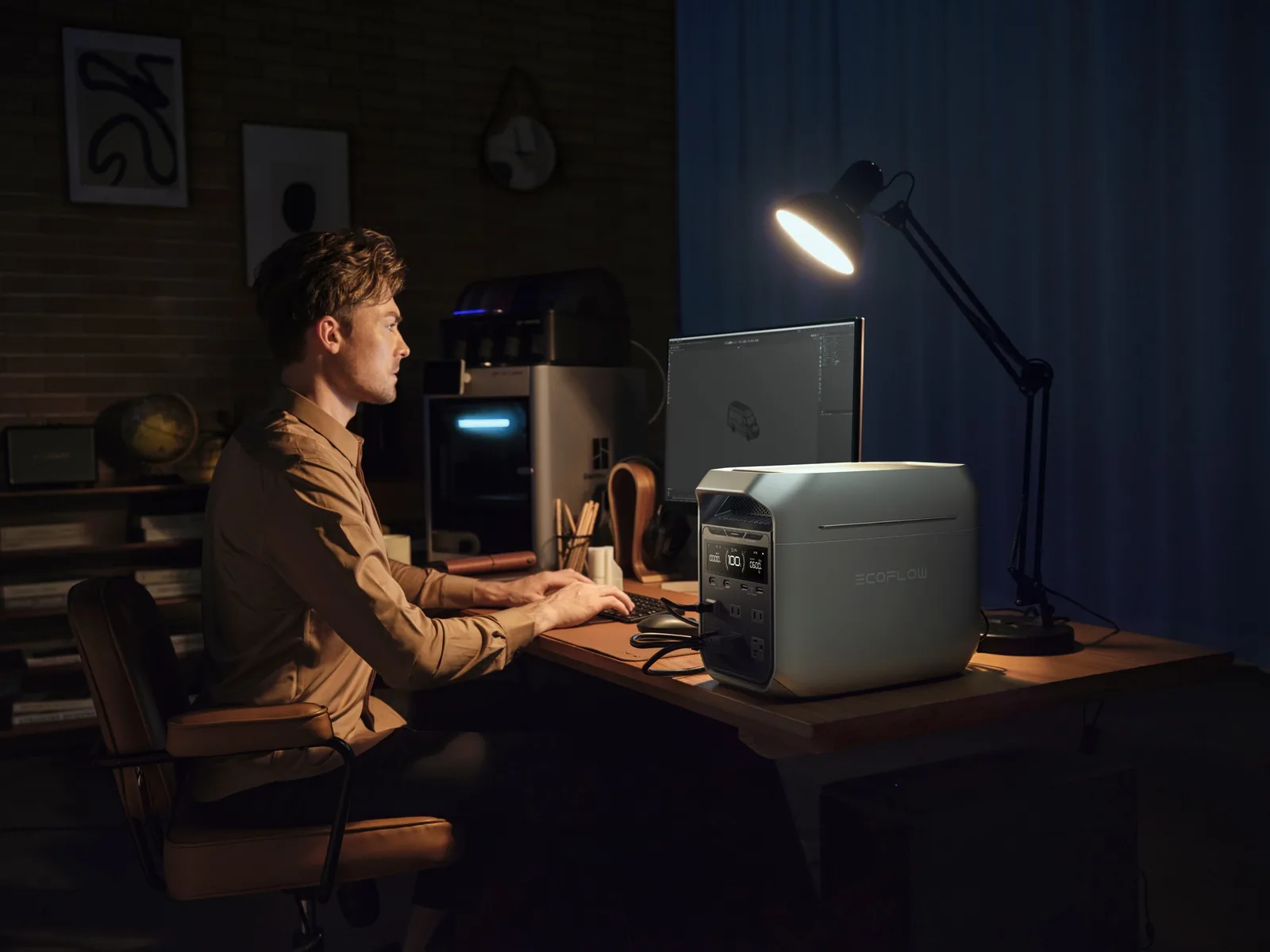

Pick it ifHome-office and network backup, a refrigerator through a day-long outage, weekend camping, and anyone who may add capacity later
Skip it ifWhole-kitchen backup, sustained loads near 1,800 W, or anyone who wants a box that is easy to carry far
At a glance
What stands out
- StorageReview measured a switchover just over 8 ms and drew 910 Wh of AC output from the 1,024 Wh pack
- 1,500 W wall input for a 56-minute refill; How-To Geek saw 1,350 to 1,400 W drawn and The Solar Lab timed 55 minutes
- Two 500 W solar ports for 1,000 W total, double what the standard DELTA 3 accepts
- One extra-battery port takes DELTA 2, DELTA 2 Max, DELTA 3 or DELTA Pro 3 packs, up to 5 kWh
Flaws to know
- The Solar Lab logged internal temperatures of 138°F under a 1,573 W load with the fans not ramping up, and How-To Geek noted a warm case even at light loads
- 27.6 lb, about 3 lb more than the Anker SOLIX C1000 Gen 2, with 200 W less continuous output
- Only one extra battery can be attached, so reaching 5 kWh means the large DELTA Pro 3 pack
Key specs
- Capacity
- 1,024 Wh LFP, rated 4,000 cycles to 80 percent
- AC output
- 1,800 W continuous, 3,600 W surge; X-Boost to 2,200 W for one resistive load
- Outlets
- 6 AC (3 rated 20 A), 2 USB-C (140 W max), 2 USB-A (36 W max), 12 V car socket (126 W), 2 DC5521
- AC input
- 1,500 W; flat to full in 56 minutes (manufacturer)
- Solar input
- 2 x 500 W MPPT, 11-60 V, 1,000 W total; about 70 minutes to full (manufacturer)
- UPS switchover
- Under 10 ms rated; just over 8 ms measured by StorageReview
- Expansion
- One extra battery (DELTA 2, DELTA 2 Max, DELTA 3 or DELTA Pro 3), up to 5 kWh
- Weight
- 27.6 lb (12.5 kg); 15.7 x 8.0 x 11.2 in; IP65 battery cells, IP20 unit
- Noise
- 30 dB at 600 W, under 40 dB at 1,200 W (manufacturer)
Who it's for
The DELTA 3 Plus is the station for a household that wants one box to cover the ordinary jobs: hold the router, modem and a desktop through a short outage, keep a refrigerator cold for most of a day during a long one, and run a campsite on the weekend. At 1,024 Wh and 1,800 W it sits at the point where a power station stops being an oversized power bank and starts being a backup system, and the extra-battery port means a 1 kWh purchase today does not rule out 2 or 5 kWh later.
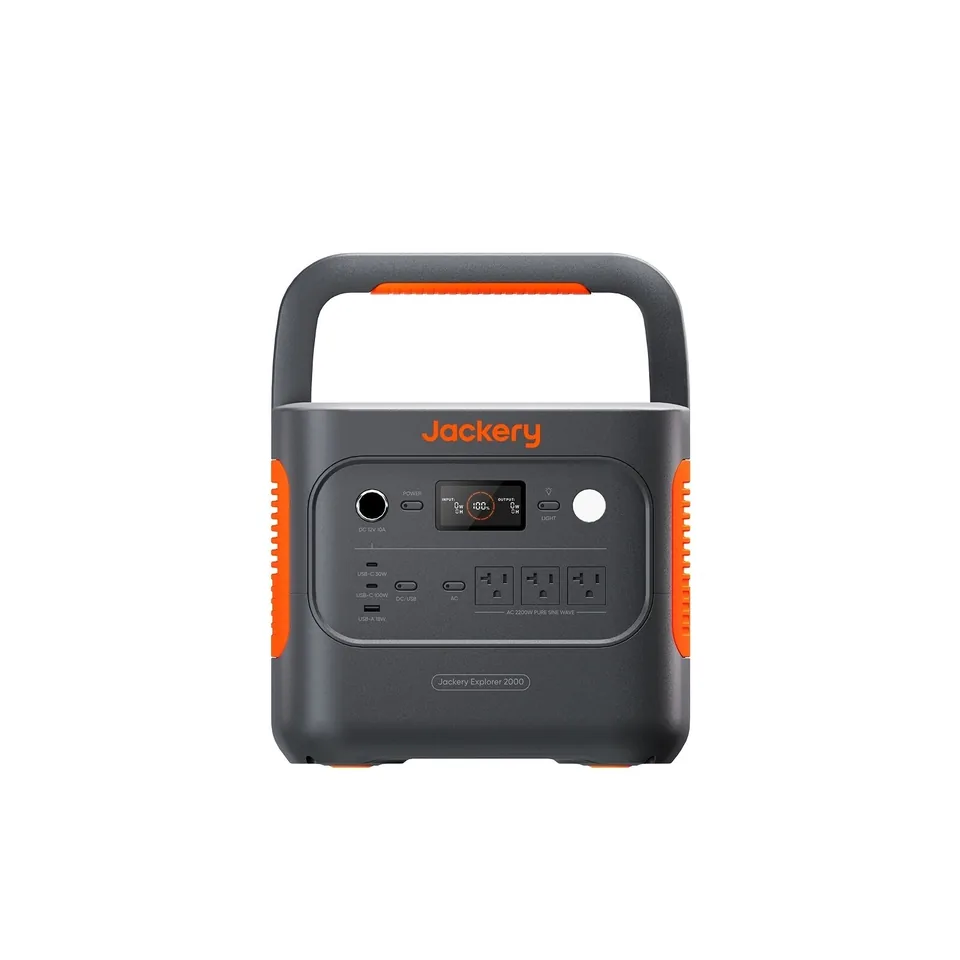
It is the best overall pick on our best portable power stations list because nothing about it is weak. The Anker SOLIX C1000 Gen 2 charges a few minutes faster and delivers more watts; the Jackery Explorer 2000 v2 stores twice as much. Neither covers as many use cases from one chassis.
What stands out
The UPS. EcoFlow rates the switchover at under 10 ms, and StorageReview measured just over 8 ms with a load running through the unit. That is inside the hold-up time of a typical computer power supply, so a PC, NAS or network rack rides through a grid drop without rebooting. EcoFlow's own series comparison notes that the Plus adds NAS and HID support to the UPS function that the standard DELTA 3 lacks. The station passes grid power straight through while the grid is up, so the pack is not cycling all day.
The charging. The AC input is rated at 1,500 W and EcoFlow quotes 56 minutes from empty. How-To Geek watched the unit settle at 1,350 to 1,400 W from a household outlet, and The Solar Lab timed a full charge at 55 minutes. The app can throttle the rate, which matters on a shared 15 A circuit or when the fan is unwelcome. Solar input is two MPPT ports at 500 W each; The Solar Lab confirmed about 1,000 W combined, and EcoFlow quotes 70 minutes to full under ideal sun. An optional 800 W alternator charger refills it from a vehicle in about 1.3 hours.
The efficiency. StorageReview pulled 910 Wh of AC output from the pack, an 88.9 percent yield, and needed 1,180 Wh from the wall to refill it. Budget about 900 Wh of real work per charge and the runtime math is simple.
The ports and the build. Six AC outlets (three rated for 20 A plugs), two 140 W USB-C ports, two USB-A ports, a 126 W car socket and two DC5521 barrels cover most loads without an adapter. EcoFlow seals the battery cells to IP65 while the unit as a whole is IP20, the pack is rated for 4,000 cycles to 80 percent, and the warranty runs five years.
Where it falls short
Heat under heavy load. This is the one real flaw in the reviews. The Solar Lab ran a 1,573 W appliance and logged internal temperatures of 138°F, with the fans not spinning up as hard as the load warranted; a retest after cooling still reached 126°F over 32 minutes, and efficiency at that load fell to 82 percent. How-To Geek found the fan audible over a 700 W vacuum and the case warmer than expected even while trickling a laptop, and rated the unit 8 out of 10 for light home and recreational use rather than sustained high-power work. Both reviewers treat it as a firmware question; until it is settled, plan on running heaters, kettles and other loads above 1,200 W in short bursts.
Weight. At 27.6 lb it is about 3 lb heavier than the Anker C1000 Gen 2 and nearly three times the RIVER 3 Plus. The handles are fine for garage-to-car, not for a walk to a campsite.
Expansion limits. Only one extra battery can be attached. Reaching the advertised 5 kWh means the DELTA Pro 3 Smart Extra Battery (4,096 Wh); a DELTA 3 or DELTA 2 pack takes you to about 2 kWh and a DELTA 2 Max pack to about 3 kWh. Decide the end state before buying the first piece.
No built-in light. The Solar Lab lists this as a miss, and the RIVER 3 Plus has one.
How it compares
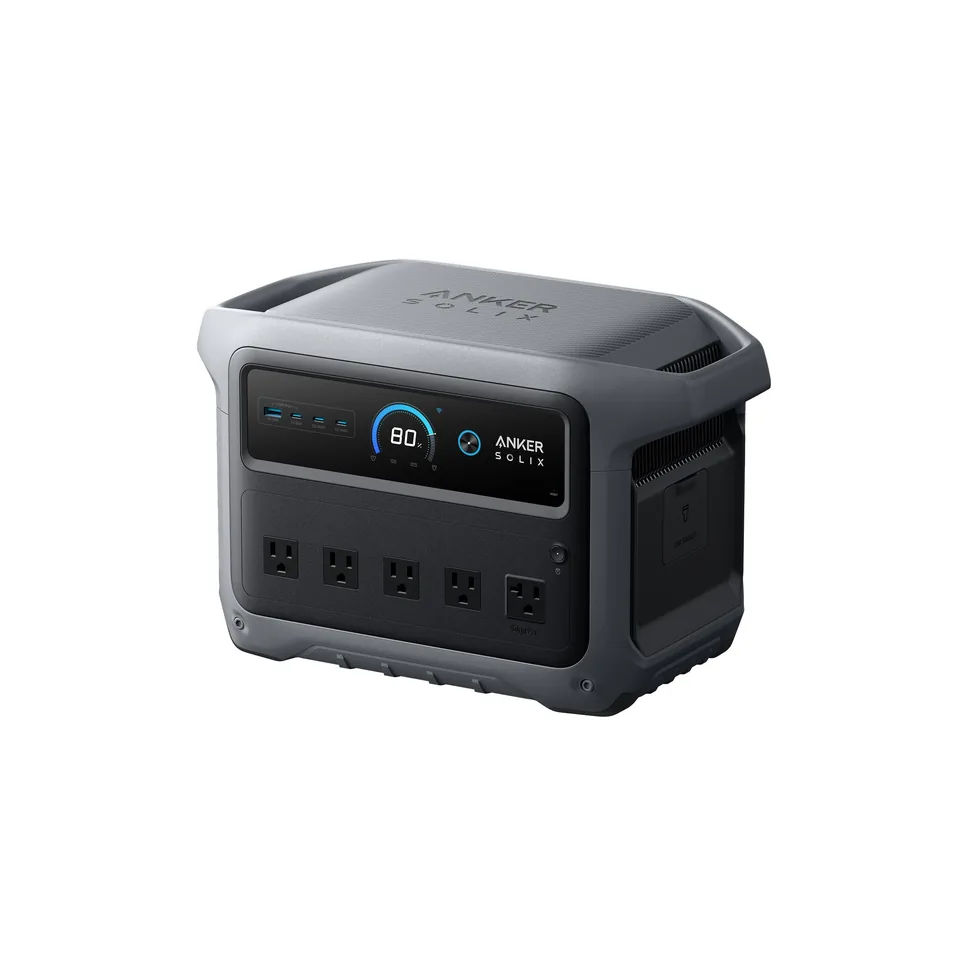
Against the Anker SOLIX C1000 Gen 2, the DELTA 3 Plus loses on output (1,800 W against 2,000 W), on weight, and by seven minutes on the wall refill. It wins on solar input (1,000 W against 600 W), on the sixth AC outlet, on the sealed battery module and on the extra-battery port. If you are sure you will never expand, the Anker is the sharper buy; if there is any chance you will, the EcoFlow is.
Against the standard DELTA 3, EcoFlow's own comparison shows the same 1,024 Wh pack, 1,800 W inverter, 56-minute charge, 12.5 kg weight and 5 kWh expansion ceiling; the Plus adds the second 500 W solar port, 140 W rather than 100 W USB-C, and the NAS-aware UPS. OutdoorGearLab tested the non-Plus version in its July 2026 roundup, drew 870 Wh from it and scored it 67 out of 100.
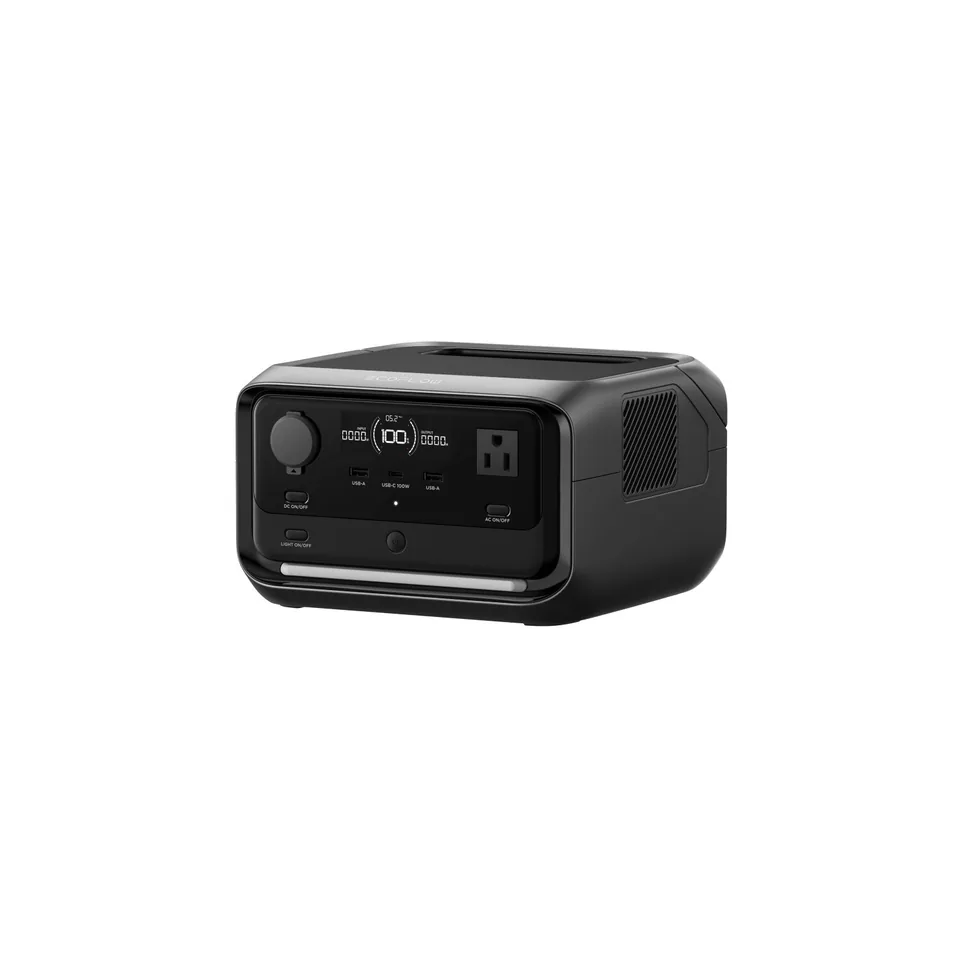
Against the RIVER 3 Plus, this is the same UPS idea at 3.6 times the capacity and three times the inverter power. The RIVER carries a router and a laptop; the DELTA carries a refrigerator and a coffee maker.
Head to head: vs Anker SOLIX C1000 Gen 2 Portable Power Station (1024Wh)
| Feature | EcoFlow DELTA 3 Plus Portable Power Station (1024Wh) | Anker SOLIX C1000 Gen 2 Portable Power Station (1024Wh) |
|---|---|---|
| Capacity | EcoFlow DELTA 3 Plus: 1,024 Wh LFP, 4,000 cycles to 80% | Anker C1000 Gen 2: 1,024 Wh LFP, 4,000 cycles to 80% |
| AC output (continuous) | EcoFlow DELTA 3 Plus: 1,800 W (X-Boost to 2,200 W for one resistive load) | Anker C1000 Gen 2, better: 2,000 W Better |
| Surge | EcoFlow DELTA 3 Plus, better: 3,600 W Better | Anker C1000 Gen 2: 3,000 W |
| UPS switchover | EcoFlow DELTA 3 Plus, better: Under 10 ms rated; just over 8 ms measured by StorageReview Better | Anker C1000 Gen 2: 10 ms rated |
| Wall recharge | EcoFlow DELTA 3 Plus: 1,500 W, 56 min to full (manufacturer); 55 min timed by The Solar Lab | Anker C1000 Gen 2, better: 1,600 W UltraFast, 49 min to full (manufacturer); 1,200 W in default mode Better |
| Solar input | EcoFlow DELTA 3 Plus, better: 2 x 500 W MPPT, 1,000 W total, about 70 min to full Better | Anker C1000 Gen 2: 600 W max, about 1.8 h to full |
| Weight | EcoFlow DELTA 3 Plus: 27.6 lb | Anker C1000 Gen 2, better: 24.9 lb (25.2 lb on OutdoorGearLab's scale) Better |
| Outlets | EcoFlow DELTA 3 Plus, better: 6 AC, 2 USB-C (140 W), 2 USB-A, 12 V car, 2 DC5521 Better | Anker C1000 Gen 2: 5 AC, 2 USB-C (140 W), 1 USB-C (15 W), 1 USB-A, 12 V car |
| Expandability | EcoFlow DELTA 3 Plus, better: One extra battery, up to 5 kWh Better | Anker C1000 Gen 2: None |
| Warranty | EcoFlow DELTA 3 Plus: 5 years | Anker C1000 Gen 2: 5 years |
Bottom line. Buy the EcoFlow DELTA 3 Plus if there is any chance you will add a battery later, if you run solar above 600 W, or if you want the sixth outlet and the sealed battery module. Buy the Anker SOLIX C1000 Gen 2 if you are certain 1 kWh is the end state and you would rather have 2,000 W, a 49-minute recharge and a lighter box.
Verdict
Buy the DELTA 3 Plus if you want a 1 kWh station that refills in an hour, holds a PC through an outage and can grow later. Skip it if your loads sit near 1,800 W for long stretches, in which case the 2,200 W Jackery Explorer 2000 v2 is the answer, or if the Anker's extra 200 W and lighter body matter more to you than expansion.
All 8 sources
- storagereview.com /review/ecoflow-delta-3-plus-review
- us.ecoflow.com /products/delta-3-plus-portable-power-station
- ecoflow.com /ca/blog/ecoflow-delta-3-plus-faq
- ecoflow.com /uk/blog/ecoflow-delta-3-series-buying-guide
- howtogeek.com /ecoflow-delta-3-plus-review
- thesolarlab.com /review/ecoflow-delta-3-plus-review
- outdoorgearlab.com /topics/camping-and-hiking/best-power-station
- jackery.com /products/jackery-explorer-2000-v2-portable-power-station
The other picks in Portable Power Stations
Compare all 4-
Best budget
EcoFlow RIVER 3 Plus Portable Power Station (286Wh)
Check price on Amazon(paid link) for EcoFlow RIVER 3 Plus Portable Power Station (286Wh) (opens in a new tab) -
Best premium
Jackery Explorer 2000 v2 Portable Power Station (2042Wh)
Check price on Amazon(paid link) for Jackery Explorer 2000 v2 Portable Power Station (2042Wh) (opens in a new tab) -
Best for fast charging
Anker SOLIX C1000 Gen 2 Portable Power Station (1024Wh)
Check price on Amazon(paid link) for Anker SOLIX C1000 Gen 2 Portable Power Station (1024Wh) (opens in a new tab)