A machine with its own grinder saves a second appliance, a second cord and the step of moving grounds from one to the other. The trade is permanence: the grinder decides how good the espresso can get, and it cannot be replaced without replacing the machine. If you expect to keep upgrading, a compact machine and a standalone grinder is the more flexible route, covered on our beginner espresso machine list, our espresso grinder list and our home espresso setup guide. If you want one box, these are the criteria that separate the four picks.
01Semi-automatic or fully automatic
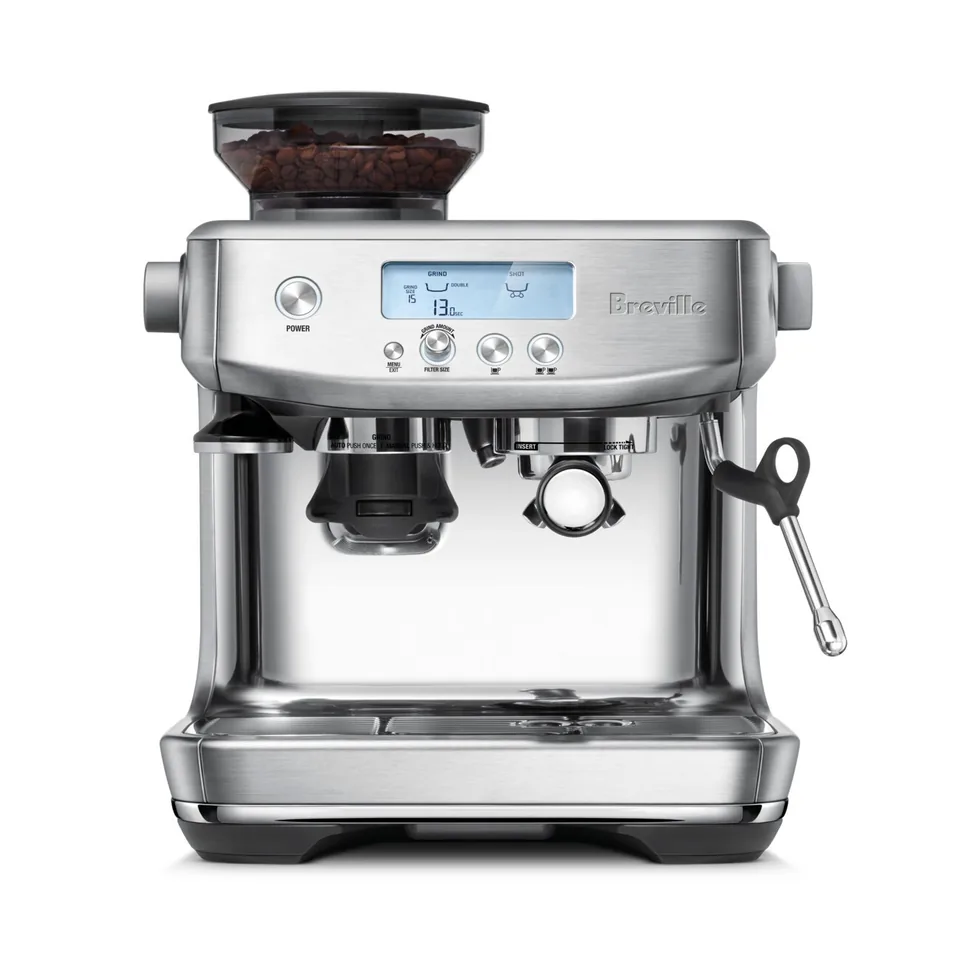
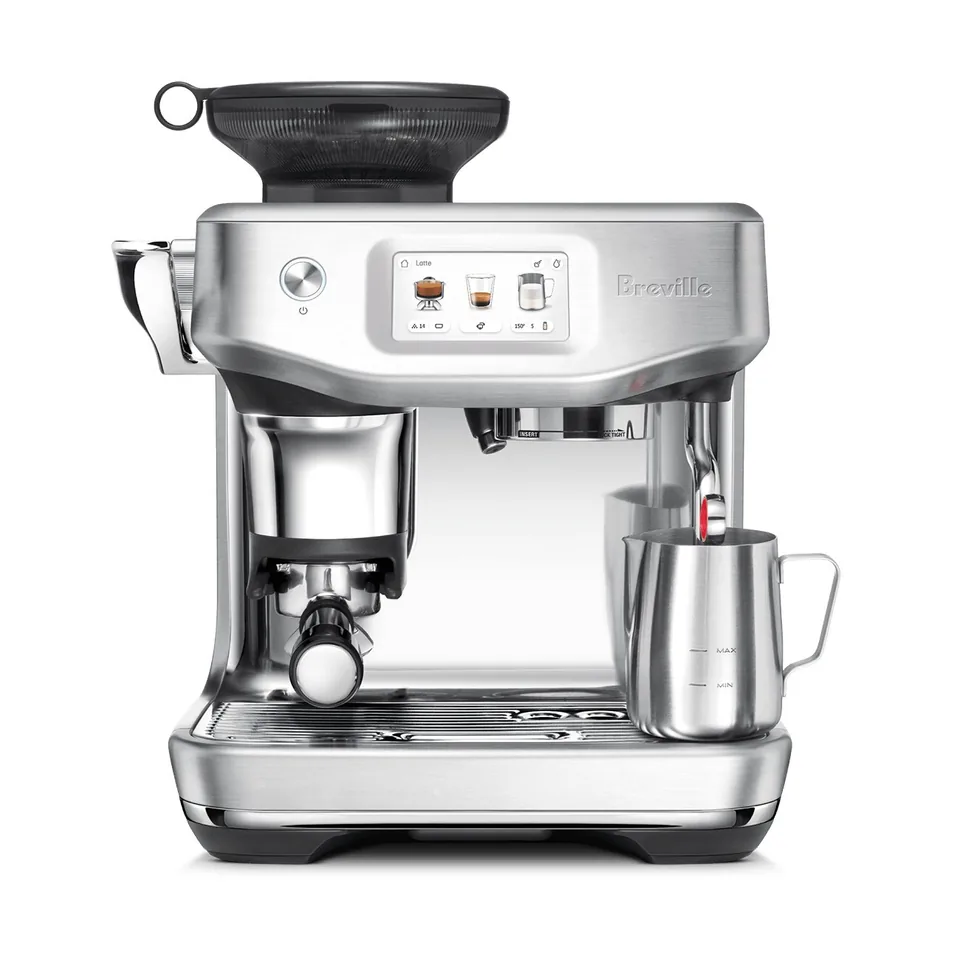
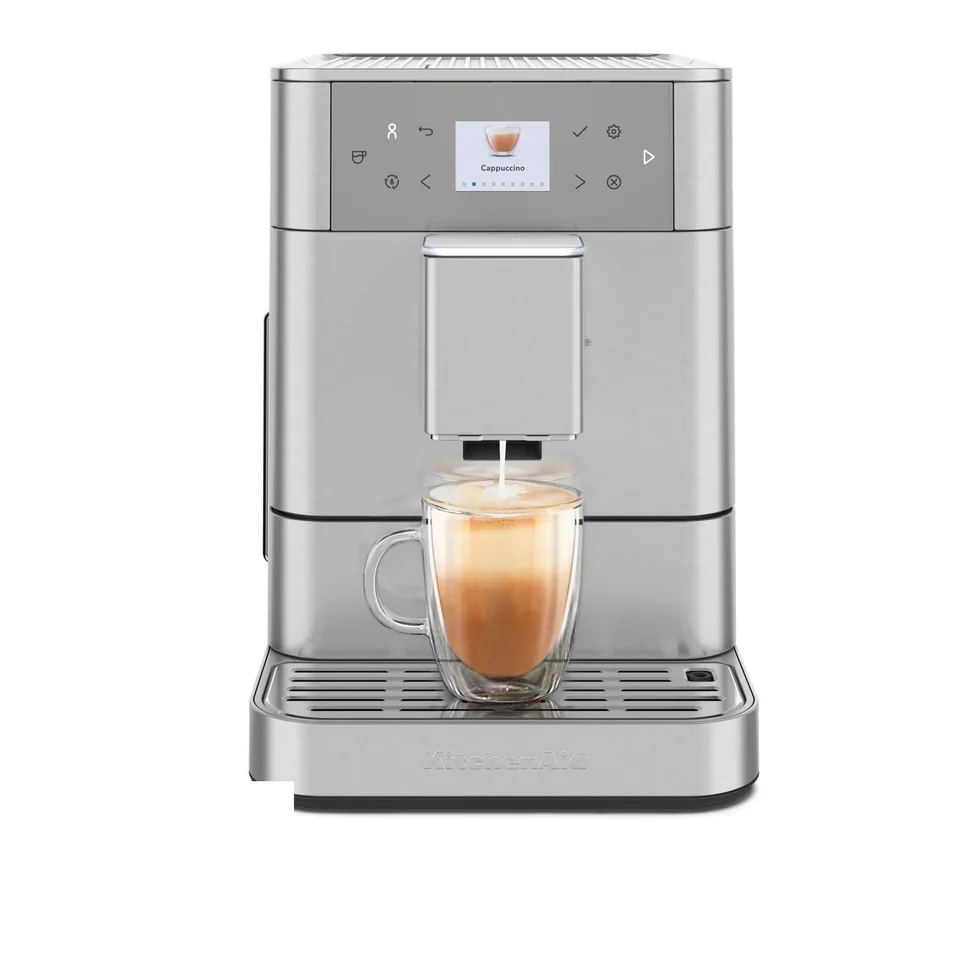
Three picks are semi-automatic: you grind into a portafilter, lock it into the group head, start the shot and steam milk with a wand. The Barista Pro, La Specialista Arte Evo and Barista Touch Impress differ in how much help they give along the way. The KitchenAid KF6 is a super-automatic: it grinds, doses, tamps, brews and froths inside the machine, and you choose a drink on a screen.
The difference is control against convenience. A semi-automatic lets you change grind, dose and shot length to suit each bag of beans and pour latte art; a super-automatic makes the same drink every time with no skill and gives you only the adjustments its menu allows. Business Insider found the KF6's grind setting sits behind a side panel, and TechRadar's own advice is that a buyer on a tight budget is better off with a manual machine.
02Grind range and step size
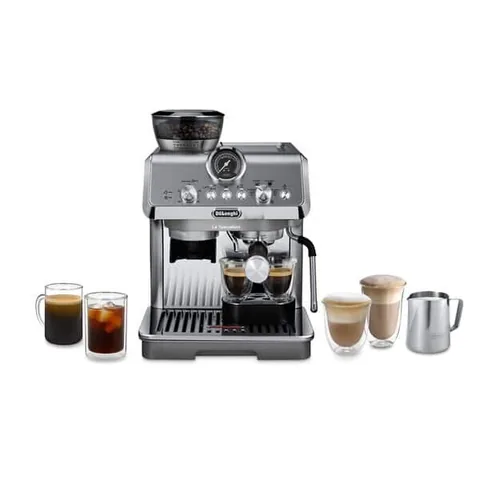
The Barista Pro and Touch Impress use the same conical burr grinder with 30 settings, which Breville brands as Baratza European Precision Burrs. The older Barista Express has 16 settings and the Arte Evo has 8. Finer steps matter because espresso is sensitive: a shot that runs a few seconds fast at one setting may choke at the next, and with only eight steps you end up adjusting dose or tamp instead. Tom's Guide sieved the Arte Evo's espresso grind and found it very uniform, so the limit is range rather than quality, and it bites hardest with light roasts. Medium and dark roasts are far more forgiving.
03Dosing and tamping help
Uneven dosing and tamping are the most common reasons a home shot tastes sour or bitter. The Touch Impress removes both: Breville's Impress Puck System doses from the last result, tamps at 22 lb when you pull a lever, and corrects the next dose, and TechRadar found it cleaner and more consistent than tamping by hand. The Arte Evo takes a middle path with a screw-on dosing and tamping guide and a tamper, which Tom's Guide preferred for keeping control without the mess. The Barista Pro leaves tamping to you with a magnetic hand tamper, and the KF6 does it out of sight.
04Heat-up and temperature control
Both Brevilles use ThermoJet heaters that Breville rates at about three seconds to extraction temperature, and Business Insider found the Barista Pro switches from shot to steam faster than rivals as a result. The Pro has PID control, which holds brew temperature steady from shot to shot. The Arte Evo uses a thermoblock with three temperature presets that De'Longhi calls Active Temperature Control; Tom's Guide points out that it is not a PID, though it still pulled a balanced double in its test.
05Milk: manual wand, auto wand or one touch
The Pro and the Arte Evo have manual wands. Business Insider found the Pro's powerful enough to blow milk out of the jug until the angle is right; TechRadar and Tom's Guide both got good microfoam from the Arte Evo, though Tom's Guide found the wand sits low on a stiff joint. The Touch Impress adds Auto MilQ, with settings for dairy, oat, soy and almond: Reviewed found it excellent with plant milk, while TechRadar found it weaker with full-fat dairy and suggests steaming whole milk by hand. The KF6 froths automatically through a tube from your own jug and has no plant-milk profile, per TechRadar, though Business Insider got good results with both dairy and plant milk.
Check the height under your wall cabinets, since every pick has a bean hopper on top, and the depth: the KF6 is narrow but about 18.5 in deep by Business Insider's measurement. Semi-automatics need regular descaling and a wipe of the group head and wand; the KF6 prompts a milk-line rinse after each milk drink and a periodic brew-unit clean.