
Noise
Coffeeness, dB (ranges plotted at the top end) · Lower is better
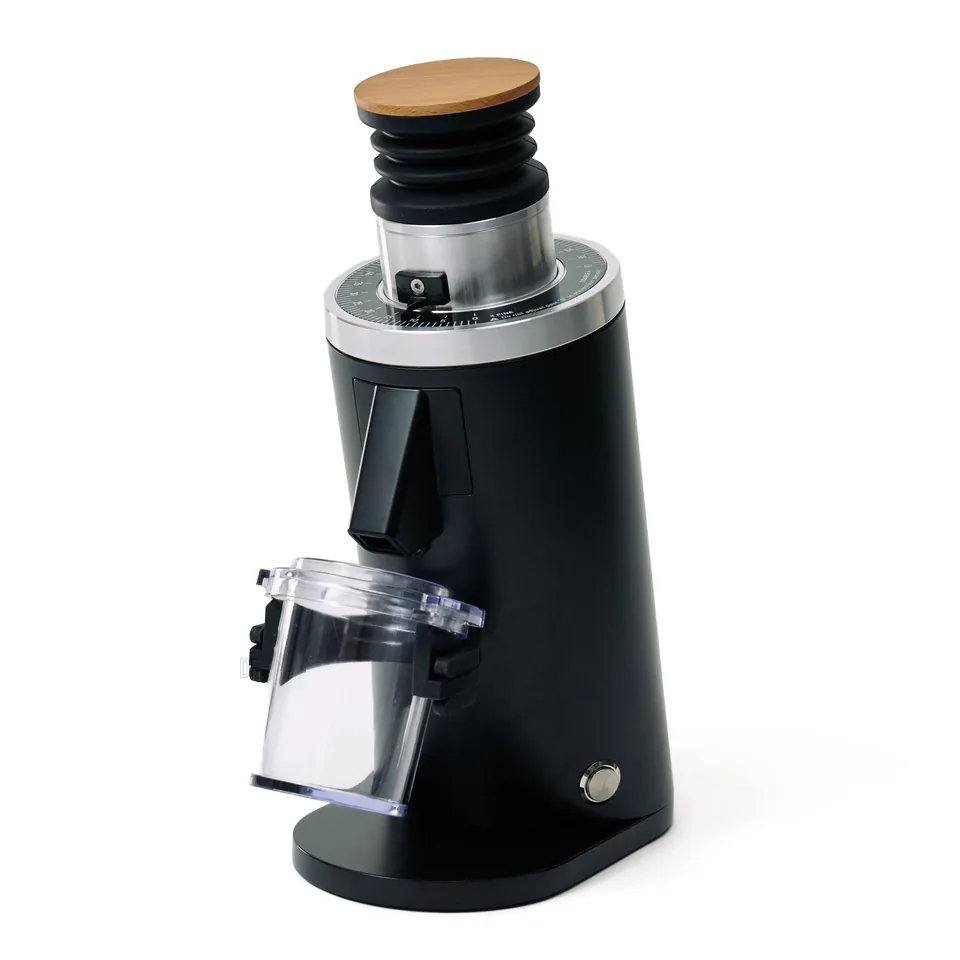
- DF54 Single-Dose Coffee GrinderNot published
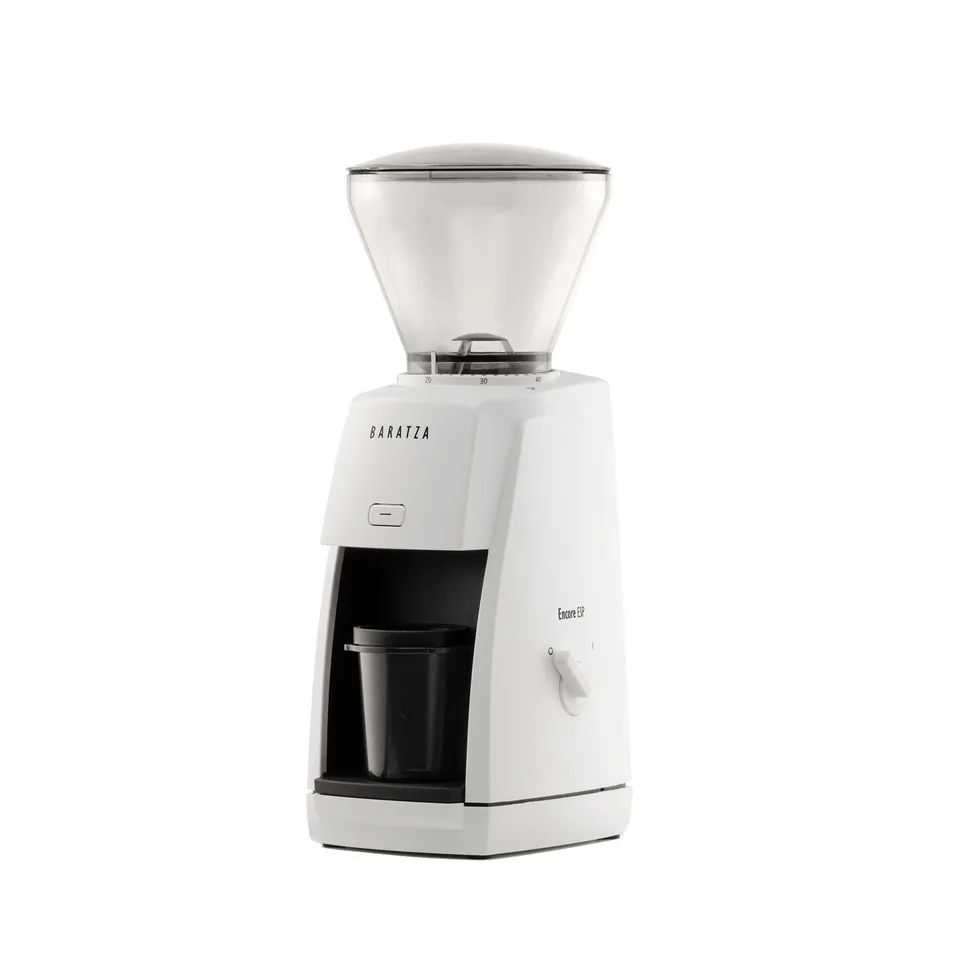
- Baratza Encore ESP80.5 dB
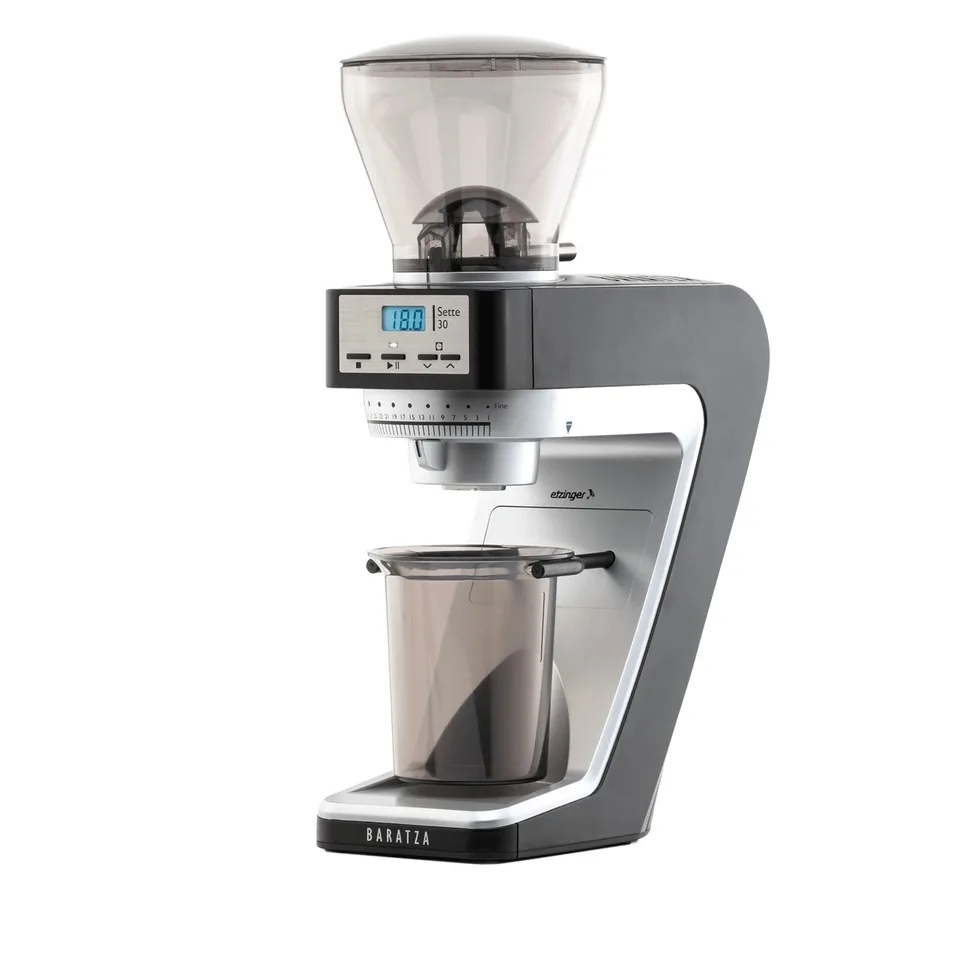
- Baratza Sette 3085-90 dB
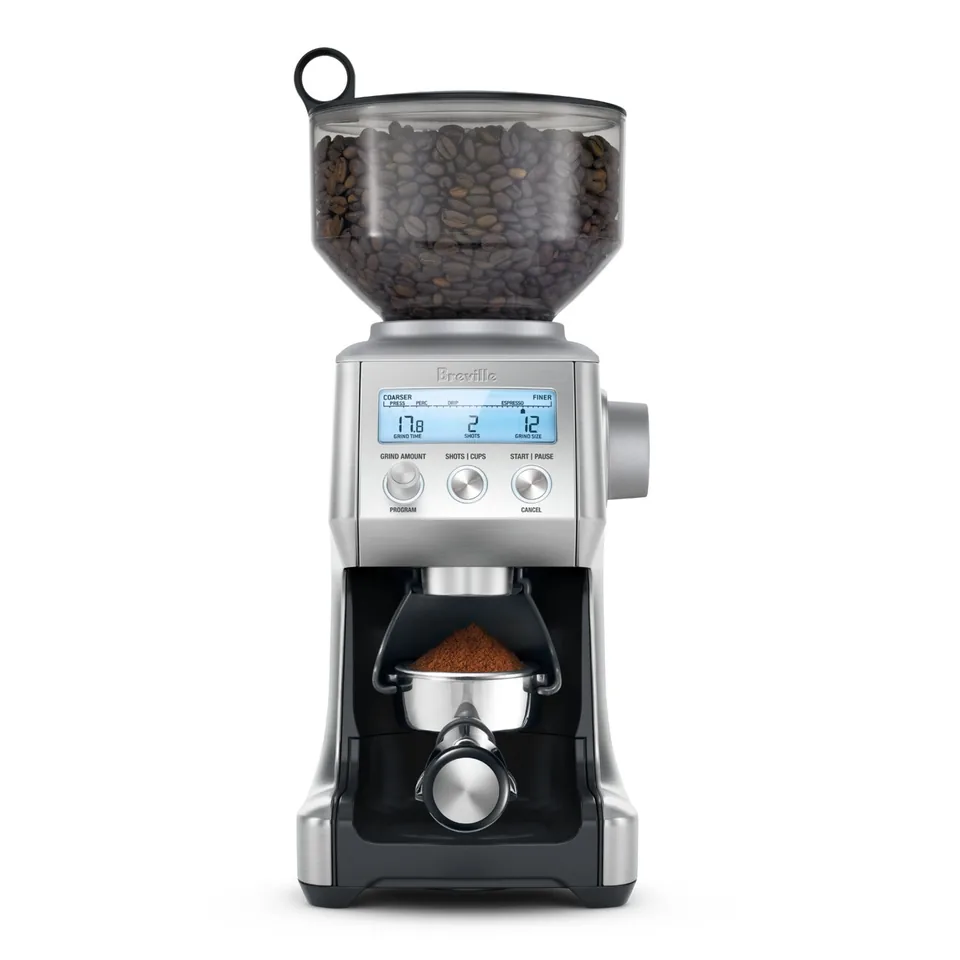
- Breville Smart Grinder Pro70-80 dB
We compared electric grinders in the under-$300 class that independent reviewers have dialed in for an unpressurized espresso basket, judging them on burr type, adjustment resolution inside the espresso range, hopper versus single-dose workflow, retention, noise and repairability.
Ad disclosure: we earn a commission on Amazon links, at no cost to you. It never decides our picks. How this works
Best overall
Suits Single-dosers who want flat-burr espresso and pour-over
Best budget
Suits First espresso setups that also brew filter
Best premium
Suits Daily espresso, fast and clean, medium or dark roasts
Best for switching between espresso and drip
Suits Sharing one grinder between espresso and drip
From spec sheets and independent tests. The best result in a row is tagged.
| Feature | DF Grinders DF54Best overall | Baratza Encore ESPBest budget | Baratza Sette 30Best premium | Breville Smart Grinder ProBest for switching between espresso and drip |
|---|---|---|---|---|
| Burrs | 54 mm flat, steel | 40 mm conical (M2) | 40 mm conical | 40 mm conical |
| AdjustmentSette espresso count per Coffeeness | Stepless Best | 40 steps, 1-20 for espresso | 30 steps, 3-4 for espresso | 60 steps plus burr shift |
| Hopper | Single dose, bellows | 8 oz | 10 oz | 18 oz |
| Timed dosing | No: Weigh each dose | No: No timer | Yes: Presets to 0.1 s | Yes: 0.2 s steps, presets |
| RetentionCoffee Chronicler, CoffeeGeek, Coffeeness | 0.2-0.3 g; 0-0.1 g bellows Best | About 1.1 g (1-3 g CoffeeGeek) | Near zero Best | Chute buildup (owner reports) |
| NoiseCoffeeness unless noted; DF54 per Coffee Chronicler | No figure, called not quiet | 80.5 dB; 92 dB Coffee Chronicler | 85-90 dB, harsh | 70-80 dB Best |
| Dose speedCoffee Chronicler, CoffeeGeek, Baratza, Coffeeness | 14 g in about 24 s | 18 g in about 13 s | 3.5 g/s, 18 g in about 5 s Best | About 2 g/s |
| Portafilter dosing | Partly: 58 mm cup with rubber insert | Yes: Cup fits 54 and 58 mm | Partly: Adjustable arms, no grip | Yes: Cradles for 54 and 58 mm |
| Parts and repair | Partly: In-house service, few burrs | Yes: Baratza parts, tool-free burrs | Yes: Baratza parts, tool-free burrs | No: No parts catalog |
| On Amazon | Check price on Amazon(paid link) for DF54 Single-Dose Coffee Grinder (V4) (opens in a new tab) | Check price on Amazon(paid link) for Baratza Encore ESP (opens in a new tab) | Check price on Amazon(paid link) for Baratza Sette 30 (opens in a new tab) | Check price on Amazon(paid link) for Breville Smart Grinder Pro (BCG820) (opens in a new tab) |
Who each one is for, and what to know before you buy.
01Best overall
The DF54 is the grinder to buy in this class if you want flat-burr clarity for espresso and filter and will weigh each dose. Skip it if you want a hopper, a timer or speed.
Pick it ifHome baristas who single-dose, switch beans often and want flat-burr espresso and pour-over from one grinder
Skip it ifAnyone who wants to fill a hopper, press a button and walk away, or who grinds for a queue of milk drinks every morning
Why it made the list. 54 mm flat burrs, stepless adjustment and retention under half a gram give flat-burr clarity at a conical-burr price. Coffee Chronicler's top pick overall in its September 2026 guide; the slow motor and fixed dial indicator are the trade-offs.
02Best budget
The Encore ESP is the cheapest grinder in the class that named reviewers dialed in for an unpressurized basket, and the one with the best repair support. Buy it for medium and dark roasts; look elsewhere for light-roast espresso.
Pick it ifFirst espresso machine owners, especially with a 54 mm Breville, who also brew filter and want a grinder that can be repaired for years
Skip it ifLight-roast espresso drinkers, or anyone who wants a timer and does not want to weigh beans
Why it made the list. A dual-range collar with 20 fine espresso steps and 20 coarser filter steps, a dosing cup for 54 mm and 58 mm portafilters, and Baratza's parts and repair support. CoffeeGeek scored it 83/100; retention and clumping are the costs.
03Best premium
The Sette 30 is for people who pull espresso every day, want it fast and clean, and are happy to tune with dose rather than fine grind steps. Skip it if you brew mostly filter or need a quiet kitchen.
Pick it ifDaily espresso drinkers who want grounds in the portafilter in seconds with nothing left inside, and who drink medium or dark roasts
Skip it ifLight-roast dialers who need fine steps, open-plan kitchens, or anyone who grinds mostly for pour-over and press
Why it made the list. A straight-through burr design grinds an espresso dose in about five seconds with almost nothing left inside, which suits espresso-only homes. Coffeeness found only three or four of its 30 steps usable for espresso, and it is loud.
04Best for switching between espresso and drip
The Smart Grinder Pro is the grinder for a kitchen that runs an espresso machine and a drip brewer from the same beans and wants both jobs automated. Buy it for convenience; buy the DF54 for the best shot.
Pick it ifHouseholds with a Breville or other 54 mm machine plus a drip or pour-over brewer, who want a hopper, a timer and presets
Skip it ifSingle-dosers, French press and cold brew drinkers, or anyone chasing the last bit of espresso clarity
Why it made the list. 60 settings, a timed dose in 0.2-second steps, an 18 oz hopper and cradles for 54 mm and 58 mm portafilters make it the easiest grinder to share between an espresso machine and a drip brewer. TechGearLab's editors' choice; weak at coarse grinds.
The floor for this list is simple: the grinder must reach a setting that chokes an unpressurized basket, and an independent reviewer must have got there. Plenty of grinders in this class advertise an espresso setting; the four below have been dialed in for real. What separates them is how they get there and what each gives up.
| Model | Burrs | Adjustment | Workflow | Retention (source) | Noise (source) | Dose speed |
|---|---|---|---|---|---|---|
| DF54 | 54 mm flat | Stepless | Single dose, bellows | 0.2 to 0.3 g, near zero with bellows (Coffee Chronicler) | Not quiet, milder than the DF64 Gen 2; no figure (Coffee Chronicler) | 14 g in about 24 s (Coffee Chronicler) |
| Baratza Encore ESP | 40 mm conical | 40 steps, 20 in the espresso range | 8 oz hopper or single dose, no timer | 1 to 3 g (CoffeeGeek); 1.1 g (Coffee Chronicler) | 80.5 dB (Coffeeness); 92 dB (Coffee Chronicler) | 1.5 g/s, about 13 s for 18 g (CoffeeGeek) |
| Baratza Sette 30 | 40 mm conical | 30 steps | 10 oz hopper, timer, portafilter arms | Near zero (Coffee Chronicler, Coffeeness) | 85 to 90 dB (Coffeeness) | 3.5 g/s (manufacturer) |
| Breville Smart Grinder Pro | 40 mm conical | 60 steps plus burr shift | 18 oz hopper, 0.2 s timer, cradles | Some chute buildup reported by owners (Coffeeness) | 70 to 80 dB (Coffeeness) | About 2 g/s (Coffeeness) |
Three of the four use 40 mm conical burrs; the DF54 uses 54 mm flat burrs. Coffee Chronicler's rule of thumb is that flat burrs give more clarity and fewer oversized particles, while conical burrs tend toward a heavier body in espresso. In blind tastings the site found the DF54 ahead of the Encore ESP on pour-over as the cups cooled, and its espresso very close to the larger DF64 Gen 2. For light roasts and distinct flavors, flat burrs are the reason to pick the DF54; for milk drinks with a medium or dark roast, the difference narrows and workflow matters more.
Espresso lives in a narrow band of grind sizes, and a stepped grinder is only as useful as the number of steps that fall inside it. The Encore ESP puts 20 clicks there at roughly 20 microns each, according to CoffeeGeek, and reaches coarse grinds with 20 wider clicks. The Breville spreads 60 steps across the whole range and lets you reposition the upper burr to move the range. The Sette 30 has 30 steps in total at about 24 microns apiece, and Coffeeness found only three or four of them useful for espresso, so you tune with dose instead. The DF54 is stepless, so any size is reachable, at the cost of a dial whose numbers are relative marks.
This is the workflow decision. A hopper grinder (Sette 30, Breville) holds a bag of beans and delivers a dose on a timer. A single-dose grinder (DF54) takes one weighed dose at a time and uses bellows to blow out the last grams; you weigh every shot but switch beans freely. The Encore ESP sits between the two: it has an 8 oz hopper but no timer, so most owners end up weighing beans anyway. Timed dosing is convenient but drifts as the hopper empties and roasts change; Coffeeness recommends a scale on the Sette and the Breville alike.
Retention is the coffee that stays inside the grinder between doses. It matters for espresso because a 1 g difference in an 18 g dose changes the shot. The Sette 30's straight-through design and the DF54's bellows get close to zero in Coffee Chronicler's testing. The Encore ESP held 1 to 3 g in CoffeeGeek's measurements and 1.1 g in Coffee Chronicler's, which is why single-dosing it is imperfect. The Breville keeps some coffee in the chute, and Coffeeness relayed owner reports of buildup that its own test did not reproduce.
None of these is quiet. Coffeeness measured the Breville at 70 to 80 dB and the Sette 30 at 85 to 90 dB with a harsh note. The Encore ESP came in at 80.5 dB on Coffeeness's meter and 92 dB on Coffee Chronicler's, a gap down to method. Coffee Chronicler gives no figure for the DF54 but calls it not quiet, a little milder than the DF64 Gen 2, which the site puts around 90 dB. The Breville is the one to pick for an open-plan kitchen.
Baratza sells wear parts for the Encore ESP and Sette 30, the burrs come out without tools on both, and the one-year warranty covers ground shipping both ways within the US and Canada. CoffeeGeek and Coffee Chronicler both cite this as a reason to buy a Baratza, and Coffee Chronicler notes the advantage applies mostly in North America. DF Grinders services its one-year warranty in-house and sells upgrade burrs and a re-zeroable dial for the DF54, but the 54 mm format has few third-party burrs, and Coffee Chronicler lists the newer brand's thinner support as a con. Breville offers a one-year limited warranty and no comparable parts catalog.
Breville espresso machines use 54 mm portafilters; most others use 58 mm. The Encore ESP's dosing cup fits both sizes with a sleeve or ring, the Breville ships cradles for both, the DF54's cup is 58 mm with a rubber insert, and the Sette 30's arms are adjustable but do not grip. Check the fit for your machine before buying.
Models we considered, and why each one did not make the list.
TechGearLab scored it 65 in its comparison, and Coffeeness says it cannot grind fine enough for espresso; the ESP replaces it for this purpose.
They add the micro-adjustment the Sette 30 lacks, and the 270 is TechGearLab's espresso pick, but both sit above this class.
Coffee Chronicler calls it one of the quietest espresso grinders, but it is above the class and the site says not to buy it for filter.
Coffee Chronicler recommends both, but says the Gen 2's real potential needs an SSP burr upgrade, and the DF64V is well above the class. The DF54 delivers most of the same espresso result for less.
Coffee Chronicler praises its quiet motor but reports underwhelming stock burrs and a shallow hopper where beans need a nudge; it is also above the class.
A filter grinder; Coffee Chronicler says espresso needs third-party burrs.
Coffeeness describes it as the Smart Grinder Pro without the display or grounds container; the Smart Grinder Pro is the better buy for espresso.
None of the espresso guides we relied on ranked it for unpressurized baskets, so we did not include it.
We list only the DF-family unit sold through MiiCoffee's Amazon store, because DF Grinders documents its factory, revisions and warranty.
Yes, with the four here. All were dialed in for an unpressurized basket by at least one of the named reviewers. The difference is how easily: the DF54 and Encore ESP reach the finest settings, the Sette 30 needs dose adjustments to land between its steps, and the Breville may need its upper burr repositioned for very fine espresso.
No. Single dosing gives the freshest beans and the lowest retention, but a hopper grinder with a timer is faster and more convenient. The Sette 30 gets near-zero retention with a hopper; the DF54 gets it with bellows.
The Encore ESP's dosing cup fits a 54 mm portafilter and the Smart Grinder Pro has a 54 mm cradle, so both grind straight into a Breville basket. The Breville is the tidier workflow match; the Encore ESP makes the better shot according to CoffeeGeek.
For medium and dark roasts, yes; the Encore ESP, Sette 30 and Breville all use them. For light roasts, where fine steps and clarity matter, the DF54's 54 mm flat burrs are the better tool.
The DF54. It reaches the finest settings without shims and adjusts steplessly, and Coffee Chronicler found the Encore ESP needed its shims for light roasts, which made clumping and retention worse.
Prime Big Deal Days run October 6 and 7, 2026, and Black Friday is November 27. If you are not in a hurry, check the live price shown on each product page around those dates.
We compared electric grinders in the under-$300 class that independent reviewers have dialed in for an unpressurized espresso basket, judging them on burr type, adjustment resolution inside the espresso range, hopper versus single-dose workflow, retention, noise and repairability. The short answer: the DF54 makes the best coffee, the Baratza Encore ESP is the cheapest that works, the Baratza Sette 30 is the fastest and cleanest for espresso-only homes, and the Breville Smart Grinder Pro is the one to share with a drip brewer.
We shortlisted current electric burr grinders sold on Amazon within the class and kept only those that Coffee Chronicler, CoffeeGeek, Coffeeness or TechGearLab reported grinding fine enough for a non-pressurized basket. We then compared them on burr size and type, stepped or stepless adjustment in the espresso range, measured retention, measured noise, dosing method and the maker's spare parts and repair support, using manufacturer spec pages and those reviews. We have not used these grinders ourselves; every measurement is attributed to whoever made it. Grinders that only reach espresso fineness with pressurized baskets, and models priced above the class, were excluded.