01Tilt-head or bowl-lift
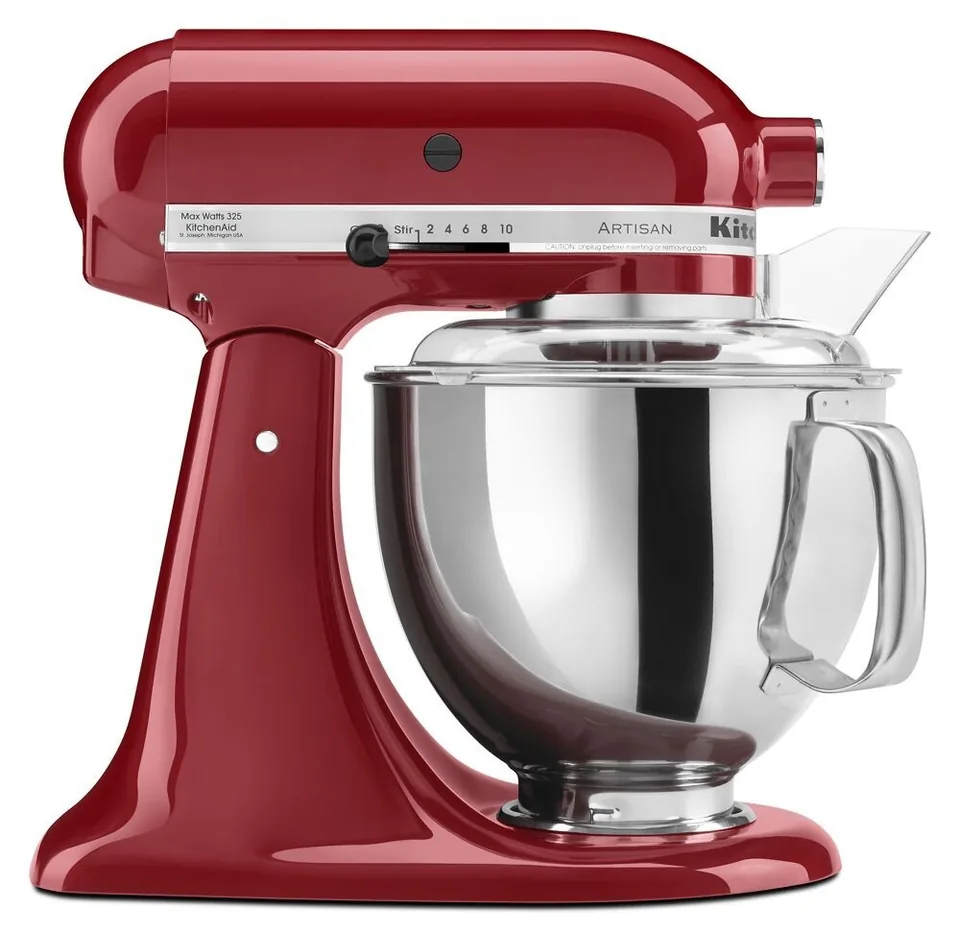
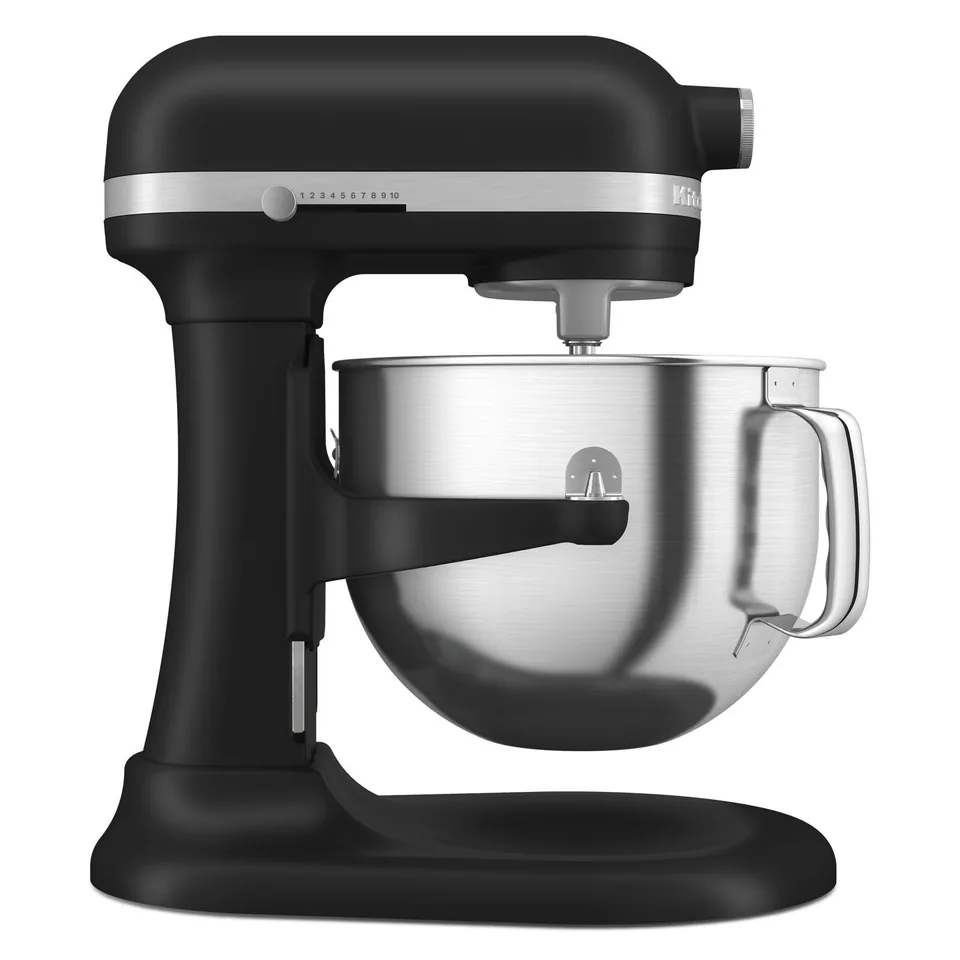
The first decision is mechanical. On a tilt-head mixer the motor head hinges up and the bowl twists onto a plate underneath; on a bowl-lift the head is fixed and a lever on the side raises the bowl into the beater on a cradle. Three of our four picks are tilt-heads. Only the KitchenAid 7 Quart Bowl-Lift is a bowl-lift.
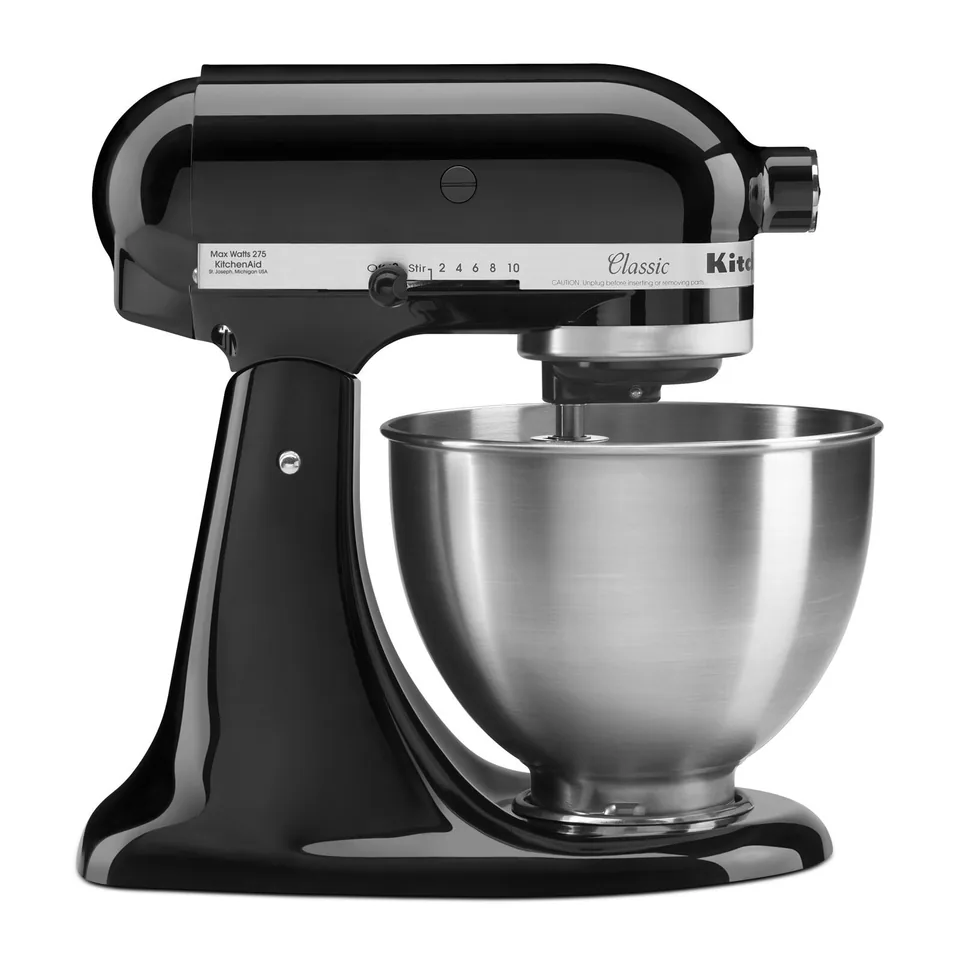
A tilt-head is shorter (the Artisan and Classic stand 13.9 inches tall against 16.5 for the 7 Quart), lighter, and the bowl lifts straight out. Its weakness is that with the head down, the head sits over the bowl. TechGearLab lists that as the Artisan's main drawback: adding flour goes through the shield's chute, and scraping means stopping and tilting.
A bowl-lift trades that for stability and capacity. The bowl locks in at three points under a fixed head, the top of the bowl stays open, and the frame is built for long runs: America's Test Kitchen put the 7 Quart's KSM70SNDX version through 12 extra batches of bread and pizza dough in a row and rates it Highly Recommended. The costs are size and weight. TechGearLab weighed it at 25.4 lb and listed a large footprint among its cons, and the bowl has to come out from between the arms. For cookies, cakes and cream, the tilt-head is the more convenient design. For weekly bread in big batches, the bowl-lift is the one built for the load.
02Watts on the box, results in the bowl
Rated wattage is the number on the box and the least useful one. It is the power the motor draws, not what reaches the dough, and gearing, tool fit and bowl shape matter as much. TechGearLab's May 2025 test, which covered all four picks, makes the point.
The 7 Quart has the highest wattage rating of the four and was no faster than the 300 W Hamilton Beach at kneading a single sandwich loaf, while the 325 W Artisan finished three minutes sooner. Where the 500 W does mean something is sustained load: KitchenAid pairs it with all-metal gears and claims twice the power in the bowl of the Artisan above speed 2, and an abuse test of a dozen dough batches in a row is exactly the job it is built for. That drivetrain, not the number, is why the 7 Quart is the bread machine.
03Bowl coverage decides whipping and scraping
The gap between the tool and the bowl decides how small a volume a mixer can whip and how often you reach for a spatula. TechGearLab whips both a full cup and a half cup of cream for this reason. The Artisan handled both fastest. The Classic reached stiff peaks on a half cup with a couple of dead zones. The Hamilton Beach needed about 3 minutes for the half cup, and the 7 Quart 3 minutes 30 seconds: TechGearLab's guide notes that big bowls often leave small quantities out of the whip's reach. The 7 Quart wins back ground on thick mixtures, where its double flex-edge beater wipes the bowl as it turns and earned the best beating score of the ten mixers.
KitchenAid's tilt-heads have an adjustable beater height, and the company quotes 59 touchpoints per rotation for their planetary action. The practical rule: if meringue, whipped cream or small batches of frosting are regular jobs, buy for coverage, which on this list means the Artisan or the Classic.
04Batch size in dozens and pounds
Bowl quarts are the other misleading number, because a bowl's usable volume depends on how much the motor can move. KitchenAid publishes batch claims per model; Hamilton Beach does not publish one for the 63397.
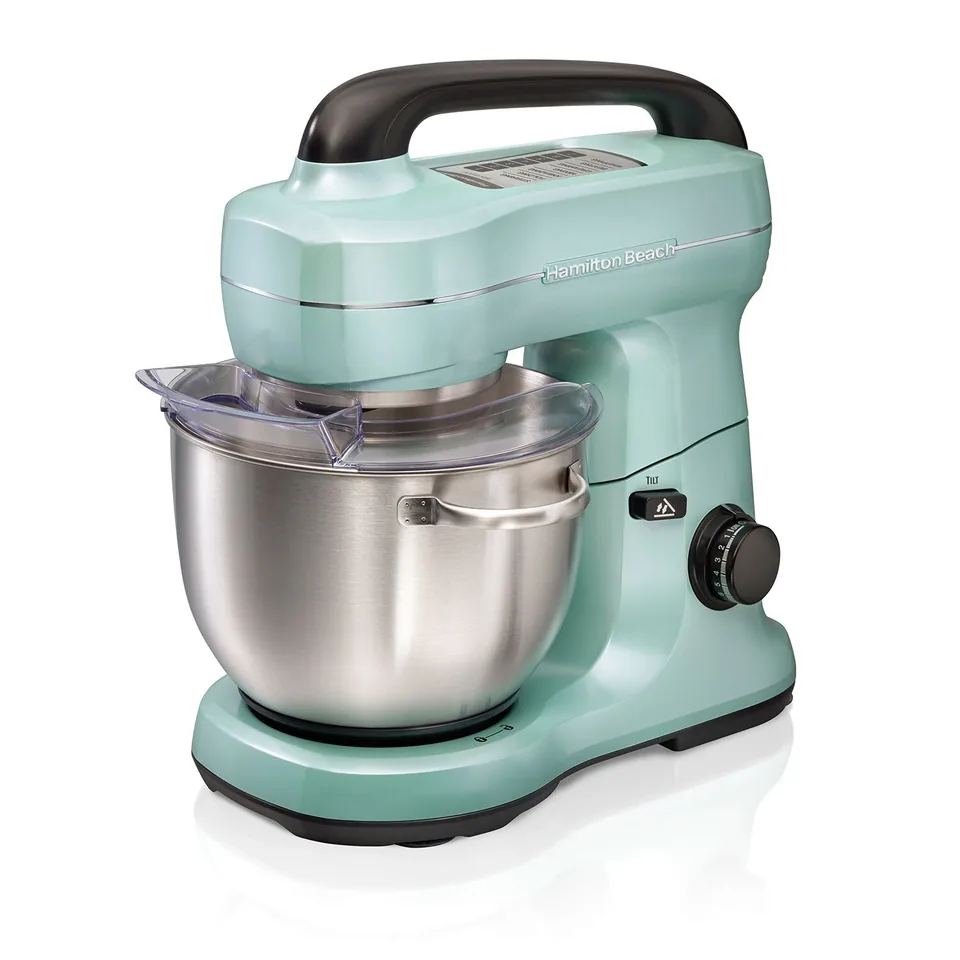
The 7 Quart has two quarts more than the Artisan and the only pound-of-dough claim on the list, which is the point of buying it: doubled bread recipes fit. The Hamilton Beach has the smallest bowl of the four, and its light body is not built for heavy loads either. TechGearLab scored its kneading 5 out of 10 and its cookie-dough beating 3 out of 10, so treat it as a mixer for batters, cream and single batches.
05The attachment hub
All three KitchenAids have the same front power hub, and it takes the same attachments: pasta roller and cutters, food grinder, slicer and shredder, spiralizer, sifter and scale, food processor. KitchenAid says more than ten fit the 7 Quart. The hub is the strongest argument for the Classic over any budget mixer: a K45SS bought today can become a pasta machine in five years. The Hamilton Beach has no hub and never will.
06Weight, height and the counter
The KitchenAid tilt-heads clear a standard 18-inch upper cabinet with the head down but need room above to tilt it. The 7 Quart is 16.5 inches before the bowl rises, so check the clearance. The Hamilton Beach is the only one light enough to put away after each use, with a carry handle on top, but America's Test Kitchen saw it rock and walk across the counter once flour got on its suction feet. The KitchenAids are meant to stay out, which is also why they come in so many colors.
Noise is thinly documented for these four. Consumer Reports rates the Classic Good for noise (in its earlier 250 W version), and Tom's Guide measured the Artisan at 77 dB while kneading. None of these mixers is quiet.