01Start with the job, then the watt-hours
Watt-hours are the tank and watts are the tap. A station's rated capacity is what the cells hold; what comes out of the AC outlets is less, because the inverter takes its share, and the lab figures matter more than the number on the box.
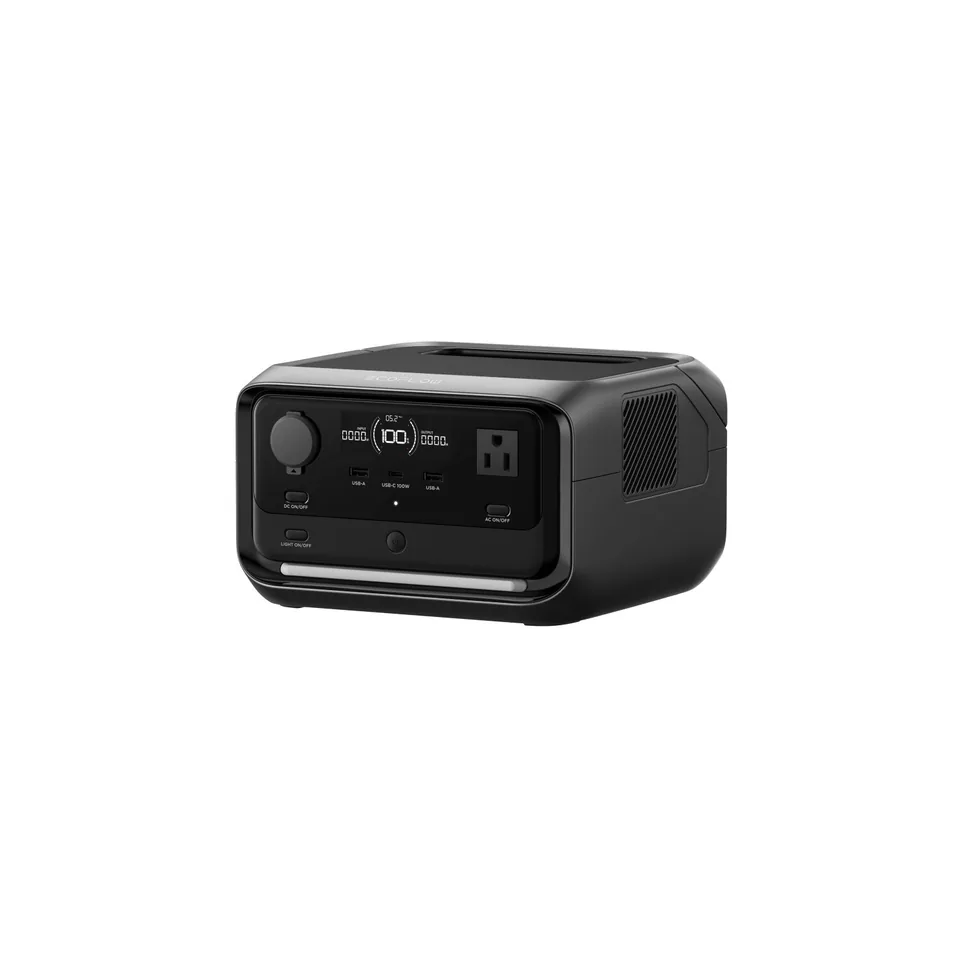
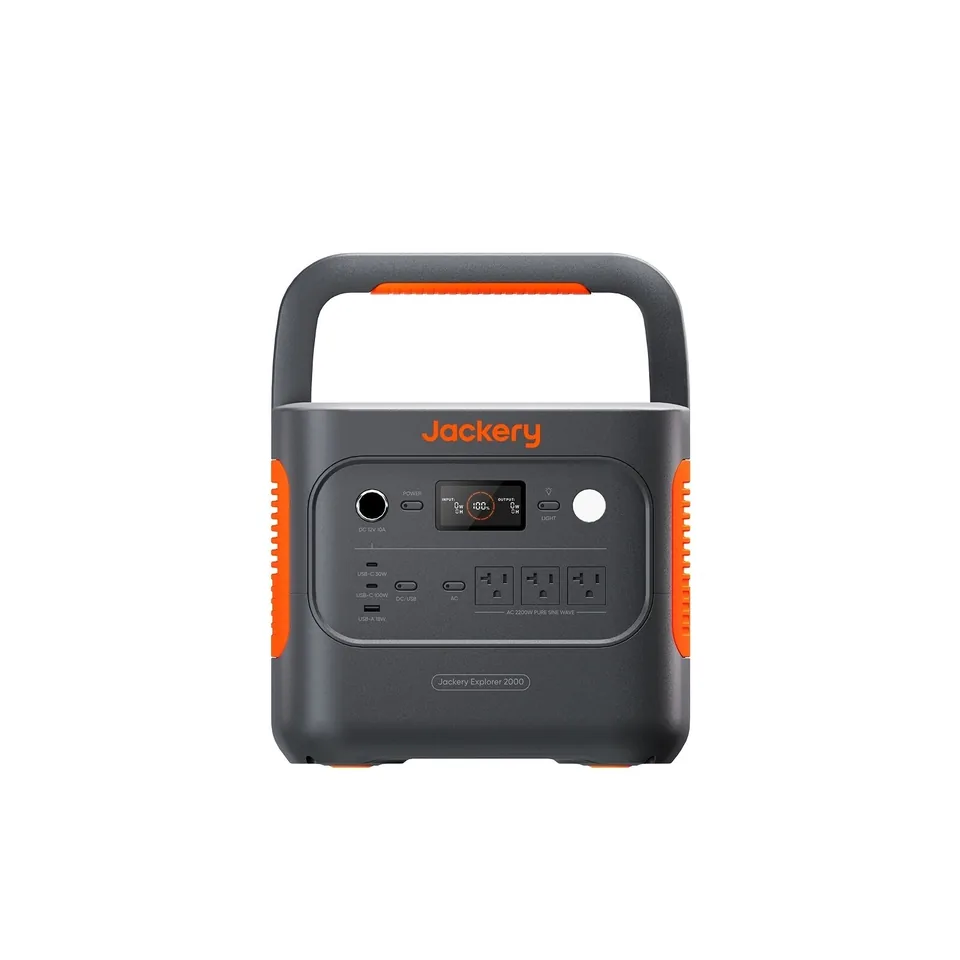
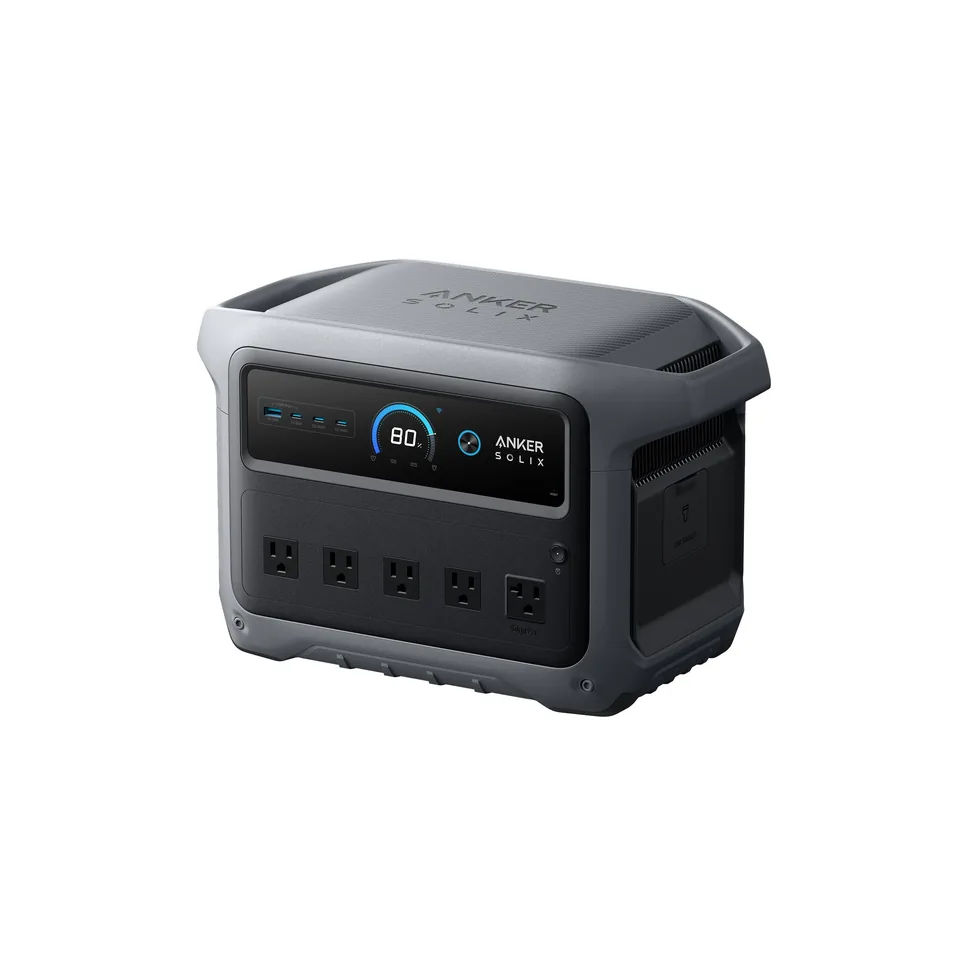
The arithmetic is usable watt-hours divided by average draw. EcoFlow quotes 35 hours for a 3 W router on the RIVER 3 Plus and 21 minutes for a 600 W desktop; Techaeris puts a full-size refrigerator at up to half a day on the Anker; a 1,500 W space heater empties the Jackery's 1.7 measured kWh in a little over an hour. Three sizes cover the three jobs: about 300 Wh for a router, CPAP or laptop; about 1 kWh for a refrigerator, a coffee maker and a home office through a day; about 2 kWh for a kitchen, a heater or a window air conditioner through a long outage. If the appliance has a heating element, check the continuous watts before the watt-hours. A 600 W inverter will not start a kettle no matter how big the pack behind it.
02The 1 kWh head-to-head: DELTA 3 Plus against SOLIX C1000 Gen 2
This is the decision most buyers face, and the two units are close enough that the spec sheets decide it.
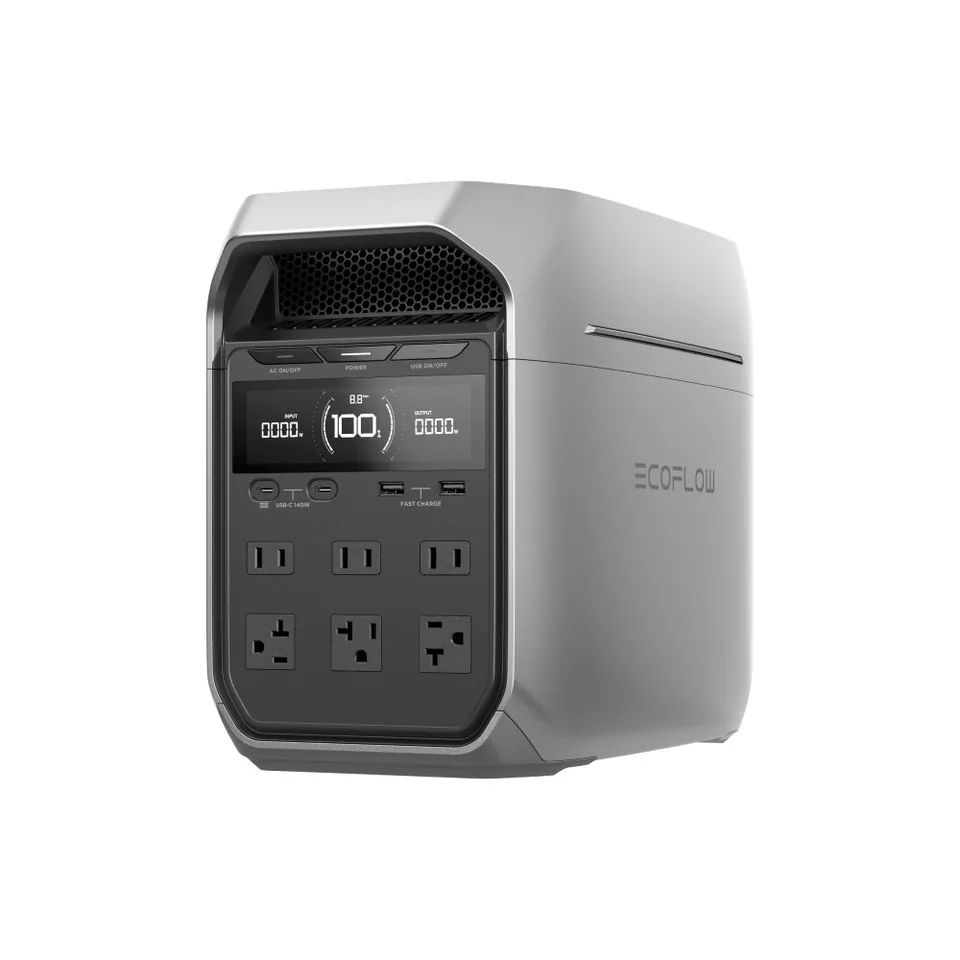
The DELTA 3 Plus wins on solar input, the sixth outlet, an IP65-sealed battery module and the extra-battery port. The C1000 Gen 2 wins on output, weight and refill time, and OutdoorGearLab named it Best Value for Most People in July 2026. Both run loud fans when charging fast or working hard, according to How-To Geek, MacRumors and OutdoorGearLab, and The Solar Lab logged the EcoFlow running hot under a 1,573 W load with its fans not keeping up. The rule is simple: if there is any chance you will want more than 1 kWh in a few years, buy the EcoFlow; if there is none, buy the Anker.
03UPS switchover: what the milliseconds mean
A station in UPS mode sits between the wall and your equipment, passes grid power through, and switches to the battery when the grid drops. The number that matters is the length of that gap, and the useful test is whether a computer stays up through it. StorageReview measured just over 8 ms on the DELTA 3 Plus and 9 ms on the RIVER 3 Plus, with a router and desktop running through the switch on the RIVER; Anker rates the C1000 Gen 2 at 10 ms; Jackery rates the Explorer 2000 v2 at under 20 ms, and none of our sources measured it. The three units at 10 ms or less are the ones to trust with a desktop or NAS, and the EcoFlows have the most margin; the Jackery's switchover is no issue for a fridge, lights or a laptop.
Two habits make UPS use work. Set the charge limit to 80 percent and the discharge floor to 20 percent in the app, which StorageReview recommends for a unit that lives plugged in, and remember that only the loads plugged into the station are protected. The RIVER 3 Plus adds a USB-B port for EcoFlow's Power Manager software, which can shut a PC or NAS down cleanly when the battery runs low.
04Recharge speed, fan noise and solar
The three smaller picks refill from a wall outlet in about an hour: the RIVER 3 Plus in 60 minutes at 380 W, the DELTA 3 Plus in 56 minutes at 1,500 W (55 minutes on The Solar Lab's stopwatch), and the C1000 Gen 2 in 49 minutes at 1,600 W with UltraFast mode on. The Explorer 2000 v2 takes about 1.7 hours by Jackery's figure and 2.5 hours on OutdoorGearLab's test, and The Solar Lab found its full 1,800 W input only works with Emergency Charging Mode switched on in the app; otherwise it drew about 1,300 W. The cost of that speed is noise and circuit load. 1,500 to 1,800 W is close to everything a 15 A household circuit can supply, so charge on a circuit with nothing else on it, and every app here can throttle the rate down, which is also how you quiet the fan at night.
Solar input is where the four separate most. The RIVER 3 Plus takes 220 W, the Jackery 400 W, the Anker 600 W and the DELTA 3 Plus 1,000 W. EcoFlow quotes 70 minutes to full on the DELTA from a full 1,000 W and Anker quotes 1.8 hours for the C1000 Gen 2. The Jackery is the weak spot: 400 W into a 2,042 Wh pack is at least five hours of perfect sun, OutdoorGearLab estimates 10 to 12 hours from one 200 W panel, The Solar Lab calls the ceiling its biggest complaint, and its DC8020 inputs need an adapter for other brands' panels. If a daily solar refill is the plan, the DELTA 3 Plus is the choice; if solar is a once-a-year camping trip, the ceiling barely matters.
05Expansion, cycle life and weight
Two picks can grow and two cannot. The DELTA 3 Plus accepts one DELTA-series extra battery for up to 5 kWh, and the RIVER 3 Plus takes an EB300 or EB600 for up to 858 Wh; the C1000 Gen 2 and the Explorer 2000 v2 are fixed. Cycle ratings are 3,000 cycles to 80 percent on the RIVER 3 Plus and 4,000 on the DELTA 3 Plus and C1000 Gen 2; Jackery rates the Explorer 2000 v2 at 4,000 cycles to 70 percent, a looser yardstick, and quotes an 11-year theoretical cell life. For a station cycled every day on solar that is the deciding spec; for one that waits in a closet for the next storm it is not.
Weight is the spec that gets ignored on a screen and felt on a staircase: 10.4 lb, 24.9 lb, 27.6 lb and 39.5 lb. None of the four has wheels. The Jackery is the reason a 2 kWh unit made the list: OutdoorGearLab found it easy enough for one person to pack in a car. Buy for the end state: if you may want more than 2 kWh later, a 1 kWh unit you can expand beats a 2 kWh unit you cannot.