Start with trips per year, not cubic feet
Every cargo carrier catalog sorts by volume. That is the wrong first question. A hard box that goes up twice a year spends the other fifty weeks on a garage wall, and Consumer Reports' track test shows what it costs to leave it on instead. A soft bag that goes up twenty times a year is tired by the third season, and the crossbars it wants are the same crossbars a box needs.
So the order below is trips per year, where the carrier lives between them, what the car already has (crossbars, raised rails, a bare roof, a hitch receiver), and only then the gear, because skis and coolers each rule out one option.
Soft cargo bags: one or two trips a year, no storage problem
A soft roof bag is a coated-fabric duffel with straps. It weighs a few pounds, folds into a stuff sack and sits in the budget class. OutdoorGearLab's cargo box buying advice puts it plainly: bags are cheaper and less durable than a box, their advantage is that they fold and store away, and they are not an option for ski gear. Long and rigid needs a box; soft (duffels, sleeping bags, tents, a folded stroller) is what a bag is for.
There are two kinds, and your roof decides which:
- Bags for crossbars or raised rails. Thule's and Yakima's bags are built this way; Rack Warehouse listed the old Thule Outbound (13 cu ft) as requiring crossbars or raised rails, and an etrailer specialist told a bare-roof owner that bars are strongly recommended because the load shifts under braking.
- Bare-roof bags with door clips. Rightline Gear's Sport 3 (18 cu ft, 48 x 36 x 18 in) ships with four straps and four clips that hook under the door-frame weather molding, so nothing runs through the cabin. Rightline claims a waterproof welded-seam shell and zipper; treat that as a claim and put anything that cannot get wet in a dry bag.
Do not run bare straps through the doors over the seats: water gets in at the seals and the webbing crosses the side-airbag path.
The trade-offs are fixed: no lock beyond a zipper, more wind noise than a box because the shape balloons at speed, and straps to re-tension at the first fuel stop. For a family driving to a cabin twice a year, none of that matters; for anyone loading every other weekend, all of it does.
Hard boxes: regular ski or camping use
A hard box earns its price class when it goes on for a season, not a weekend. What a bag cannot give: a lock, a rigid shape that stays quiet at highway speed, skis carried flat, and a lid you open in a snowy lot without untying anything. OutdoorGearLab's testers add the point that decides which box: if it comes off after every trip, mounting ease matters most; if it stays on all winter, the lid and latch do.
Run four checks before choosing.
Crossbars. Every box on our list clamps to crossbars, and each accepts a spread: the Yakima SkyBox NX 18 24 to 40 in, the widest; the INNO Wedge 660 24 to 39 in by BetterTrail's measurement; the Thule Motion 3 XL about 21 13/16 to 36 5/8 in; the SportRack Vista XL fixed floor holes at roughly 23 5/8 to 27 1/2 in. Raised rails alone are not enough, and a bare roof needs towers and a fit kit first, which belongs in the budget.
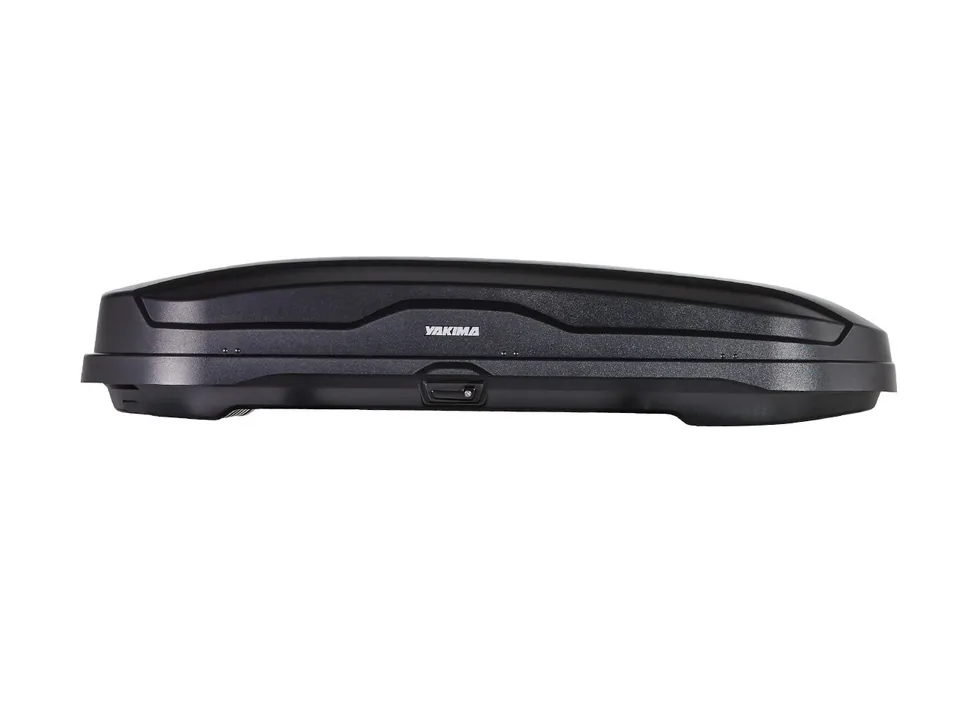
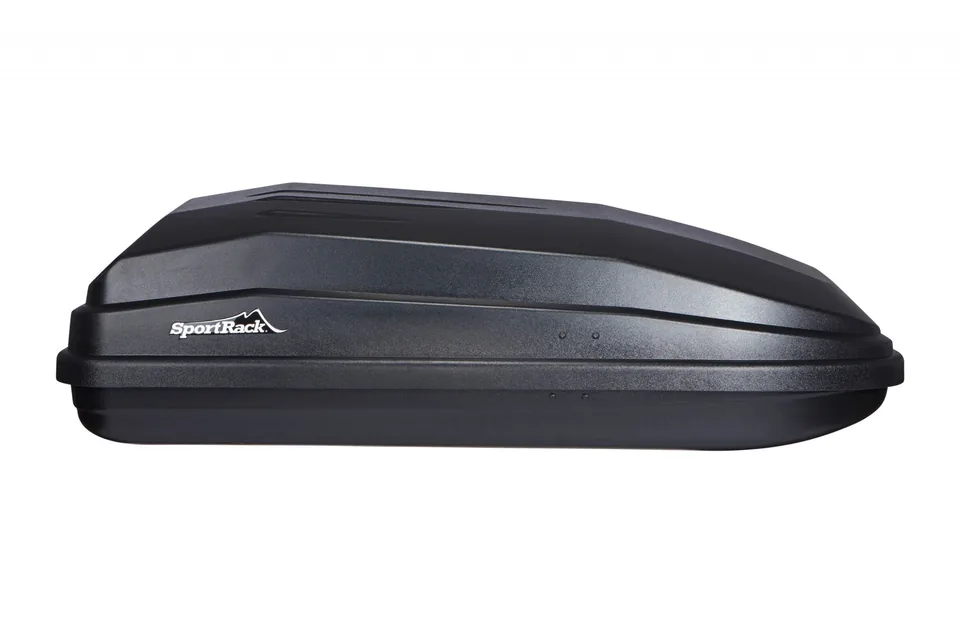
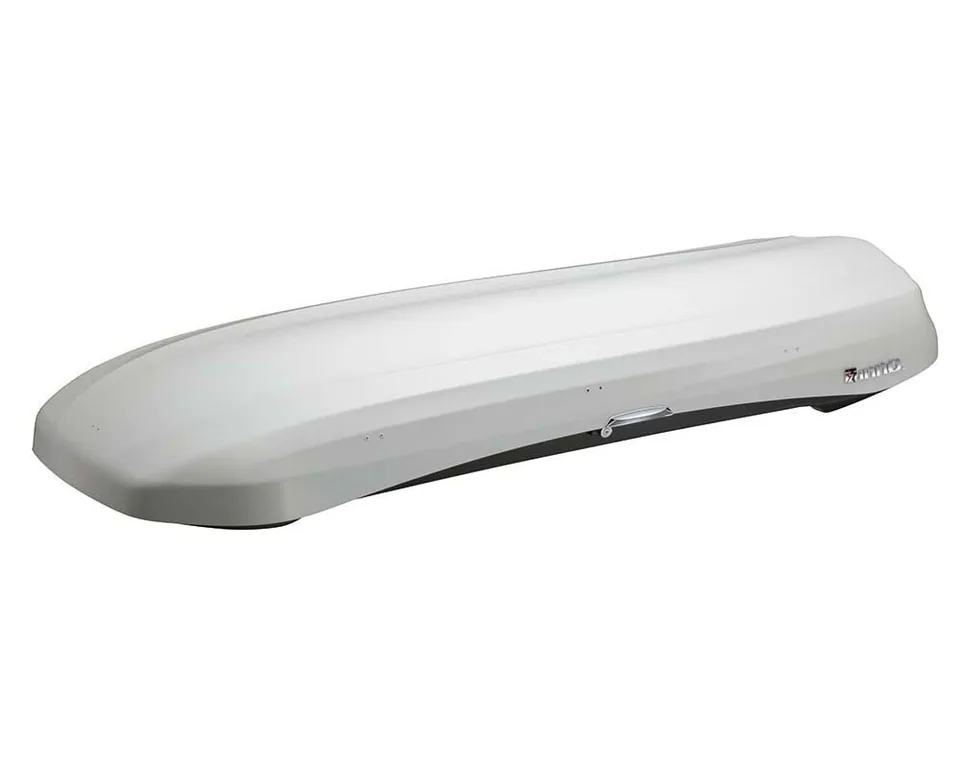
Garage height. Vehicle plus crossbars plus box. The INNO is 11 in tall, the Yakima 16.5 in, the Thule 17 in, the SportRack 19 in. This number sends more boxes back than any other.
Fuel economy. Consumer Reports measured it at 65 mph. A 2019 Nissan Altima went from 48 mpg bare to 43 mpg with an empty rack and 39 mpg with a rooftop carrier, a 19 percent drop; a 2019 RAV4 went from 41 to 40 to 35 mpg, 13 percent. Its advice is to take rack and box off when not in use, which is the storage question again.
Wind noise and weather. Independent tests rate the INNO the quietest of our picks and the Thule close behind; Switchback Travel lists road noise as the Yakima's main weakness, and BetterTrail found the SportRack noisier than sleeker shells. No hard box is waterproof (boxes are vented to stop mold), so electronics and down still ride in a duffel inside.
Which box for which pattern
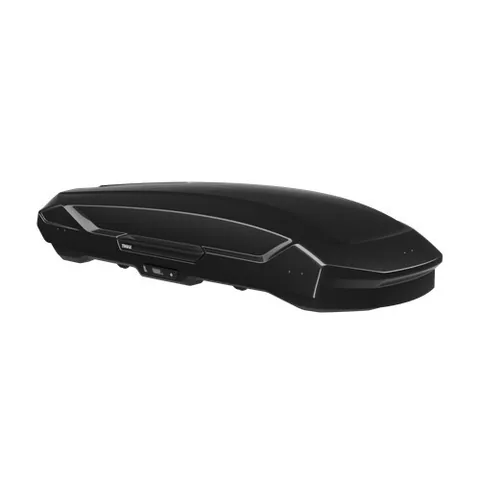
- Box stays on December through March, tall SUV, loaded every weekend: the Thule Motion 3 XL, premium class. Its one-hand SlideLock lid, torque-indicating PowerClick mounts and 200 cm ski length are the features you touch every trip; the glossy shell scuffs if it lives outside.
- Ski trips plus summer camping, box off between seasons: the Yakima SkyBox NX 18, mid class. Same 18 cu ft and dual-side opening as the Thule, skis to 195 cm, the widest crossbar spread and a textured finish that hides wear; keep its separate torque wrench in the glovebox.
- Garage door to clear, mostly skis, boards and soft bags: the INNO Wedge 660, mid class. Eleven inches tall, tool-free Memory Mount clamps and the quietest shell in the tests we read. The limit is 9.2 in of interior height; coolers and a full 60 L pack stay in the car.
- Two or three camping trips a year, light bulky gear, garage storage: the SportRack Vista XL, budget class. Eighteen cubic feet in a 63 in shell that fits a shorter roof and stores upright, with a wide rear opening. Not for skis, not for more than 100 lb, and SportRack's sheet says to keep at least 50 lb inside above 40 mph. It is for people who want a lock and a rigid shape without premium hardware; if a bag would do, a bag stores smaller.
The full cargo box list has the spec table and the models we left out.
Hitch carriers and baskets: heavy, dirty or no roof rails
A hitch carrier is a steel platform in the receiver. It carries what a roof should not: coolers full of ice, firewood, muddy camp gear, a generator, anything heavy enough that lifting it overhead is the problem. A CURT 60 x 24 in tray, for example, is rated for 500 lb, needs a 2 in receiver, has a folding shank and weighs about 70 lb itself. Loading is a waist-height job, and Car and Driver's back-to-back highway test on its Toyota Grand Highlander Hybrid returned 25 mpg with a Yakima EXO hitch carrier and 21 mpg with a Thule box on crossbars. It also solves the bare-roof problem: no crossbars, no fit kit, unchanged garage height.
The limits are the hitch, not the tray. etrailer's class guide puts Class I receivers (1-1/4 in) at 100 to 200 lb of tongue weight, Class II (1-1/4 in) at 200 to 525 lb and Class III (2 in) at 300 to 800 lb. The carrier's own weight counts against that figure, the vehicle's tongue rating overrides the hitch's if lower, and an extender halves the rating. A 500 lb tray on a small SUV with a 200 lb tongue limit is a 130 lb carrier once the tray is subtracted. An open basket keeps nothing dry or locked, so it is a cargo bag on a tray; an enclosed hitch box such as Yakima's GearLocker fixes that at a premium price class. And etrailer's specialists note that most states require brake lights on any accessory that blocks the tail lights, and suggest relocating the plate to the carrier, so budget for a light kit and a plate bracket.
Decision table
| Your pattern | Buy | Needs | Price class | Skip if |
|---|---|---|---|---|
| 1 to 2 trips a year, soft gear, no storage space | Soft cargo bag (door-clip type for bare roofs) | Door clips, or crossbars or raised rails | Budget | Skis, or loading more than a few times a year |
| 2 to 3 camping trips a year, bulky light gear, garage to store it | SportRack Vista XL | Crossbars 23 5/8 to 27 1/2 in apart | Budget | Skis, loads over 100 lb, tall SUV (rear opening) |
| Ski trips plus summer camping, box off between seasons | Yakima SkyBox NX 18 | Crossbars 24 to 40 in apart; 16.5 in of clearance | Mid | Tight garage; you want the smoothest lid |
| Box stays on all winter, tall SUV, loaded every weekend | Thule Motion 3 XL | Crossbars about 22 to 36 5/8 in apart; 17 in of clearance | Premium | Tight garage; scuffed gloss bothers you |
| Any frequency, must clear a garage door, skis and soft bags | INNO Wedge 660 | Crossbars 24 to 39 in apart; 11 in of clearance | Mid | Coolers, full 60 L packs, anything over 9.2 in tall |
| Heavy or dirty gear, coolers, no roof rails | Hitch tray or basket (enclosed hitch box for weather) | Receiver with enough tongue rating; light kit and plate bracket | Budget to mid (enclosed: premium) | Class I hitch, or gear that must stay dry and locked |
Who should skip all three
A bag plus a hitch tray covers many families for less than one premium box: soft gear up top twice a year, the cooler and the muddy things out back, nothing in the garage but a stuff sack and a folding tray.
If the trunk is full because of packing habits rather than gear, any roof carrier is the expensive fix. And if the car has no crossbars, no rails and no hitch, the cheapest honest path is a door-clip cargo bag for this trip and a decision about crossbars before the next one.
All 18 sources
- consumerreports.org /fuel-economy-efficiency/how-rooftop-carriers-affect-fuel-economy
- aol.com /rooftop-box-hitch-carrier-affected-130000660.html
- outdoorgearlab.com /topics/travel/best-cargo-box/buying-advice
- outdoorgearlab.com /reviews/travel/cargo-box/sportrack-vista-xl
- bettertrail.com /outdoor-gear/sportrack-vista-xl-roof-cargo-box-review
- etrailer.com /faq-hitchclasses.aspx
- etrailer.com /faq-how-much-weight-can-i-put-on-my-trailer-hitch.aspx
- etrailer.com /question-153390.html
- etrailer.com /question-539852.html
- etrailer.com /question-4365.html
- curtmfg.com /part/18153
- jegs.com /i/Rightline-Gear/822/100S30/10002/-1
- rackwarehouse.com /products/thule-868-outbound-car-roof-top-cargo-luggage-bag
- thule.com /en-us/cargo-carrier/car-top-carrier/thule-motion-3-xl-_-639850
- yakima.com /products/skybox-nx-xl
- assets.yakima.com /product/instructions/8007371/1
- usa.innoracks.com /product/brm660
- sportrack.com /product/vista-xl-cargo-box