01Start with the sizer you will actually meet
A carry-on only trip succeeds or fails at the gate, so look up your airline's limit before you look at bags. Delta, like the other big US carriers, publishes 22 x 14 x 9 in (56 x 35 x 23 cm) including handles, and on a full domestic flight the depth is what gets checked. Europe's low-cost carriers are stricter. Ryanair's free bag grew to 40 x 30 x 20 cm in 2025, and its paid Priority bag is 55 x 40 x 20 cm up to 10 kg. Wizz Air allows a free 40 x 30 x 20 cm bag and, with Priority, a 55 x 40 x 23 cm trolley bag up to 10 kg. easyJet includes a 45 x 36 x 20 cm under-seat bag and sells a large cabin bag of up to 56 x 45 x 25 cm.
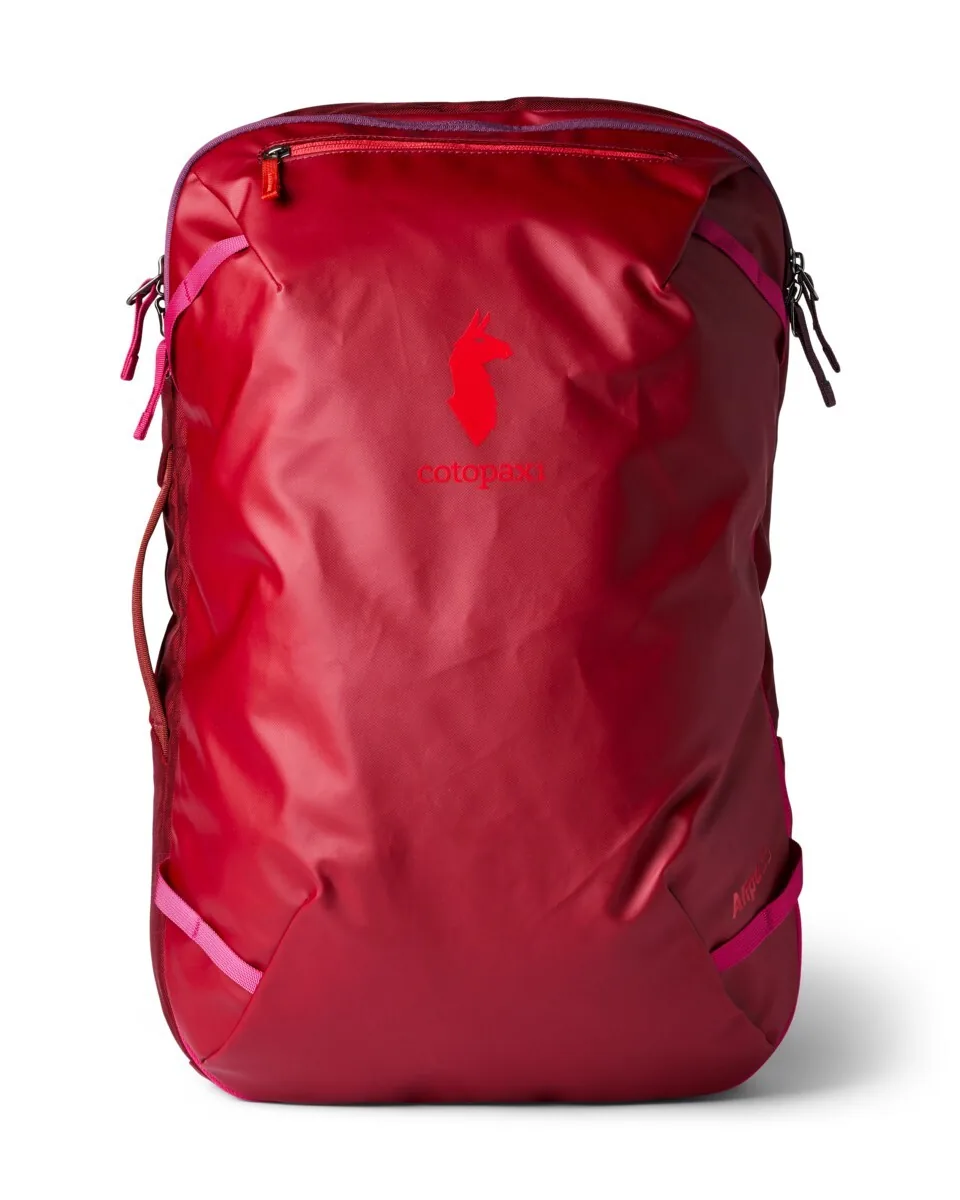
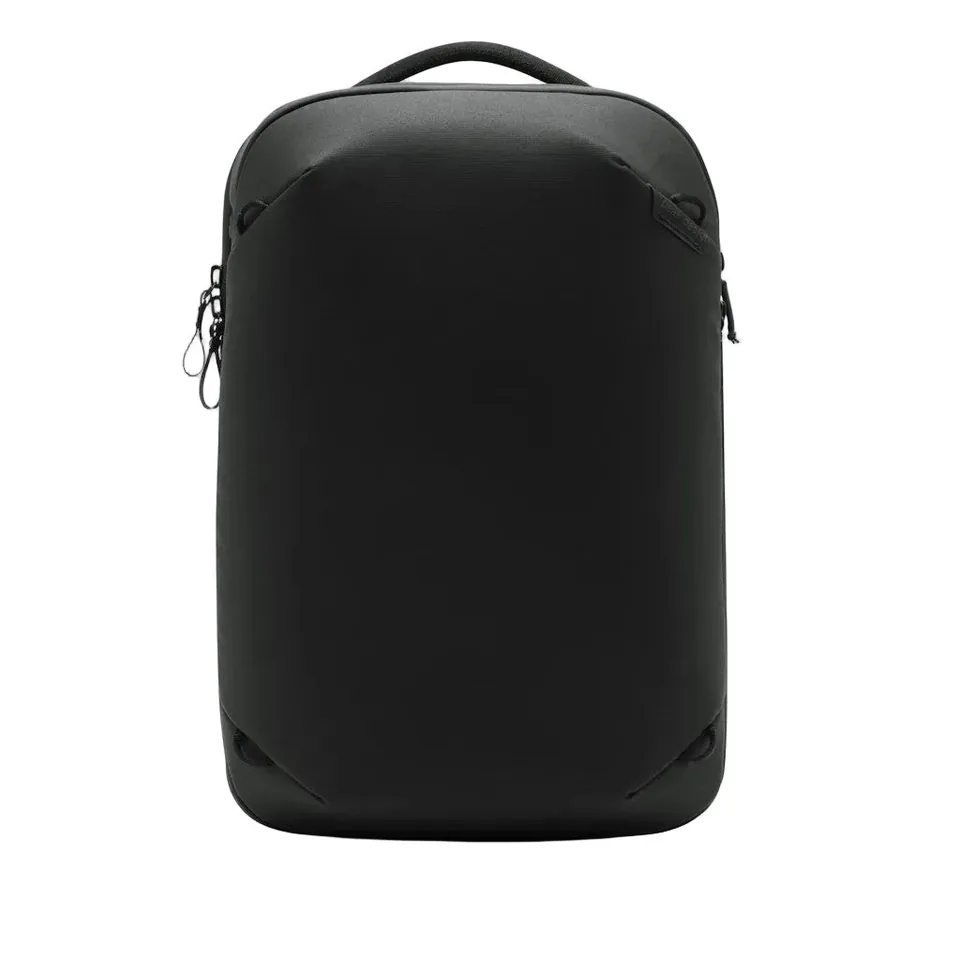
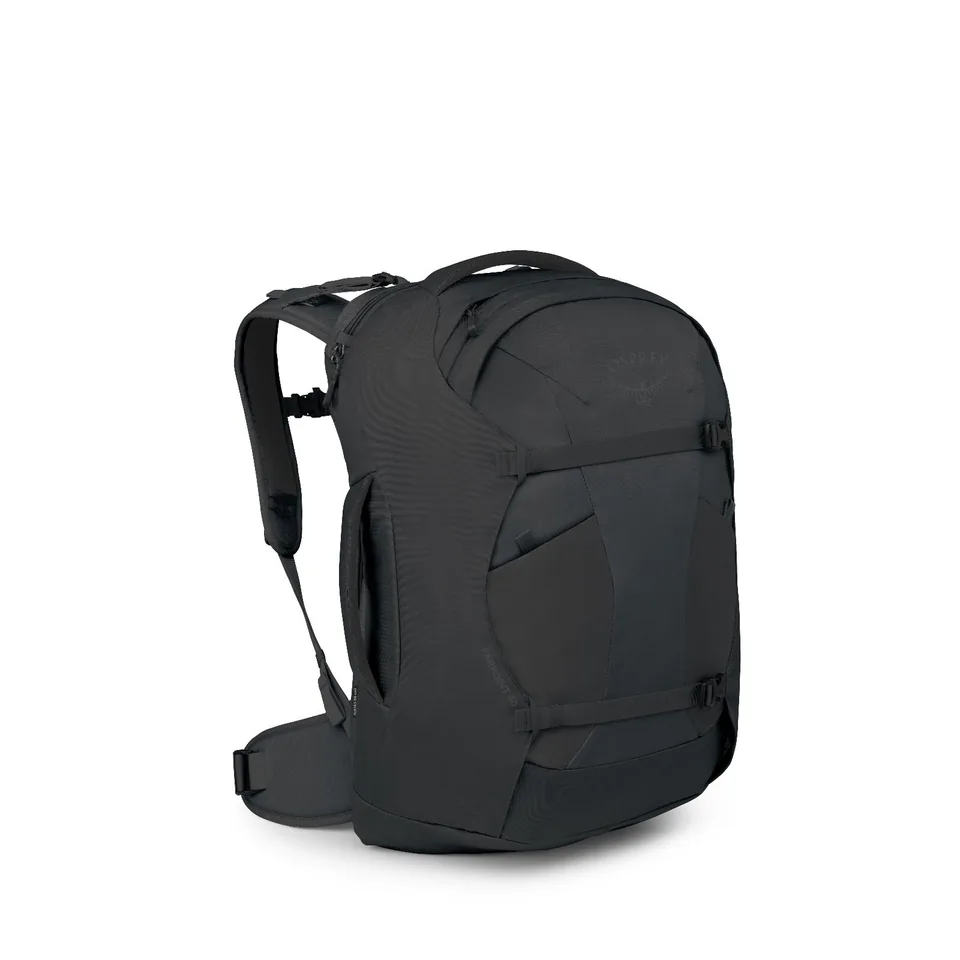
Here is how the makers' own dimensions line up, before any squeezing:
Soft packs give, which is their main advantage over a hard suitcase. A bag packed to about 80 percent with its compression straps cinched usually slides into a sizer its label says it misses; a stuffed one does not. None of these is small enough for the free under-seat bag on Ryanair, Wizz Air or easyJet, which calls for a 20 to 25 liter daypack.
02Pick a capacity, then mind the weight
For carry-on only travel, 35 to 40 liters covers a week of clothes if you plan one laundry stop. Forty-five liters is only useful if your airline allows the depth, and the Peak Design shows the trade: it is designed to fly at 35 L and expand after landing. Remember the empty weight too. Ryanair and Wizz Air cap their Priority bags at 10 kg, and full-service carriers such as Lufthansa publish 8 kg for the cabin bag. The Allpa at 2.96 lb (1.34 kg) leaves about 700 grams more for clothes than the Peak Design at 2.05 kg. For heavier or longer trips, a suitcase from our checked luggage list may simply be the better tool.
03Choose a clamshell opening
Every pick here opens like a suitcase, and that is deliberate. A top-loading hiking pack forces you to dig; a clamshell lets you see everything, pack in layers and close the lid over packing cubes. The layouts differ. The Allpa's zippered mesh sections do the job of packing cubes, the Peak Design splits its main compartment with a mesh divider and adds top and side access, and the Farpoint 40 and the Amazon Basics are mostly one open space, so budget for a set of cubes.
04Check where the laptop lives
A laptop sleeve against your back keeps weight close to your spine, and a separate opening means you can pull the laptop without unpacking. The Peak Design has padded sleeves for a 16 in laptop and a 10 in tablet, and the Farpoint's sleeve takes a 16 in machine. The Allpa's 15 in sleeve opens from the side, which Pack Hacker and OutdoorGearLab both found awkward: lay the bag down before opening it. GearJunkie's advice is to favor sleeves suspended off the bottom of the bag, so the laptop is not the first thing to hit the floor.
05Decide how far you will walk
If the bag goes from a taxi to a hotel lobby, the harness hardly matters. If you walk between stations, ferries and hostels, it matters most. A padded hip belt moves weight off your shoulders; OutdoorGearLab found the no-belt tomtoc T66 uncomfortable above about 20 lb and the Allpa less stable above about 25 lb. The Farpoint 40 goes further with a LightWire frame, a framesheet and torso adjustment. GearJunkie rated the previous version the best carry of any travel pack it tried, and the 2026 version keeps the LightWire frame and adjustable torso. Stowable straps help on the plane: all four picks can hide their shoulder straps so they do not snag in a bin or on a baggage belt.
If you would rather roll than carry, our carry-on luggage list compares four 21-inch suitcases on the same sizer arithmetic.