The one formula you need
Runtime in hours = (rated Wh x 0.85) / average device watts.
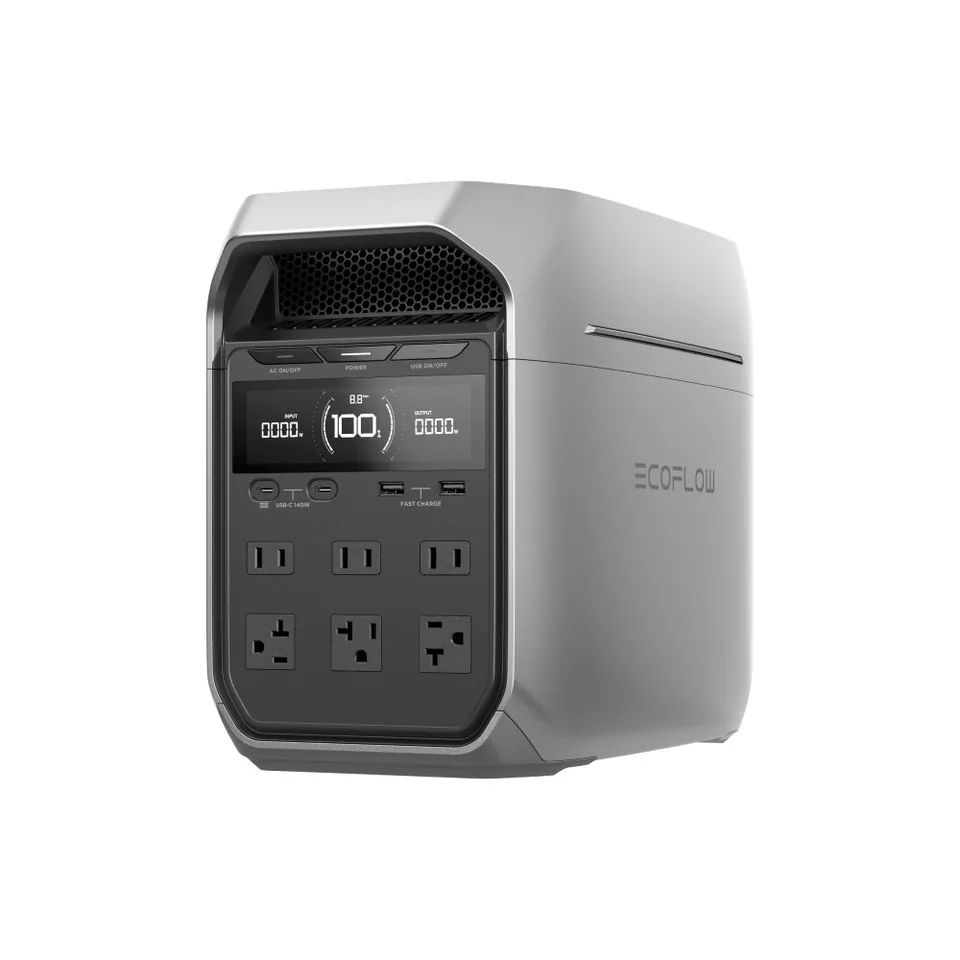
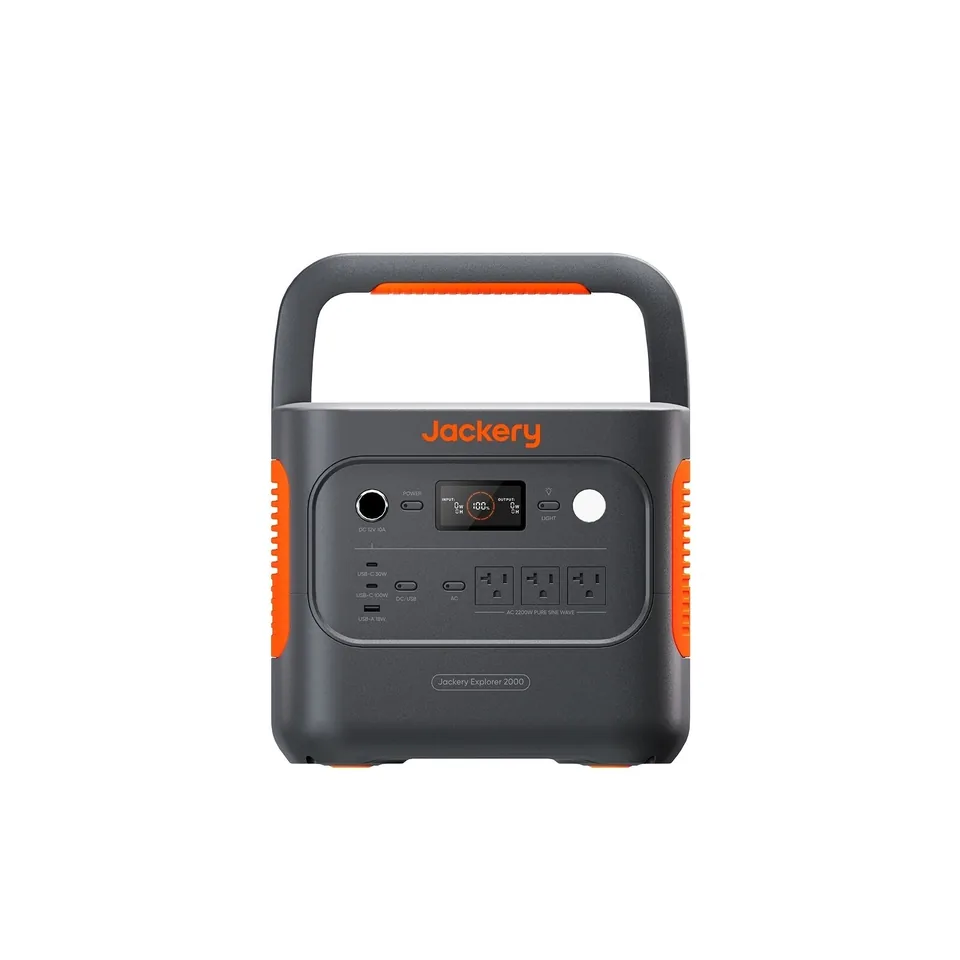
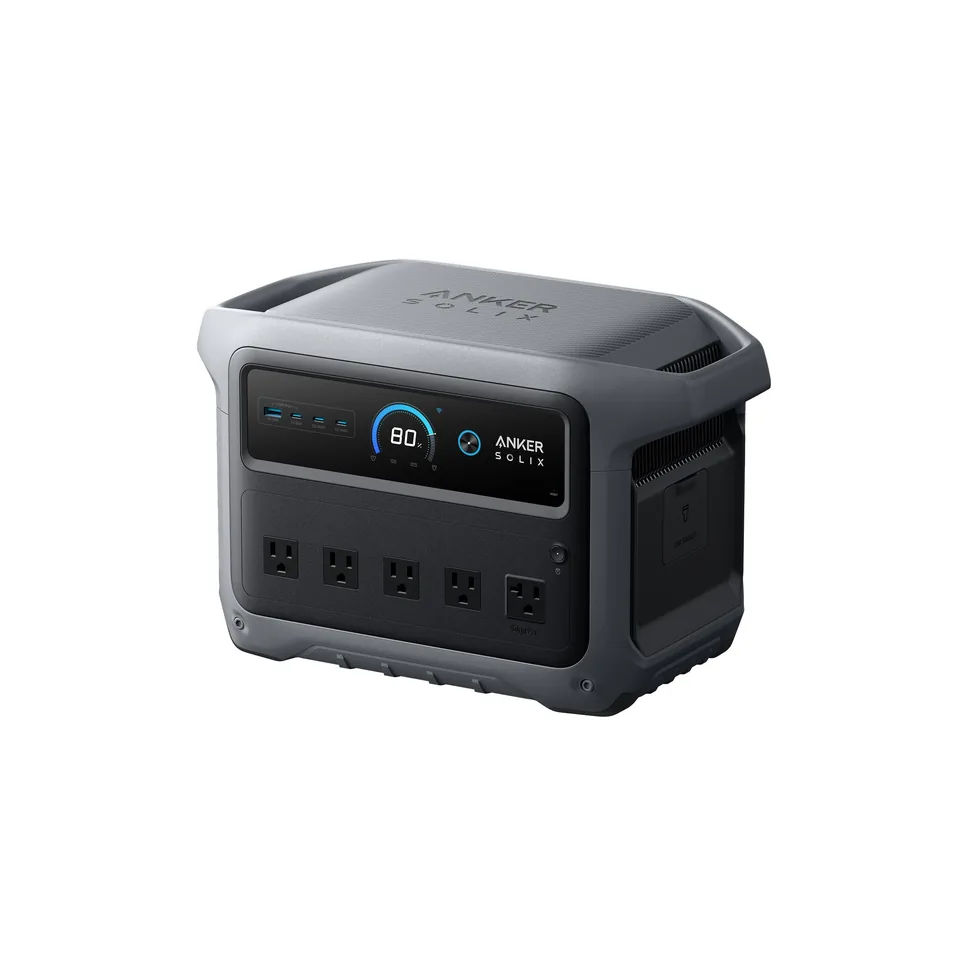
The 0.85 is the share of the pack that reaches your devices after the inverter and the battery management system's reserve take theirs. It is a planning figure, not a law: StorageReview drew 910 Wh from the 1,024 Wh EcoFlow DELTA 3 Plus, and OutdoorGearLab drew 890 Wh from the 1,024 Wh Anker SOLIX C1000 Gen 2 and 1,710 Wh from the 2,042 Wh Jackery Explorer 2000 v2. The two 1 kWh units beat 0.85 in the lab and the Jackery came in just under it at 84 percent, so 0.85 is a fair planning figure for the picks on our best portable power stations list, if a slightly generous one for the Jackery. Where a unit beats it, treat the extra as margin for a cold garage or a fridge door opened too often.
The second half of the formula is where people go wrong. A device's average watts are rarely the number on its label. A refrigerator's nameplate says several hundred watts, but its compressor cycles and the 24-hour average is closer to 60 W. A CPAP's power brick says 65 W and the blower alone draws under half that. Use the average draw for watt-hours and the peak draw for the next section.
| Pick | Rated Wh | Usable Wh at 0.85 | Measured usable Wh |
|---|---|---|---|
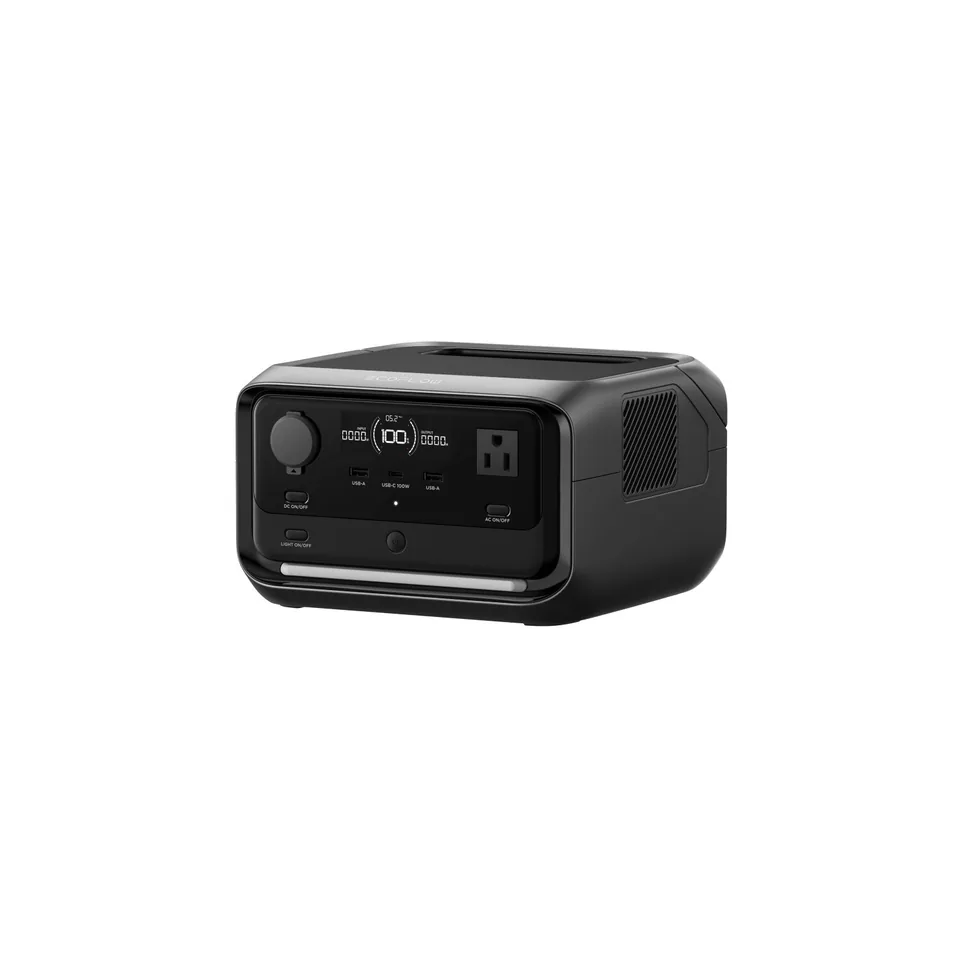
| EcoFlow RIVER 3 Plus | 286 | 243 | not lab-measured by our sources |
| Anker SOLIX C1000 Gen 2 | 1,024 | 870 | 890 (OutdoorGearLab) |
| EcoFlow DELTA 3 Plus | 1,024 | 870 | 910 (StorageReview) |
| Jackery Explorer 2000 v2 | 2,042 | 1,736 | 1,710 (OutdoorGearLab) |
Continuous watts and surge watts come first
Before the watt-hours, check that the station can start and hold the load at all. Continuous output is what the inverter supplies all day; surge or peak output is what it supplies for a fraction of a second. A compressor in a refrigerator or a 12 V cooler draws two to three times its running watts for an instant when it starts; a kettle or space heater draws its full 1,200 to 1,500 W the whole time it is on.
| Pick | Continuous | Surge or peak | What that rules in |
|---|---|---|---|
| RIVER 3 Plus | 600 W | 1,200 W | Router, CPAP, laptop, phones, 12 V cooler, LED lights |
| SOLIX C1000 Gen 2 | 2,000 W | 3,000 W | Adds full-size fridge, coffee maker, kettle, microwave, most tools |
| DELTA 3 Plus | 1,800 W | 3,600 W | Same as the Anker, with more headroom for compressor starts |
| Explorer 2000 v2 | 2,200 W | 4,400 W (maker); about 3,100 W brief surges seen by The Solar Lab | Adds a 1,500 W heater alongside the fridge, and twice the watt-hours of the 1 kWh units |
Two footnotes. The RIVER 3 Plus's 1,200 W X-Boost works by lowering the output voltage, which suits a bare heating element and, according to The Solar Lab, is a risk for laptops. And The Solar Lab logged the DELTA 3 Plus running hot under a sustained 1,573 W load, so treat heaters and kettles on any 1 kWh unit as short-burst loads.
Scenario 1: a full-size refrigerator
ENERGY STAR-class refrigerators land around 1.3 to 1.8 kWh per day, according to the certification data and Aurora Solar's summary of running figures; a 1,500 Wh day is about 62 W averaged over 24 hours, with 100 to 250 W while the compressor runs and a start-up surge that can pass 1,000 W on older fixed-speed compressors.
| Station | Usable Wh | Fridge at 62 W average | Verdict |
|---|---|---|---|
| RIVER 3 Plus | 243 | about 4 hours | Do not plan on it; the surge may trip the 600 W inverter |
| SOLIX C1000 Gen 2 | 870 | about 14 hours | Most of a day; Techaeris estimates up to half a day |
| DELTA 3 Plus | 870 | about 14 hours | Same; can double with one extra battery |
| Explorer 2000 v2 | 1,736 | about 28 hours | A day and change with margin |
A closed fridge holds temperature for hours on its own, so a 1 kWh station running it in stretches, door kept shut, covers a longer outage than the table suggests. The 1 kWh class is where fridge backup begins.
Scenario 2: a mini fridge or a 12 V cooler
A 4.4 cu ft compact refrigerator runs on roughly 0.6 to 0.85 kWh per day, per Aurora Solar's figures, which is about 30 W averaged. A 12 V compressor cooler is similar: OffGridBenchmark lists 40 to 60 W while running, with a duty cycle that brings the average down.
| Station | Usable Wh | Mini fridge at 30 W average |
|---|---|---|
| RIVER 3 Plus | 243 | about 8 hours |
| SOLIX C1000 Gen 2 / DELTA 3 Plus | 870 | about 29 hours |
| Explorer 2000 v2 | 1,736 | about 58 hours |
The RIVER 3 Plus can start a small compressor, so it carries a dorm fridge overnight or a car-camping cooler through a day. Run a cooler from the 12 V socket rather than the AC outlet; the DC path skips the inverter and buys a few extra hours.
Scenario 3: a CPAP, with and without the humidifier
Sleep Backup Lab puts a ResMed AirSense 10 or 11 at 20 to 30 W with the blower alone and 50 to 65 W with the heated humidifier and heated tube, and the Philips DreamStation in the same range. We size with 40 W dry, which covers higher pressures, and 65 W humidified.
| Station | Usable Wh | Dry, 40 W | Humidifier and heated tube, 65 W |
|---|---|---|---|
| RIVER 3 Plus | 243 | about 6 hours | under 4 hours |
| SOLIX C1000 Gen 2 / DELTA 3 Plus | 870 | about 22 hours (2 to 3 nights) | about 13 hours (1 to 2 nights) |
| Explorer 2000 v2 | 1,736 | about 43 hours | about 27 hours |
The humidifier costs more than half your nights. For camping or a short outage, turn the humidifier and heated tube off and the RIVER 3 Plus gets close to a full night; a long sleeper on high pressure will want the 1 kWh class. A DC cable from the machine's maker, run from the station's 12 V socket, avoids the inverter and adds roughly 10 percent to every figure above. The RIVER 3 Plus and DELTA 3 Plus both have a measured sub-10 ms UPS switchover, per StorageReview, so a CPAP plugged into either at home keeps running when the grid drops.
Scenario 4: phones and laptops on a camping weekend
Small electronics rarely justify a big station. Assume two phones at about 15 Wh each charged nightly, one laptop with a 60 Wh battery charged once a day, a 10 Wh camera battery, and a USB fan or lantern at 5 W for four hours. Through the USB-C ports, where the loss is closer to 10 percent than 15, that is about 135 Wh a day.
| Load | Per day | Three days |
|---|---|---|
| Two phones, one charge each | 30 Wh | 90 Wh |
| Laptop, one full charge | 60 Wh | 180 Wh |
| Camera battery | 10 Wh | 30 Wh |
| Fan or lantern, 4 hours | 20 Wh | 60 Wh |
| Total at the ports, with a 10 percent DC loss | 135 Wh | about 400 Wh |
The RIVER 3 Plus at 243 usable Wh covers two of those three days without a recharge, and all three if it sees a 200 W panel for an afternoon or rides in the car between sites. Add a 12 V cooler at about 600 Wh a day and the trip needs a 1 kWh unit; the DELTA 3 Plus, with its 1,000 W solar ceiling, is the one if panels are part of the plan.
Scenario 5: a 24-hour outage kit
Add up a realistic day for a household that wants to keep food cold, stay online, and keep one medical device running.
| Load | Average watts | Hours | Wh |
|---|---|---|---|
| Full-size refrigerator | 62 | 24 | 1,500 |
| Router and modem | 15 | 24 | 360 |
| CPAP, dry | 40 | 8 | 320 |
| Laptop | 50 | 4 | 200 |
| LED lamps | 20 | 6 | 120 |
| Two phones | 60 | ||
| Total at the outlets | about 2,560 Wh | ||
| Rated capacity needed at 0.85 | about 3,000 Wh |
No single pick on our list holds 3 kWh. The two honest answers are a 2 kWh unit topped up during the day, or a system built to grow. The Explorer 2000 v2 covers about 16 hours of that list, or the full 24 if the fridge runs in stretches, but its 400 W solar ceiling makes a daytime top-up slow: at least five hours of perfect sun by the arithmetic, and OutdoorGearLab estimates 10 to 12 hours from one 200 W panel. The DELTA 3 Plus with one DELTA 3 extra battery reaches about 2 kWh and can go to 5 kWh with the DELTA Pro 3 pack, the only path on the list to a multi-day kit. Drop the fridge and the list is about 1,060 Wh, which a 1 kWh station covers alone.
Why LFP cycle life matters more than the Wh number
All four picks use lithium iron phosphate (LFP) cells, rated by their makers at 3,000 cycles (RIVER 3 Plus) and 4,000 cycles (DELTA 3 Plus and C1000 Gen 2) before capacity falls to 80 percent of new; Jackery rates the Explorer 2000 v2 at 4,000 cycles to 70 percent. Anker's own comparison of the chemistries puts older NMC packs at a fraction of that, and Goal Zero rates its NMC Yeti 1500X at 500 cycles. A cycle rating is a capacity promise over time: a 1,024 Wh pack rated at 4,000 cycles to 80 percent still holds about 820 Wh after ten years of daily use. For a station that waits in a closet for the next storm it barely matters; for one cycled daily on solar, it decides how many years the sizing math stays true.
Recharging: wall, car and solar
The tables assume a full pack at the start. How fast you get back there decides whether a 1 kWh unit can do a 2 kWh job over a long outage.
| Pick | Wall input, maker's time | Car input | Solar ceiling |
|---|---|---|---|
| RIVER 3 Plus | 380 W, about 60 min | 220 W, about 3.3 h | 220 W |
| SOLIX C1000 Gen 2 | 1,600 W UltraFast, 49 min | 12 V socket, slow | 600 W, about 1.8 h in full sun |
| DELTA 3 Plus | 1,500 W, 56 min | Optional 800 W alternator charger, about 1.3 h | 1,000 W, about 70 min in full sun |
| Explorer 2000 v2 | Up to 1,800 W in Emergency Charging Mode per The Solar Lab, about 1.7 h (2.5 h measured by OutdoorGearLab) | Car adapter, about 24 h (maker) | 400 W, about 10 to 12 h on one 200 W panel per OutdoorGearLab |
Fast wall charging pulls close to everything a 15 A circuit supplies, so use an empty circuit and throttle the rate in the app if the fan bothers you. Car charging from a 12 V socket is a trickle for the big units; the DELTA 3 Plus's alternator accessory is the exception. Solar figures assume ideal sun; halve them for a cloudy day.
A recall-check habit before any purchase
Power stations are lithium packs the size of a suitcase, and they do get recalled. The CPSC announced a recall of the EcoFlow Delta Max 2000, model EFD310, on October 9, 2025, after reports of units catching fire; the remedy is a firmware update, and the model is off our list. In September 2025 the agency warned owners to stop using Aeiusny 400 W and 500 W stations sold on Amazon after 24 reports of fires and explosions. Before buying, especially used, search the model name at cpsc.gov, check the model plate against the notice, and register the unit with the maker so the next firmware fix reaches you. Stations with no brand page and no stated cell chemistry cannot be checked and are not worth the saving.
Which pick fits which scenario
| Scenario | Pick | Why |
|---|---|---|
| CPAP dry, router, laptop, a phone-and-camera weekend | EcoFlow RIVER 3 Plus | 243 usable Wh, 10.4 lb, measured 9 ms UPS |
| Full-size fridge for most of a day, CPAP with humidifier for two nights, camping with a cooler | EcoFlow DELTA 3 Plus | 870 usable Wh, 1,000 W solar, grows to 5 kWh |
| The same jobs with no plan to expand, and the lightest 1 kWh box | Anker SOLIX C1000 Gen 2 | 2,000 W, 24.9 lb, 49-minute refill |
| 24-hour outage kit with a fridge, or a heater and a fridge at once | Jackery Explorer 2000 v2 | 1,710 Wh measured, 2,200 W, 39.5 lb |
One thing a power station is not is a jump starter. Its 12 V socket powers accessories; it does not crank an engine. If a dead car battery is the problem, the packs on our best jump starters list are the right tool at a fraction of the weight.
All 16 sources
- offgridbenchmark.com /learn/watt-hours-explained
- sleepbackuplab.com /blog/cpap-power-consumption-watts
- aurorasolar.com /home-solar/blog/energy-101/how-many-watts-does-a-fridge-use
- energystar.gov /products/refrigerators
- storagereview.com /review/ecoflow-delta-3-plus-review
- storagereview.com /review/ecoflow-river-3-plus-review-compact-power-station-with-600w-output-ups-support
- outdoorgearlab.com /reviews/camping-and-hiking/power-station/jackery-explorer-2000-v2
- thesolarlab.com /review/jackery-explorer-2000-v2-review
- outdoorgearlab.com /reviews/camping-and-hiking/power-station/anker-solix-c1000-gen-2
- us.ecoflow.com /products/delta-3-plus-portable-power-station
- us.ecoflow.com /products/river-3-plus-portable-power-station
- ankersolix.com /products/c1000-gen2
- jackery.com /products/jackery-explorer-2000-v2-portable-power-station
- ankersolix.com /uk/blogs/solar-generator/lfp-vs-nmc-batteries
- cpsc.gov /content/Delta-Max-2000-Power-Station-Recall
- cpsc.gov /Warnings/2025/CPSC-Warns-Consumers-to-Immediately-Stop-Using-Aeiusny-Power-Stations-Due-to-Risk-of-Serious-Injury-or-Death-from-Fire-Sold-on-Amazon