01Night plate readability: sensor, HDR and polarizer
The footage that matters is from the incident you did not expect, often at night, in rain or into low sun. Three things decide whether a plate survives that: the sensor, HDR and a polarizing filter.
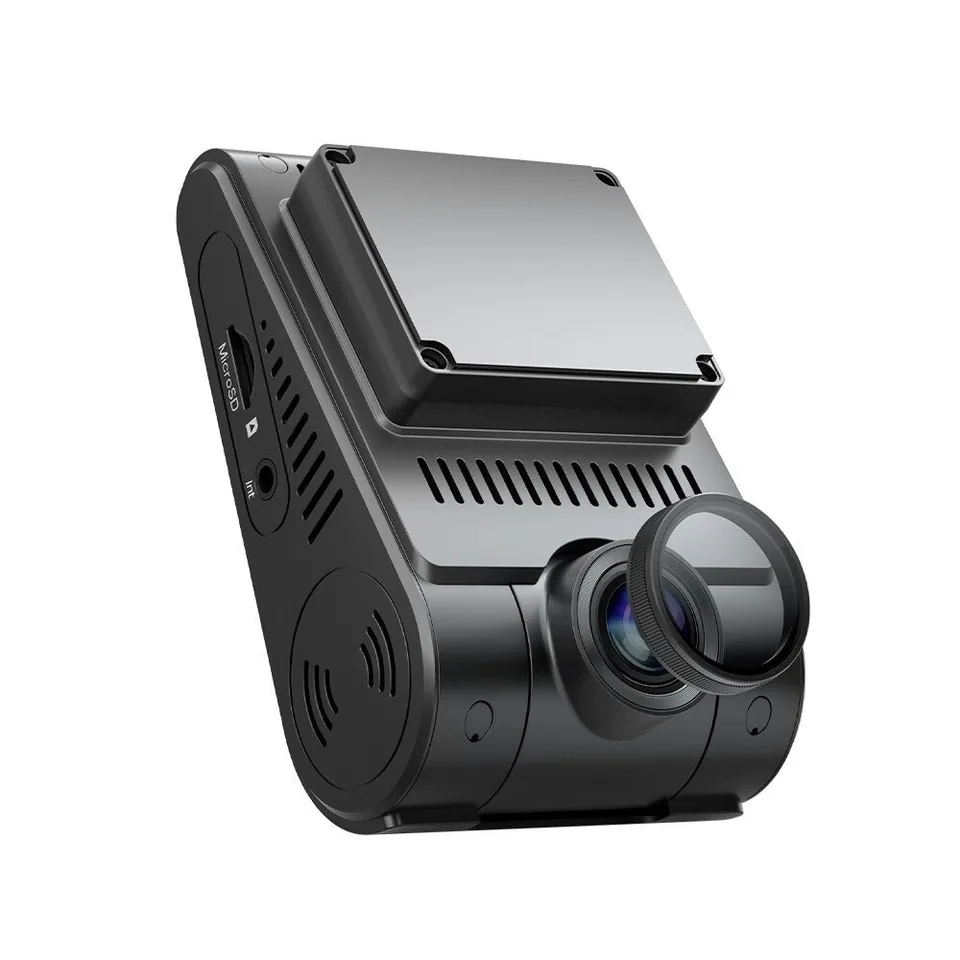
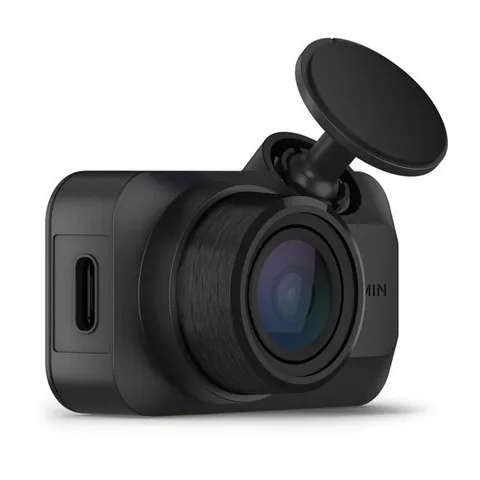
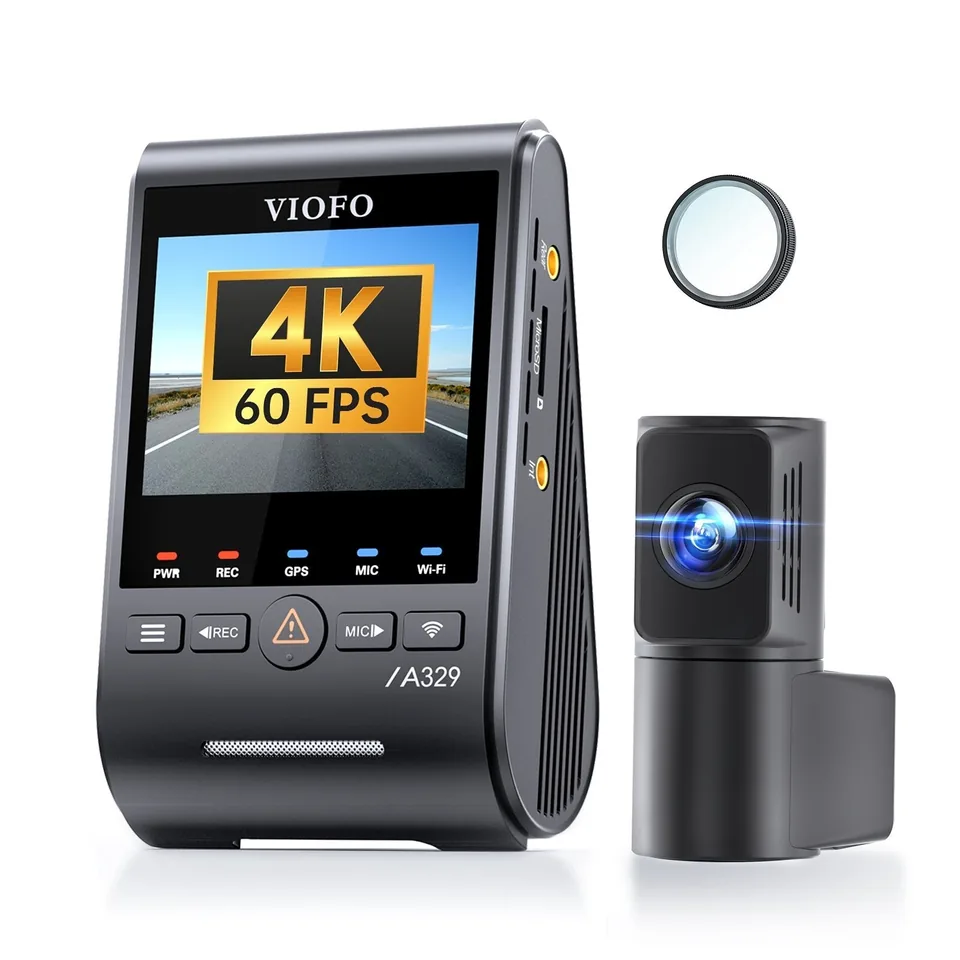
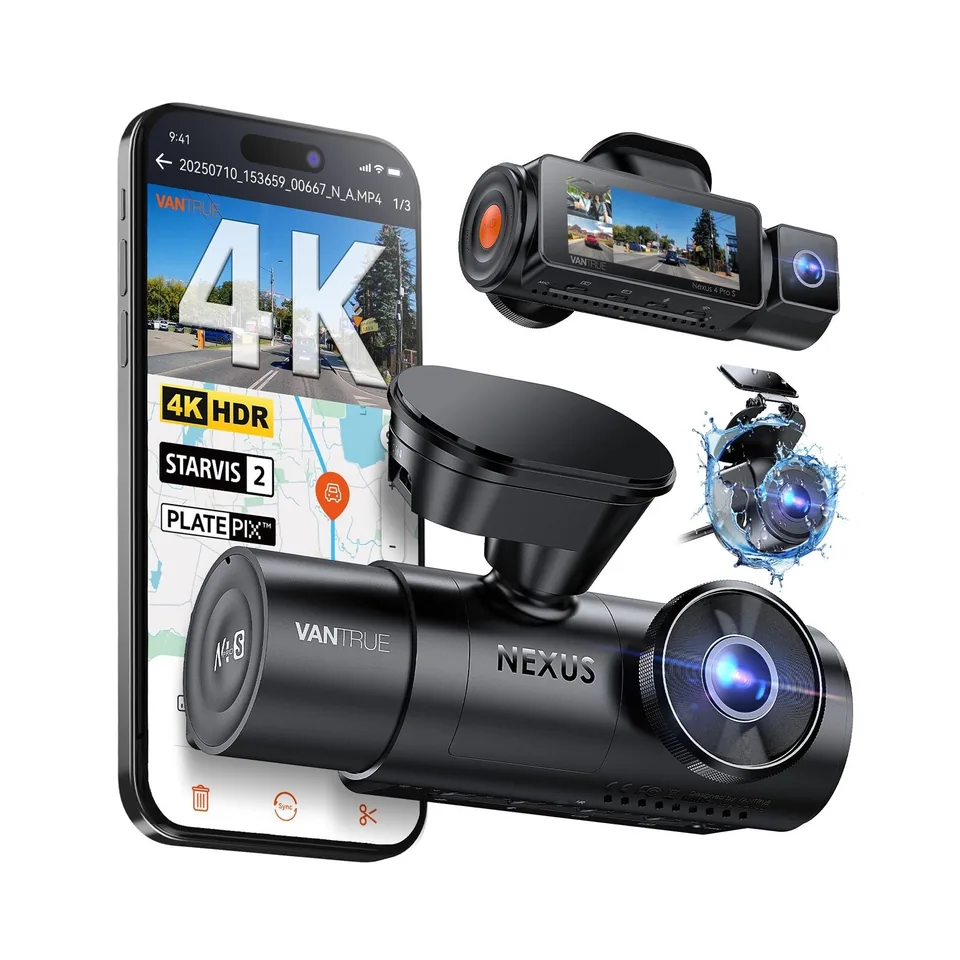
Sony's STARVIS 2 sensors are the current standard for low light. The IMX678 that fronts three of our four picks is an 8 MP, 1/1.8 in chip, and Dashboard Camera Reviews rated both the VIOFO A229 Pro and the Vantrue N4 Pro S fronts very good by day and by night, with plates legible without pausing. HDR blends two exposures so that headlight glare and the dark plate beneath it are both usable. A polarizer cuts the dashboard reflection off the windshield and, at night, the halos around headlights; VIOFO puts a CPL filter in the A229 Pro box, and Garmin builds one into the Dash Cam Mini 3 lens, where TechGearLab found it visibly reduced flare.
Resolution matters less than the sensor until it matters a lot. The Mini 3's 1080p shows what happened; TechGearLab could not read plates 30 to 40 feet away with it, and Dashboard Camera Reviews rated its night footage fair. The 4K cameras read plates at distances the Mini 3 cannot. The A329S's 60 fps helps with a plate crossing the frame at an intersection, but only in daylight, because HDR switches off above 30 fps.
02The rear camera is the weak channel on every pick
Every multi-channel camera here has the same shape of result: a strong front and a rear that fades at night. The A229 Pro, A329S and N4 Pro S rears all use the smaller 5 MP STARVIS 2 IMX675 behind a tinted rear window. Dashboard Camera Reviews scored the A229 Pro rear fair at night and the N4 Pro S rear poor, with no plates readable; DashCamTalk calls the A329S rear average after dark. If the car behind you is the main concern, the A229 Pro is the least bad option.
03Parking mode: what it draws is what it costs
A dash cam that records while parked has to be hardwired, and the kit has to cut power before the car battery drops too far. The draw in parking mode decides how long the camera stays armed.
The conventional approach, on the A229 Pro and the N4 Pro S, keeps the camera awake. Buffered event detection holds the last 10 or 15 seconds in memory and writes them plus the following 30 seconds when the G-sensor or motion detection triggers, so you get the car backing into you, not only the aftermath. The N4 Pro S lets you draw the motion zone on the frame, which cuts false triggers, and pick which channels record. Both also offer time-lapse and low-bitrate modes. The cost is a draw high enough that most kits cut power within a day.
The A329S adds a different approach. In its low-power impact mode the camera sleeps with the G-sensor listening, at a stated minimum of 0.24 W, or 20 mA at 12 V, and wakes to record within two seconds; Safe Drive Solutions measured about 29 mA with one channel and 39 mA with two on pre-production units. Hybrid mode starts in a full parking mode and drops to the low-power one on a timer or a voltage threshold, the latter needing VIOFO's HK6 kit. For street or airport parking, this is what separates the A329S from the rest.
The Mini 3's Parking Guard is the simplest: impact-triggered, a 15-second clip, Garmin's constant-power cable required, about 1.8 W of draw per Dashboard Camera Reviews, and a paid Vault subscription for alerts and cloud upload.
04Storage and memory cards
Dash cams loop, and the loop length is card size divided by bitrate. The A229 Pro records about 60 Mbps front and 24 Mbps rear, roughly 13 hours on a 512 GB card per Dashboard Camera Reviews. The A329S runs about 65 and 27 Mbps and accepts a 512 GB card or an external SSD up to 4 TB, which VIOFO rates at 46 days of three hours' driving. The N4 Pro S takes a 1 TB card and uses H.265, more than 37 hours of three-channel footage per the same reviewer. The Mini 3 takes up to 512 GB and ships without a card.
Two rules from the reviews: buy a high-endurance card from the camera maker or SanDisk's Max Endurance line, because Dash Cam Guys and Dashboard Camera Reviews both name cheap and counterfeit cards as the leading cause of corrupted footage; and on the A329S the SSD replaces the card rather than backing it up.
05App, Wi-Fi and the screen question
Getting a clip off the camera is where most dash cams fail their owners. TechGearLab rated Garmin's app the most polished of any maker, with a connection that establishes itself and clips that land in the phone's camera roll. Dashboard Camera Reviews calls VIOFO's app well designed; Dash Cam Guys calls it practical rather than polished. The A329S's Wi-Fi 6 moves clips at a stated 30 MB/s, which matters when a minute of 4K 60 is close to half a gigabyte.
The Vantrue's 3.19 in display is the easiest to aim and check; the two VIOFOs have 2.4 in screens; the Garmin has none. A screen makes setup faster and the camera bigger. If you want the camera to disappear behind the mirror, the Mini 3 is the only pick that does; the A229 Pro at 99 x 58 x 46 mm is, in Dash Cam Guys' words, not a hidden camera.
06Two channels or three
Buy three channels if you carry passengers for money. The N4 Pro S's cabin camera uses a STARVIS 2 IMX662 with four infrared LEDs and a privacy mode that limits retention, which is why it is our rideshare pick; Dashboard Camera Reviews found the infrared insufficient for a clear cabin at night, so treat it as a record of events rather than a sharp image. For everyone else, a two-channel camera gives better rear night footage for less money.