Garmin · Dash cam
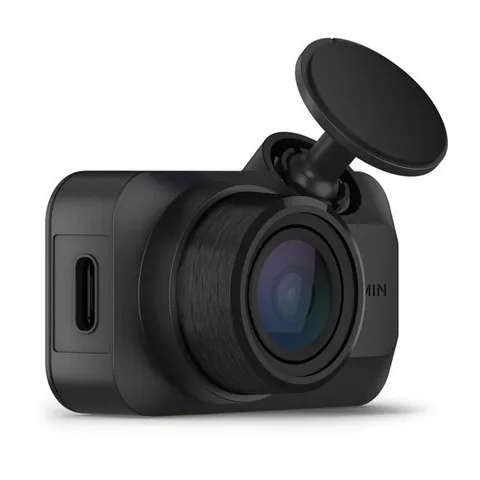
Garmin Dash Cam Mini 3
The dash cam for people who want one on the glass and never want to see it. It records usable 1080p HDR footage with a built-in polarizer and the easiest setup in the category, but it cannot read plates at the distances a 4K camera can.
Ad disclosure: we earn a commission on Amazon links, at no cost to you. It never decides our picks. How this works
Photos
Pick it ifDrivers who want a discreet front camera, a five-minute install and an app that just works, and who accept 1080p
Skip it ifAnyone who needs rear coverage, a screen, GPS logging or plates readable at 30 feet and beyond
At a glance
What stands out
- 2.05 x 1.24 x 0.8 in and 30 g, which Dashboard Camera Reviews called the smallest dash cam it had seen as of early 2025
- Built-in polarizing lens as standard; TechGearLab found it visibly reduced headlight halos and flare at night
- TechGearLab installed it in about five minutes and rated the app the most polished of any dash cam maker it tested
- Clips save straight to the phone's camera roll with metadata, and the Wi-Fi link connects nearly automatically
- Supercapacitor power and a -4 to 140 F operating range
Flaws to know
- 1080p: TechGearLab could not read plates 30 to 40 feet away, and Dashboard Camera Reviews rated night footage only fair
- No screen, no GPS and no rear camera option on the unit itself
- Parking Guard is impact-triggered only and needs Garmin's constant-power cable; alerts and cloud upload need a paid Vault subscription
- TechGearLab measured the field of view at about 119 degrees against the 140 advertised, and found audio muffled
Key specs
- Camera
- 1920 x 1080 at 30 fps with HDR, 140-degree field of view (about 119 degrees measured by TechGearLab), H.264
- Lens filter
- Built-in Garmin Clarity polarizer
- Screen and GPS
- None; controlled by two buttons, voice or the Garmin Drive app
- Connectivity
- 2.4 GHz Wi-Fi; voice control in English, German, French, Spanish, Italian and Swedish
- Parking mode
- Parking Guard, impact-triggered, 15-second clips; requires Garmin Constant Power Cable; about 1.8 W draw (Dashboard Camera Reviews)
- Storage
- microSD up to 512 GB, card not included
- Power
- Supercapacitor, no battery; USB power cable in the box
- Operating temperature
- -4 to 140 F (-20 to 60 C), per Garmin's manual
- Size and weight
- 2.05 x 1.24 x 0.8 in, 30 g (1.06 oz)
Who it's for
The Dash Cam Mini 3 is the budget pick on our best dash cams list, but it is really the pick for a specific person: someone who wants a camera on the windshield, wants nobody to notice it, and does not want to learn a menu system. It is 2.05 in wide, 0.8 in deep and weighs 30 g, about the size of a car key. There is no screen. Two buttons save a clip and mute the microphone; everything else happens by voice or in the Garmin Drive app.
Digital Camera World's conclusion is that if a very small dash cam is what you are shopping for, this is the one to get, and our reading of the other tests agrees. It is not the pick for anyone who needs the footage to hold up at distance, and that is the trade-off to understand before buying.
What stands out
Size and setup. TechGearLab had it installed in about five minutes, which it estimated at three to four times faster than the other cameras it tested. The mount is an adhesive stem with a small dot on the glass, and the camera pops off the stem so you can take it with you. Dashboard Camera Reviews measured it at 30 percent less volume than the Mini 2 it replaces, now in a landscape layout that tucks behind a mirror more easily.
The polarizer. The Mini 3 has a polarizing filter built into the lens, something most brands sell as a separate accessory. TechGearLab found that halos and flare around headlights were noticeably reduced compared with cameras that lack one, which matters more at night than the resolution number suggests. It also cuts the dashboard reflection that turns daytime footage milky.
The app. TechGearLab rated the Garmin Drive app the most polished it had used from any dash cam maker, with a Wi-Fi connection that establishes itself almost automatically and clips that land in the phone's camera roll with embedded metadata rather than in a proprietary viewer. For a camera with no screen, that is the interface, and it is a good one.
Voice control and durability. Voice commands save a clip or toggle audio in six languages including English and Swedish. A supercapacitor replaces a battery, and Garmin's manual rates the camera from -4 to 140 F, the same range Vantrue quotes for the much larger N4 Pro S.
Where it falls short
Resolution. This is a 1080p camera, and the tests are consistent about what that means. TechGearLab could not read plates 30 to 40 feet ahead by day and put the practical limit around 25 feet. Dashboard Camera Reviews scored daytime footage good to very good, with plates readable on nearby cars, and night footage only fair, with plates readable only when stopped or crawling. HDR and the polarizer help; they do not add pixels. A 4K STARVIS 2 camera like the VIOFO A229 Pro reads plates in conditions where the Mini 3 cannot.
Field of view. TechGearLab measured about 119 degrees against the advertised 140, and then argued that 119 is about right, since wider lenses distort and shrink plates. We agree with the second point, but the spec is optimistic.
Parking mode. Parking Guard triggers on impact only, records a 15-second clip, and needs Garmin's constant-power cable, which is sold separately. Dashboard Camera Reviews puts the draw at about 1.8 W, higher than the low-power standby modes on the VIOFO A329S. Push alerts, cloud upload and live view require a paid Vault subscription and an internet connection, and the free tier is gone. Without the cable and the subscription, this is a driving camera only.
What is missing. No GPS, so no speed or location in the footage. No screen, so no checking the frame without a phone. No rear camera. Audio is muffled with a lot of road noise in TechGearLab's clips. And Dashboard Camera Reviews notes an above-average share of negative owner reports for both the Mini 2 and Mini 3, which we cannot verify independently but would not ignore.
How it compares
The VIOFO A229 Pro 2CH is the camera to buy instead if the footage matters more than the footprint. It adds a 4K front, a 2K rear, GPS, a screen and a buffered parking mode, at roughly three times the volume on the glass and with a hardwire job for parking. The Mini 3 wins on install time, app quality and invisibility, and on nothing else.
Among small single-channel cameras, the Mini 3's real rivals are budget dual-channel units. TechGearLab ranked the Rove R2-4K Dual and RedTiger F7NP above the Mini 3 in its 2026 test, on the strength of rear cameras and higher resolution. We have not found a second independent test of either, so they are not on our list, but the ranking tells you what you give up for the Garmin's size.
Verdict
Buy the Mini 3 if a tiny, screenless camera with a first-rate app and a built-in polarizer is worth more to you than plate readability at distance. Skip it if you want a rear view, a screen, GPS, or a parking mode that costs nothing extra to run. It is the best of its kind; its kind is narrow.
All 4 sources
- digitalcameraworld.com /reviews/garmin-dash-cam-mini-3-review
- techgearlab.com /reviews/cool-gadgets/dash-cam/garmin-mini-3
- dashboardcamerareviews.com /garmin-mini-3
- www8.garmin.com /manuals/webhelp/GUID-8B5CEA4F-A508-4496-9EDE-B6D1669C09BE/EN-US/GUID-3CC8DB18-20A6-479A-B94F-310492FEB2C5.html
The other picks in Dash Cams
Compare all 4-
Best overall
VIOFO A229 Pro 2CH 4K + 2K HDR Dash Cam
Check price on Amazon(paid link) for VIOFO A229 Pro 2CH 4K + 2K HDR Dash Cam (opens in a new tab) -
Best premium
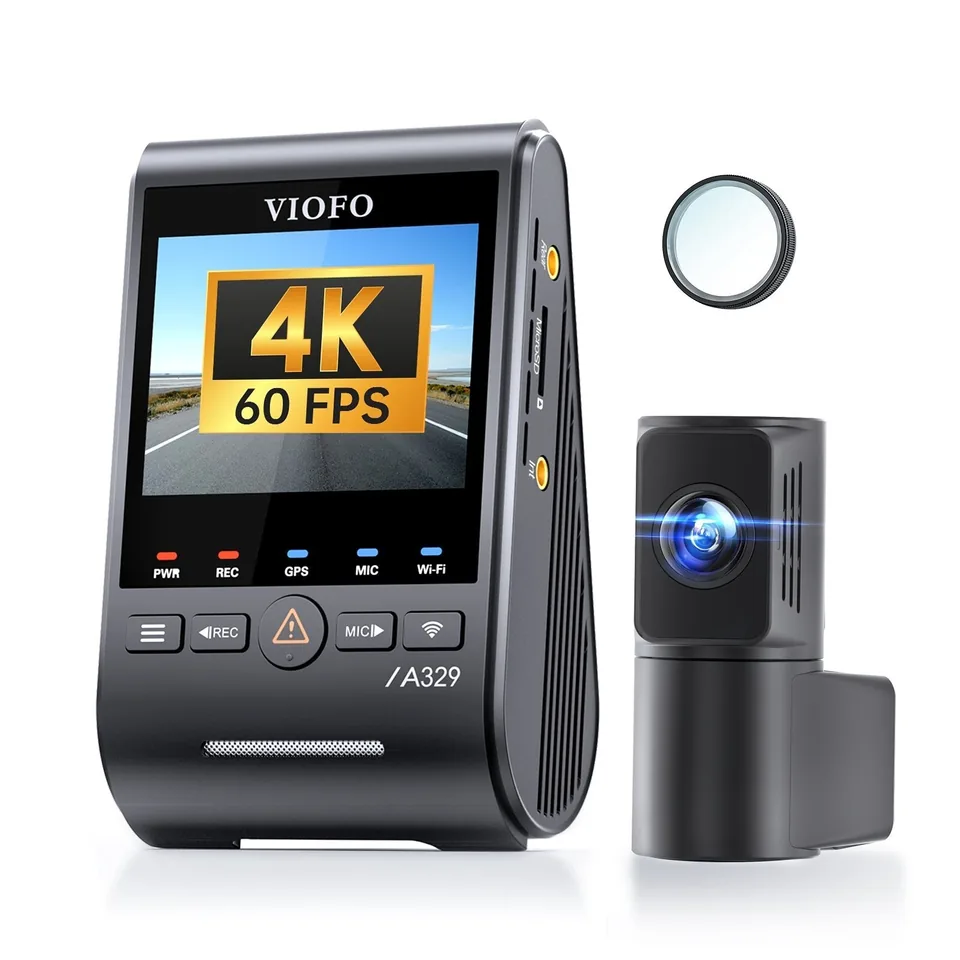
VIOFO A329S 2CH 4K 60fps + 2K HDR Dash Cam
Check price on Amazon(paid link) for VIOFO A329S 2CH 4K 60fps + 2K HDR Dash Cam (opens in a new tab) -
Best for rideshare
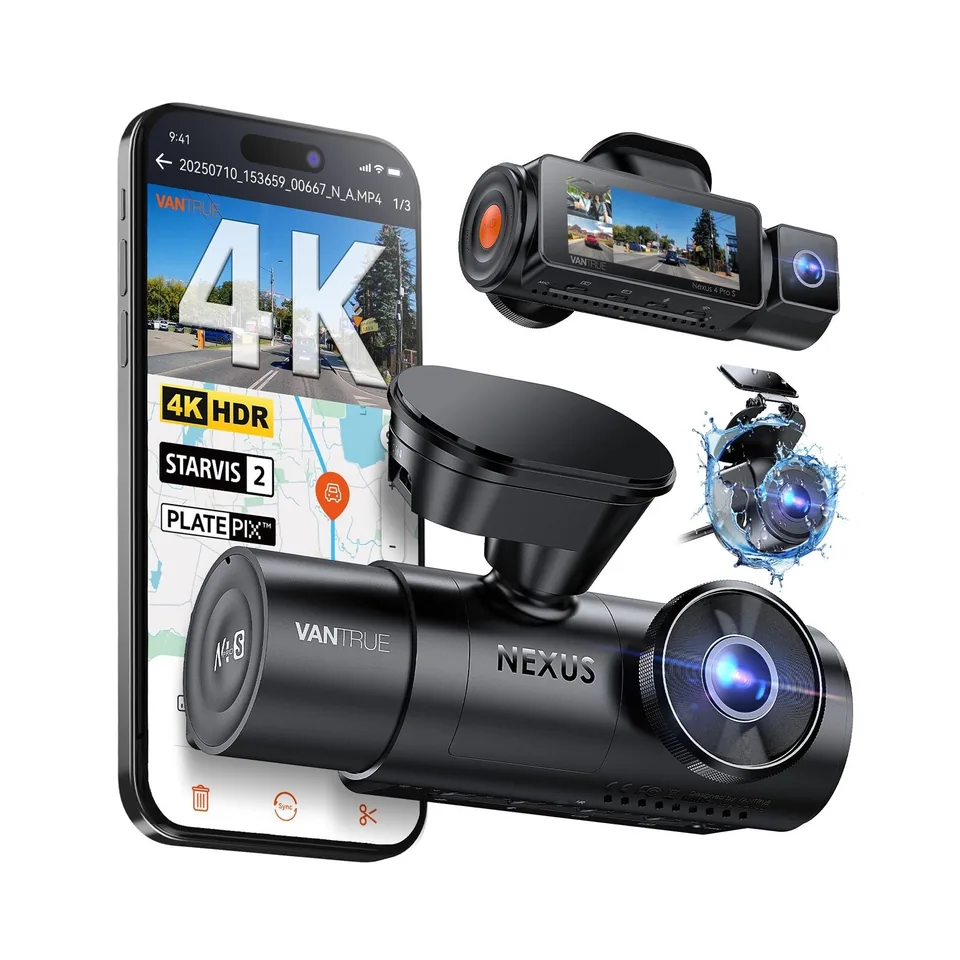
Vantrue N4 Pro S 4K 3-Channel Dash Cam
Check price on Amazon(paid link) for Vantrue N4 Pro S 4K 3-Channel Dash Cam (opens in a new tab)