VIOFO · Dash cam
VIOFO A329S 2CH 4K 60fps + 2K HDR Dash Cam
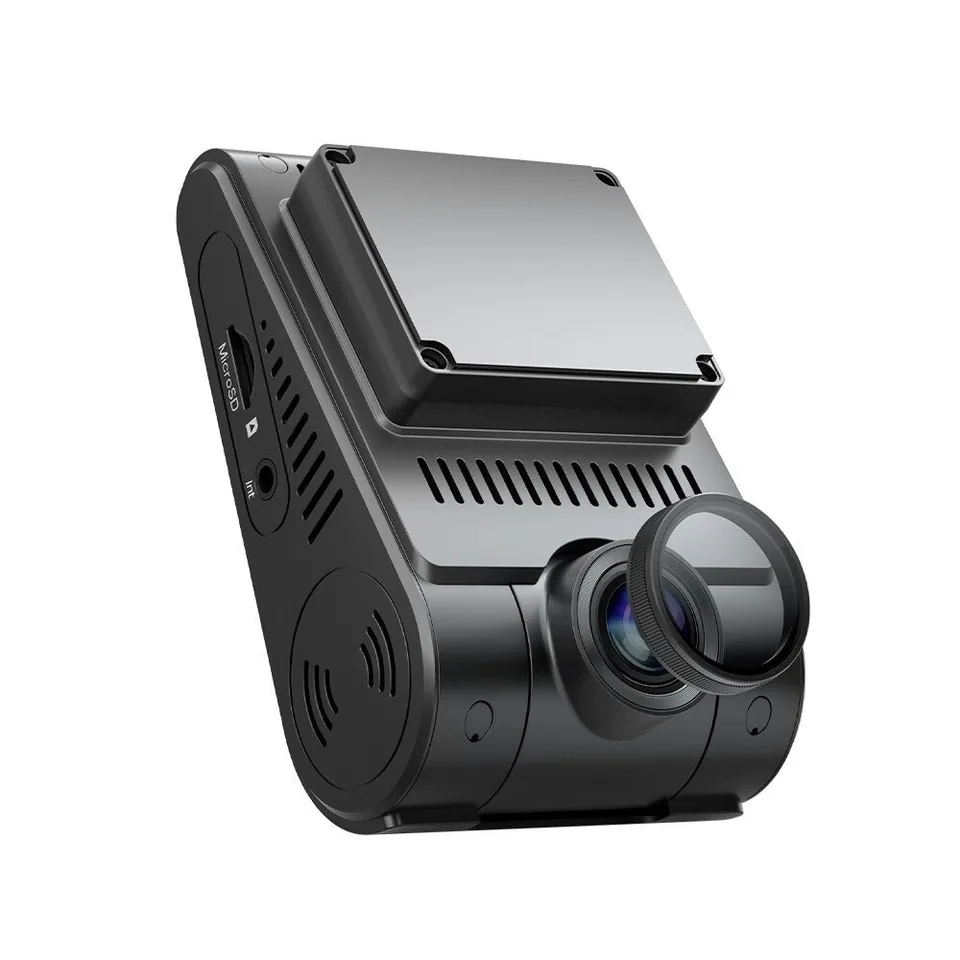
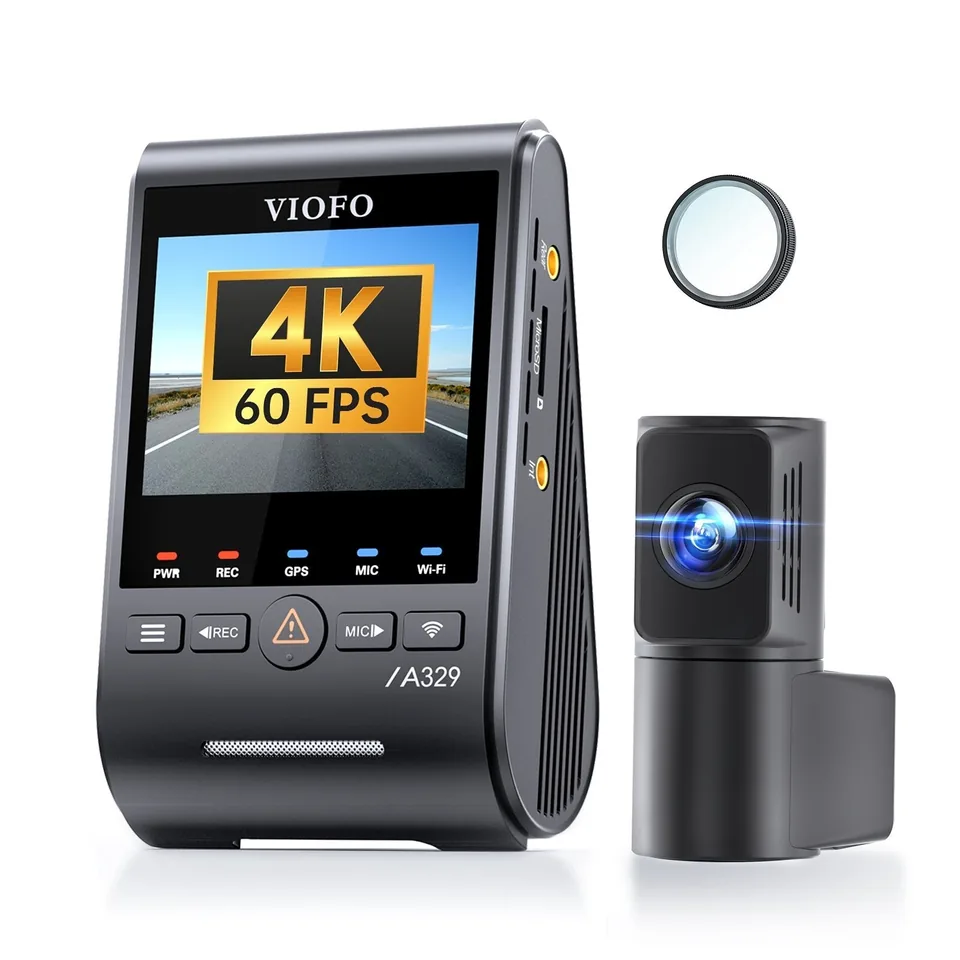
VIOFO's 2026 flagship, and the dash cam to buy if you park on the street for days or want 60 fps for fast-moving plates. Most drivers will be as well served by the cheaper A229 Pro; the A329S earns its premium on parking draw and storage.
Ad disclosure: we earn a commission on Amazon links, at no cost to you. It never decides our picks. How this works
Photos
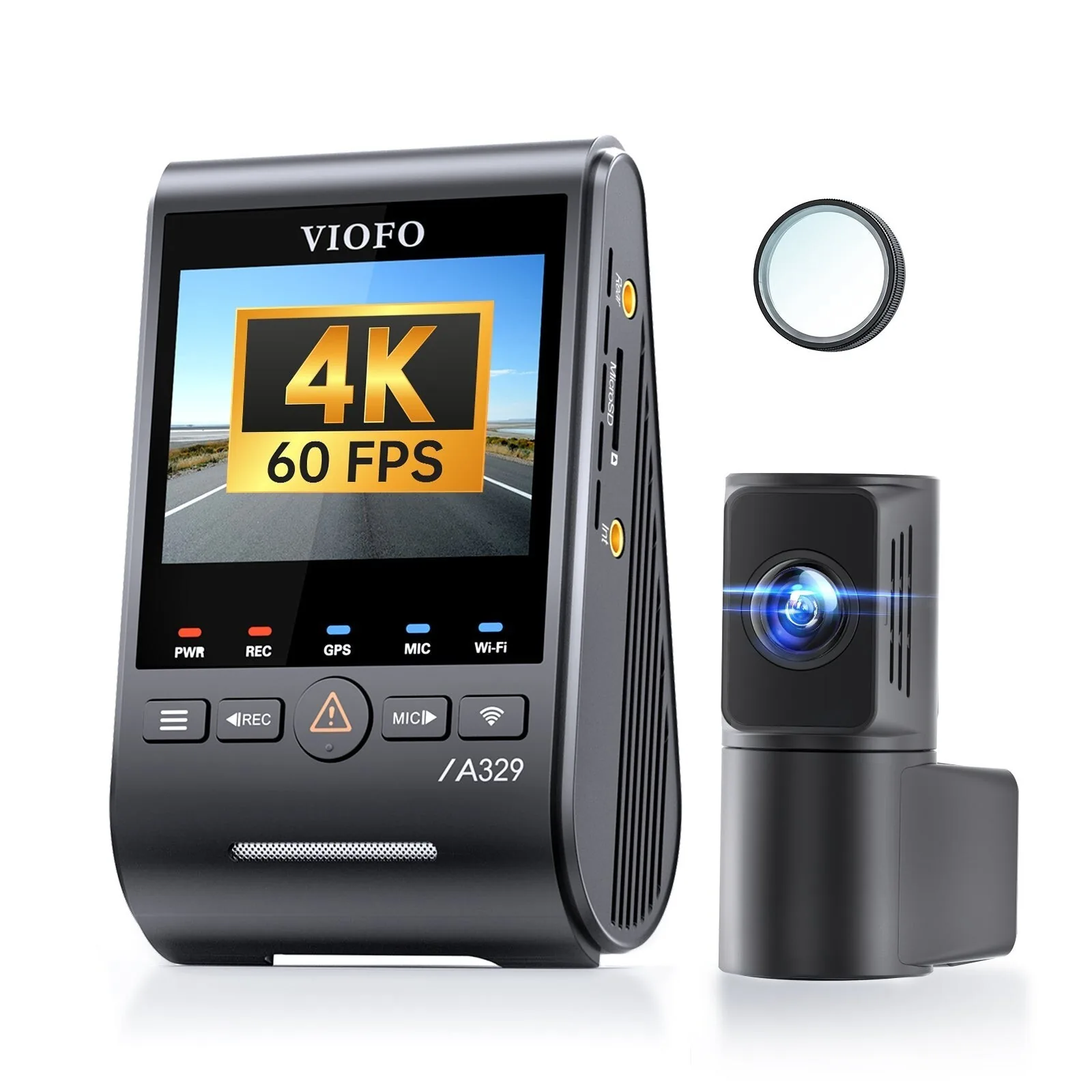
Pick it ifStreet parkers who want impact detection that lasts, rideshare and fleet drivers who need weeks of footage, and anyone who wants the smoothest 4K available
Skip it ifDrivers who mainly park in a garage and never fill a 256 GB card; the A229 Pro gives them the same sensors for less
At a glance
What stands out
- 4K at 60 fps from the Sony STARVIS 2 IMX678, or 4K 30 fps with HDR, at about 65 Mbps
- Low-power impact mode idles at a stated minimum of 0.24 W (20 mA at 12 V) and wakes to record within 2 seconds
- Records to microSD up to 512 GB or an external SSD up to 4 TB; VIOFO quotes 46 days of 3 hours a day on a 4 TB drive
- Wi-Fi 6 on both bands with transfers of about 30 MB/s to a phone and USB 3.0 at up to 55 MB/s to a computer
- Quad-mode GPS, Bluetooth, voice control, supercapacitor and a 24-month warranty with registration
Flaws to know
- DashCamTalk rated the rear camera only average at night
- You record to SSD or to microSD, not both, and DashCamTalk reports some owners hit SSD compatibility problems
- Hybrid parking needs the HK6 hardwire kit for voltage-based switching; the HK4 handles cut-off time only
- HDR is limited to 4K 30 fps; at 60 fps it is off
Key specs
- Front camera
- Sony STARVIS 2 IMX678, 1/1.8 in, 8 MP, 140-degree field of view; 3840 x 2160 at 60 fps, or 30 fps with HDR; about 65 Mbps
- Rear camera
- Sony STARVIS 2 IMX675, 1/2.8 in, 5 MP, 160-degree field of view; 2560 x 1440 at 30 fps with HDR; about 27 Mbps
- Processor
- Novatek NT98530
- Screen
- 2.4 in, non-touch
- Connectivity
- Wi-Fi 6 (2.4 and 5 GHz), Bluetooth, quad-mode GPS (GPS, BeiDou, Galileo, GLONASS), USB 3.0, voice control
- Parking modes
- Time-lapse, low bitrate, buffered event detection (15 s pre-roll), low-power impact mode, hybrid mode that switches between them on a timer or voltage; HK4 or HK6 hardwire kit required
- Parking standby draw
- Minimum 0.24 W / 20 mA at 12 V in low-power impact mode (manufacturer); Safe Drive Solutions measured about 29 mA on one channel and 39 mA on two
- Storage
- microSD up to 512 GB or external SSD up to 4 TB (one or the other)
- Power
- Supercapacitor
Who it's for
The A329S 2CH is the premium pick on our best dash cams list, and the reason is not the 4K 60 fps headline. It is the parking mode. Older parking modes, including the buffered one on VIOFO's own A229 Pro, keep the camera awake and recording, which draws enough current that a hardwire kit has to cut power after a day or so to protect the car battery. The A329S adds a low-power impact mode that puts the camera to sleep with only the G-sensor listening. VIOFO states a minimum standby draw of 0.24 W, or 20 mA at 12 V, and a wake-up within two seconds of an impact. Safe Drive Solutions measured about 29 mA with one camera attached and 39 mA with two on pre-production units. At those numbers a healthy car battery can sit for days, not hours, with the camera still armed.
That makes the A329S the choice for people who park on the street, at an airport or at a job site for long stretches, and for anyone who fills memory cards and can attach an SSD instead.
What stands out
Frame rate and bitrate. The front IMX678 is the same 1/1.8 in, 8 MP STARVIS 2 sensor as the A229 Pro, but the Novatek NT98530 processor lets it record 4K at 60 fps, which no other dash cam in our research offers. DashCamTalk puts the bitrate around 65 Mbps front and 27 Mbps rear. Sixty frames per second halves motion blur on a plate crossing the frame at an intersection, and DashCamTalk rates daytime clarity as excellent. The catch is that HDR is available at 4K 30 fps only; at 60 fps it switches off. For night driving, most owners will want the 30 fps HDR mode, which is the same mode the A229 Pro runs.
Hybrid parking. The camera can start in a normal parking mode, such as buffered event detection with a 15-second pre-roll or time-lapse, and then switch itself to low-power impact mode once a timer runs out or the battery voltage drops to a threshold. The switch on voltage requires the HK6 hardwire kit; the older HK4 supports the timer only. A 2026 firmware update lets the pre-impact buffer save to the SSD as well.
Storage. Up to 512 GB of microSD, or an external SSD of up to 4 TB over USB 3.0. VIOFO's table for 4K 60 plus 2K 30 runs from six days on a 512 GB drive to 46 days on 4 TB, at three hours of driving a day. DashCamTalk notes the SSD can be hidden elsewhere in the car, so a thief who grabs the camera does not get the evidence.
Transfers. Wi-Fi 6 moves clips to a phone at a stated peak of 30 MB/s, and USB 3.0 to a computer at up to 55 MB/s; DashCamTalk found the link noticeably faster than earlier VIOFO models, which matters when a minute of 4K 60 is close to half a gigabyte.
Where it falls short
Rear at night. DashCamTalk rates the rear camera as only average after dark. It is the same IMX675 sensor as the A229 Pro rear, and the same limitation applies: a 1/2.8 in chip behind a tinted rear window is not going to match the front. If rear plates at night are the priority, no camera we found solves it, this one included.
SSD caveats. Recording goes to the SSD or the card, never both, so the card is not a backup. DashCamTalk also notes that some owners have had problems with specific SSD models, and advises checking VIOFO's compatibility notes before buying a drive. This is a new feature in a category that has run on microSD for fifteen years, and it behaves like one.
Practicalities. The 2.4 in screen is not a touchscreen, the camera does not swivel to film a traffic stop through the side window, and DashCamTalk found the voice commands of limited use. With the HK4 kit you lose the voltage-based switching that makes hybrid mode set-and-forget.
How it compares
Against the VIOFO A229 Pro 2CH, the A329S shares the sensor family, the screen size and the buffered parking logic, and adds 60 fps, Wi-Fi 6, USB 3.0, SSD support and the low-power impact mode. If you park in a garage and drive an hour a day, the A229 Pro is the same camera in the ways that matter. If you street-park or need weeks of retention, the A329S is the one that will still be armed on day three.
Against the Vantrue N4 Pro S, the A329S has no cabin camera in 2CH form, a smaller screen and a bigger storage ceiling. VIOFO sells a 3CH version of the A329S with a 210-degree infrared interior camera on the same IMX675 sensor; the Vantrue's advantage is a larger screen, an IP67 rear camera that can mount outside a truck, and four parking modes with adjustable motion zones, while the VIOFO's is the low-power standby draw and the SSD.
Head to head: vs VIOFO A229 Pro 2CH 4K + 2K HDR Dash Cam
| Feature | VIOFO A329S 2CH 4K 60fps + 2K HDR Dash Cam | VIOFO A229 Pro 2CH 4K + 2K HDR Dash Cam |
|---|---|---|
| Front camera | VIOFO A329S, better: IMX678, 4K at 60 fps, or 30 fps with HDR, about 65 Mbps Better | VIOFO A229 Pro: IMX678, 4K at 30 fps with HDR, about 60 Mbps |
| Rear camera | VIOFO A329S: IMX675, 2K at 30 fps with HDR | VIOFO A229 Pro: IMX675, 2K at 30 fps with HDR |
| HDR | VIOFO A329S: 4K 30 fps only; off at 60 fps, AutoHDR switches by light | VIOFO A229 Pro: On at 4K 30 fps front and 2K rear |
| Wi-Fi | VIOFO A329S, better: Wi-Fi 6, dual-band, stated peak about 30 MB/s Better | VIOFO A229 Pro: Dual-band 2.4 and 5 GHz (Wi-Fi 5 class) |
| Storage | VIOFO A329S, better: microSD up to 512 GB or external SSD up to 4 TB (one or the other) Better | VIOFO A229 Pro: microSD up to 512 GB |
| Parking standby draw | VIOFO A329S, better: 0.24 W / 20 mA stated minimum in low-power impact mode; 29 to 39 mA measured by Safe Drive Solutions Better | VIOFO A229 Pro: About 6 W in awake modes (VIOFO figure for the 3CH), roughly half an amp at 12 V |
| CPL filter | VIOFO A329S: Front CPL in the box; rear CPL-600 sold separately | VIOFO A229 Pro: Front CPL in the box |
| Hardwire kit | VIOFO A329S: HK4 for basic modes and cut-off time; HK6 needed for hybrid mode and voltage cut-off | VIOFO A229 Pro, better: HK4 covers every parking mode, with voltage cut-off Better |
| Price class | VIOFO A329S: Premium, a modest step up in 2CH form | VIOFO A229 Pro, better: Upper mid-range Better |
Bottom line. Buy the A229 Pro 2CH if you park in a garage or driveway, drive during the day and want the best night plates for the money; it is the same sensor pair with a simpler accessory story. Buy the A329S 2CH if you leave the car on the street for days, need weeks of footage on an SSD, or want 60 fps for plates crossing the frame at speed. The parking draw, not the frame rate, is what earns the premium.
Verdict
Buy the A329S 2CH if parking protection that lasts for days, or storage that lasts for weeks, is the reason you are buying a dash cam. Skip it if neither applies; the A229 Pro records the same HDR footage at 30 fps and leaves money for a high-endurance card and a hardwire kit.
All 5 sources
- viofo.com /products/viofo-a329s-2ch-4k-60fps-2k-hdr-dash-cam-with-sony-starvis-2-sensor
- viofo.com /blogs/viofo-car-dash-camera-guide-faq-and-news/highlights-of-the-a329s-series-what-are-low-power-impact-mode-hybrid-parking-mode
- dashcamtalk.com /viofo-a329s
- safedrivesolutions.com /blogs/resources/viofo-a329s-fast-impact-detection-low-power-parking-mode
- viofo.com /blogs/viofo-car-dash-camera-guide-faq-and-news/the-best-dash-cams-of-2026-our-top-picks-and-whats-new
The other picks in Dash Cams
Compare all 4-
Best overall
VIOFO A229 Pro 2CH 4K + 2K HDR Dash Cam
Check price on Amazon(paid link) for VIOFO A229 Pro 2CH 4K + 2K HDR Dash Cam (opens in a new tab) -
Best budget
Garmin Dash Cam Mini 3
Check price on Amazon(paid link) for Garmin Dash Cam Mini 3 (opens in a new tab) -
Best for rideshare
Vantrue N4 Pro S 4K 3-Channel Dash Cam
Check price on Amazon(paid link) for Vantrue N4 Pro S 4K 3-Channel Dash Cam (opens in a new tab)