Baratza · Coffee grinder
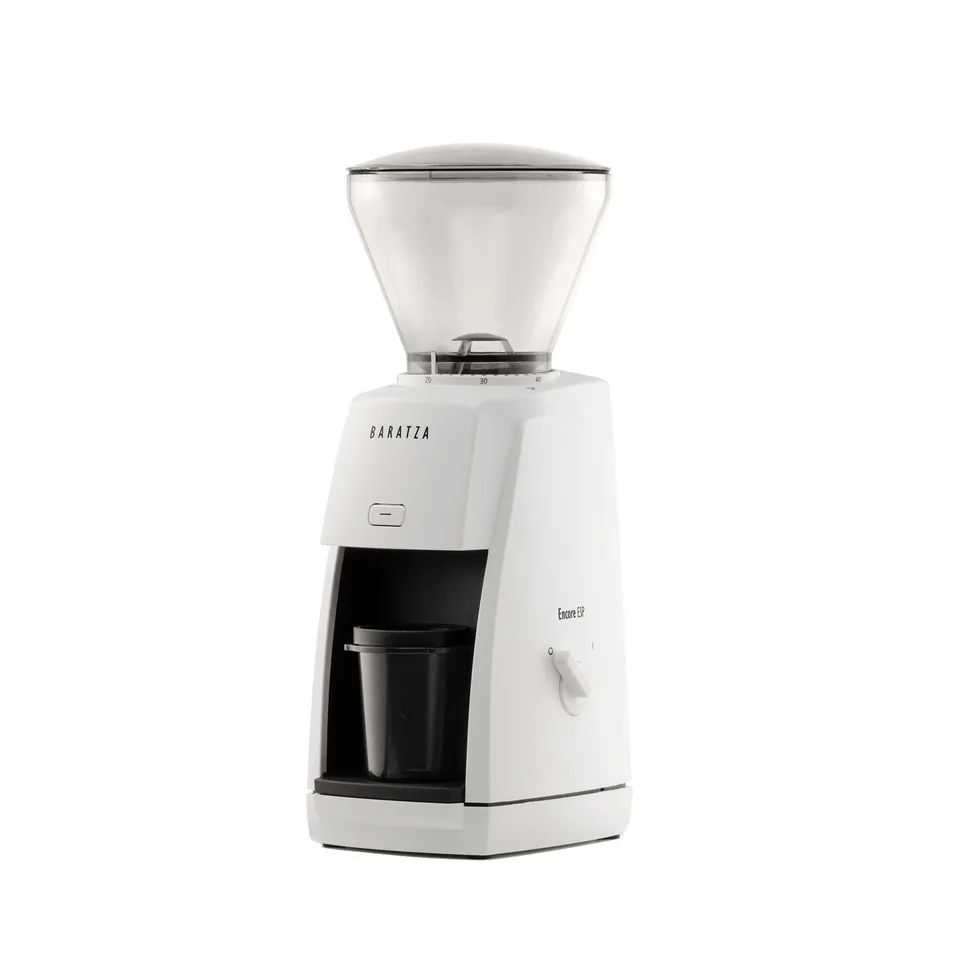
Baratza Encore ESP
The Encore ESP is the cheapest grinder in the class that named reviewers dialed in for an unpressurized basket, and the one with the best repair support. Buy it for medium and dark roasts; look elsewhere for light-roast espresso.
Ad disclosure: we earn a commission on Amazon links, at no cost to you. It never decides our picks. How this works
Photos
Pick it ifFirst espresso machine owners, especially with a 54 mm Breville, who also brew filter and want a grinder that can be repaired for years
Skip it ifLight-roast espresso drinkers, or anyone who wants a timer and does not want to weigh beans
At a glance
What stands out
- Settings 1 to 20 are reserved for espresso at roughly 20 microns per click, according to CoffeeGeek and Coffee Chronicler
- The dosing cup fits 54 mm and 58 mm portafilters, so grounds go straight into the basket
- M2 burrs are a redesign over the original Encore; CoffeeGeek scored the grinder 83/100 and preferred its espresso to the Smart Grinder Pro's
- Burrs come out without tools, Baratza sells spare parts, and the one-year warranty includes free ground shipping both ways in the US and Canada
- 1.5 g per second at espresso settings, about 13 seconds for an 18 g dose (CoffeeGeek)
Flaws to know
- No timer: with a hopper you eyeball the dose, so most owners single-dose and weigh
- CoffeeGeek measured 1 to 3 g of retention per espresso dose; Coffee Chronicler about 1.1 g
- Clumpy at espresso settings; CoffeeGeek considers a WDT tool essential
- Light roasts need the included shims, which Coffee Chronicler found made retention, clumping and heat worse
- Plastic housing, and loud: 80.5 dB (Coffeeness) to 92 dB (Coffee Chronicler) depending on the test
Key specs
- Burrs
- 40 mm M2 conical, steel, made in Liechtenstein (Baratza retailer spec sheet)
- Adjustment
- 40 stepped settings; 1 to 20 for espresso, 21 to 40 for filter
- Motor
- DC, geared and electronically reduced to 550 rpm
- Grind speed
- 1.5 to 2.4 g/s (spec sheet); 1.5 g/s at espresso, 2.3 g/s peak for pour-over (CoffeeGeek)
- Hopper and bin
- 8 oz (230 g) hopper; 5 oz (142 g) bin
- Dosing cup
- Fits 54 mm and 58 mm portafilters via a removable sleeve or ring; about 24 g
- Retention
- About 1 to 3 g (CoffeeGeek); about 1.1 g (Coffee Chronicler)
- Size and weight
- 12 x 35 x 16 cm (4.7 x 13.8 x 6.3 in); 7 lb (3.1 kg)
- Warranty
- 1 year, parts and labor
Who it's for
The Encore ESP is the grinder for someone whose first espresso machine has just arrived, most often a Breville with a 54 mm portafilter, and whose old grinder cannot go fine enough. It is the budget pick on our list of the best espresso grinders under $300 because it is the cheapest grinder in the class that CoffeeGeek, Coffeeness and Coffee Chronicler all dialed in for an unpressurized basket, and because it is the one you are most likely to still be using, repaired if necessary, in ten years.
It is also a filter grinder. Settings 21 to 40 cover pour-over through press pot in larger steps, so a household that pulls a shot on weekdays and brews a pot at the weekend can do both with one machine. Coffeeness adds a caveat: for someone who never makes espresso, it is not much of an upgrade over the original Encore.
What stands out
The dual-range collar is the idea that makes the grinder. The first 20 clicks are packed into the espresso range; CoffeeGeek puts each click at about 20 microns and the whole range at roughly 400 microns, and Coffee Chronicler arrived at 18.8 microns per step. The next 20 clicks are spaced widely to reach coarse grinds.
The M2 burrs, made in Liechtenstein, are a redesign for finer, more even grinding. CoffeeGeek scored the grinder 83 out of 100, said it produced better shots than the original Encore nearly every time, and rated its cup consistency three and a half out of five against four for the far more expensive Sette 270Wi in blind tastings. The same review called it the clear winner over the Breville Smart Grinder Pro for espresso. Coffee Chronicler found dark roasts ground fine enough out of the box.
The dosing cup handles both common portafilter sizes: Baratza's retailer spec sheets call it a 54 mm cup with a 58 mm adapter ring, and CoffeeGeek describes a 58 mm cup with a silicone sleeve for 54 mm machines. You grind into the cup, invert it onto the basket and tap. It holds about 24 g, more than a double needs, so you weigh beans in rather than fill it.
Then there is Baratza. The cone burr comes out by turning a knurled knob, no tools needed; replacement parts are sold near cost, according to CoffeeGeek; and the one-year warranty covers parts, labor and ground shipping both ways in the US and Canada. CoffeeGeek and Coffee Chronicler both single out this support as a reason to buy, though Coffee Chronicler notes it applies mostly in North America.
The DC motor is geared and electronically slowed to 550 rpm, which keeps heat and static down. CoffeeGeek measured 1.5 g per second at espresso settings, about 13 seconds for an 18 g dose, and 2.3 g per second for pour-over.
Where it falls short
There is no timer, mechanical or digital, which CoffeeGeek calls a significant omission. With beans in the hopper you hold the button and guess, so in practice owners single-dose: weigh 18 g, drop it in, grind until it stops. The Encore ESP was not designed for that. CoffeeGeek measured 1 to 3 g staying inside between espresso doses, and Coffee Chronicler about 1.1 g; a bellows pushed out roughly half a gram more in CoffeeGeek's test.
Grounds come out clumpy at espresso settings, and CoffeeGeek considered a WDT tool essential. Light roasts are the hard case: Coffee Chronicler needed the included shims to go fine enough, and the shims brought more retention, more clumping and more heat. If you drink mostly light, fruity espresso, this is the wrong grinder.
The build is plastic. Coffeeness thought that acceptable; Coffee Chronicler called it cheap-feeling and raised the plastic impeller under the cone burr as a long-term wear concern. CoffeeGeek noted the hopper shifts slightly while grinding and that the grinder struggles at the very coarse end for Chemex and press pot.
It is loud. Coffeeness measured 80.5 dB, Coffee Chronicler 92 dB; the gap is down to method, but CoffeeGeek also found it louder than the Smart Grinder Pro.
How it compares
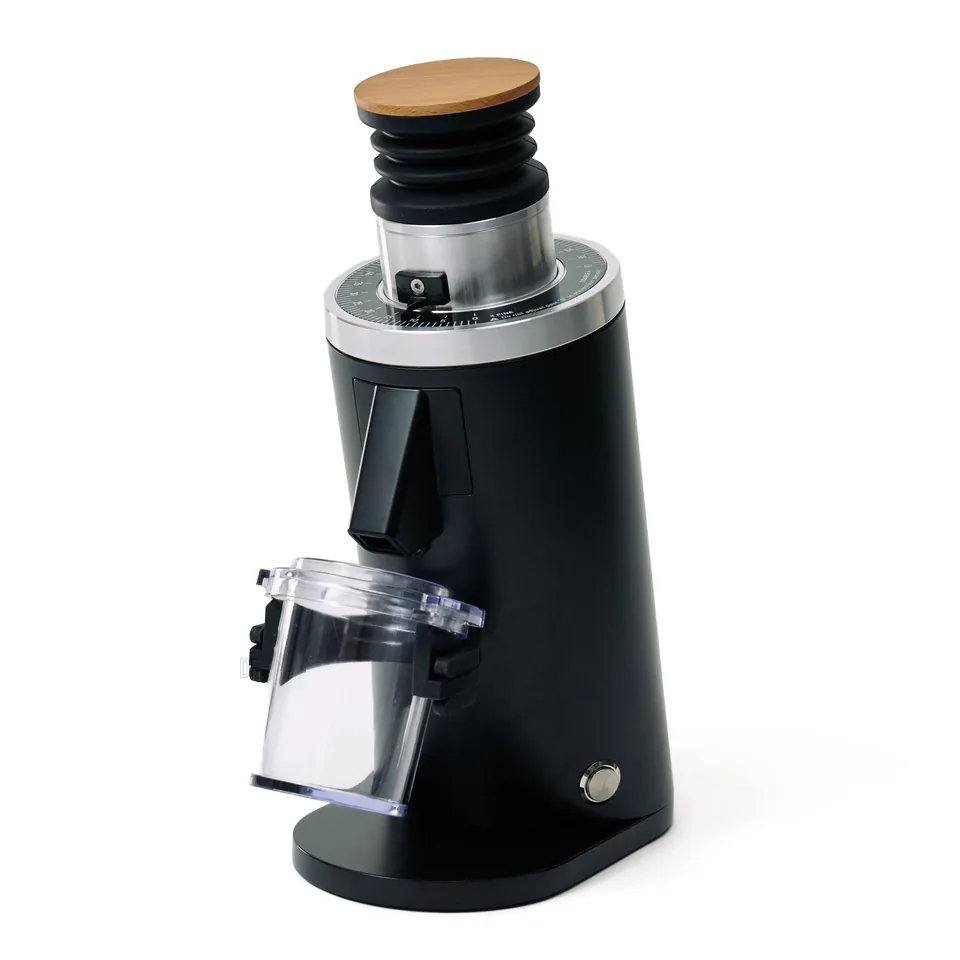
The DF54 is the upgrade if grind quality is the priority: flat burrs, stepless adjustment and a fraction of the retention. Coffee Chronicler's blind pour-over tasting went to the DF54 as the cups cooled, and the same review recommends the Encore ESP mainly to US buyers with standard roasts who value Baratza's support.
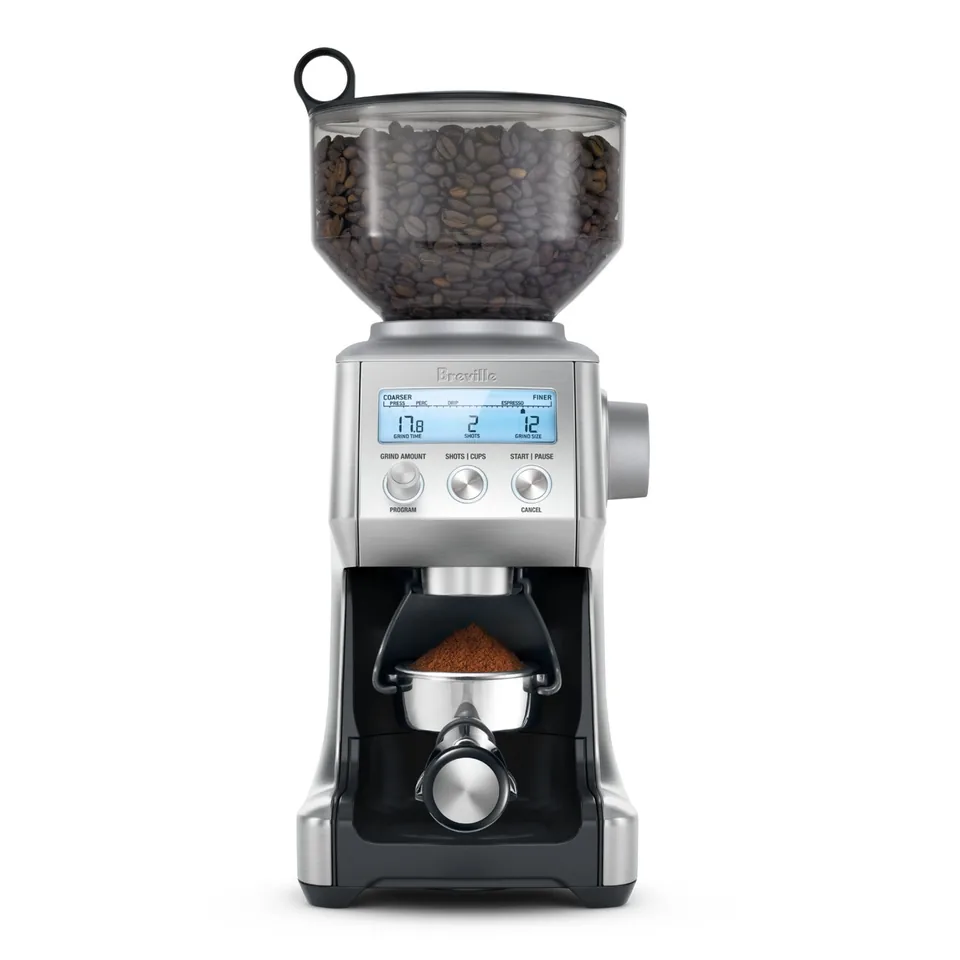
The Breville Smart Grinder Pro is the alternative for a Breville machine owner who wants a hopper, a timer and cradles that hold the portafilter. Coffeeness preferred its portafilter-friendly design; CoffeeGeek preferred the Encore ESP's espresso and noted the Breville is quieter and better at press-pot grinds.
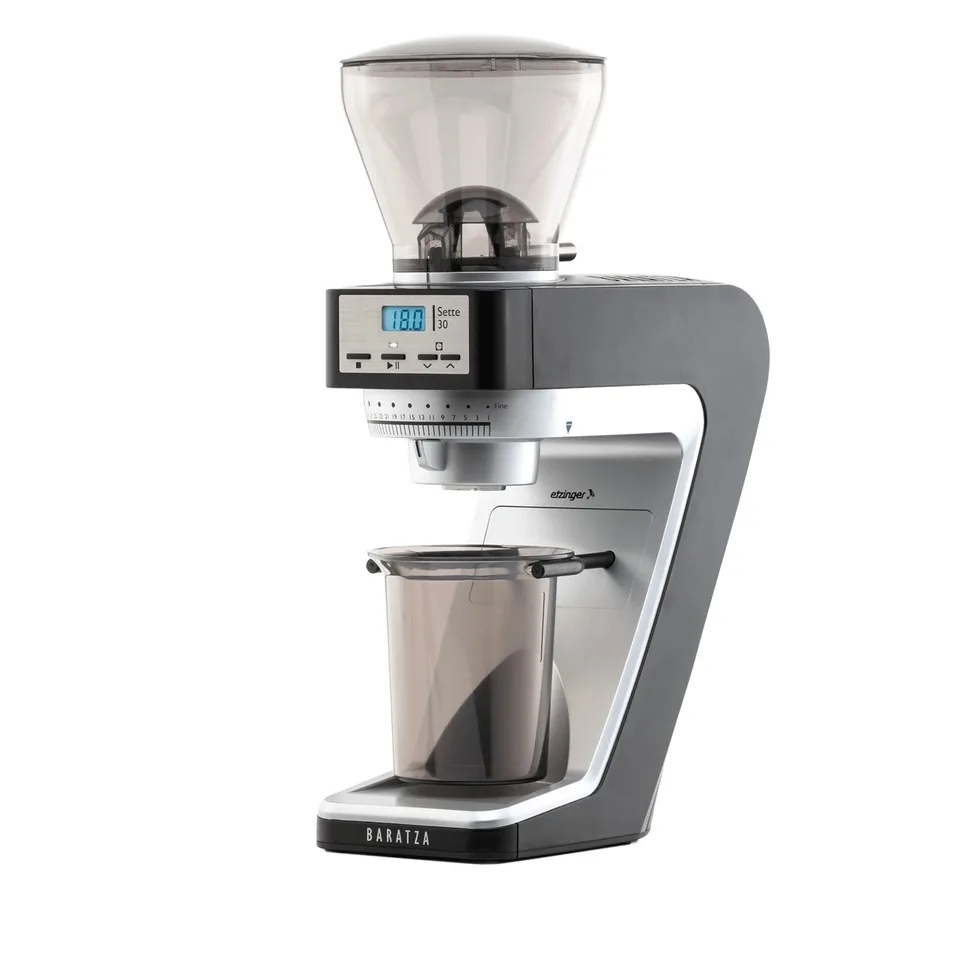
The Baratza Sette 30 grinds faster with almost no retention but has 30 steps across the whole range, where the Encore ESP has 20 inside the espresso range alone.
Head to head: vs DF54 Single-Dose Coffee Grinder (V4)
| Feature | Baratza Encore ESP | DF54 Single-Dose Coffee Grinder (V4) |
|---|---|---|
| Burrs | Baratza Encore ESP: 40 mm M2 conical, steel (Baratza) | DF Grinders DF54, better: 54 mm flat, stainless steel, uncoated or coated (DF Grinders) Better |
| Adjustment | Baratza Encore ESP: 40 steps; 1 to 20 for espresso at about 20 microns per click (CoffeeGeek) | DF Grinders DF54, better: Stepless collar; stock indicator cannot be re-zeroed Better |
| Retention | Baratza Encore ESP: 1 to 3 g per espresso dose (CoffeeGeek); about 1.1 g (Coffee Chronicler) | DF Grinders DF54, better: 0.2 to 0.3 g without bellows, 0.0 to 0.1 g with (Coffee Chronicler) Better |
| Dosing style | Baratza Encore ESP: 8 oz hopper, hold-to-grind, no timer; dosing cup for 54 and 58 mm | DF Grinders DF54: Single dose with bellows; 58 mm cup with rubber insert |
| Speed | Baratza Encore ESP, better: 1.5 g/s at espresso, about 13 s for 18 g (CoffeeGeek) Better | DF Grinders DF54: About 14 g in 24 s at espresso (Coffee Chronicler) |
| Noise | Baratza Encore ESP: 80.5 dB (Coffeeness) to 92 dB (Coffee Chronicler); louder than a Smart Grinder Pro | DF Grinders DF54: Not quiet, milder than the DF64 Gen 2 (Coffee Chronicler); no published dB |
| Weight | Baratza Encore ESP, better: 7 lb (3.1 kg) per spec sheet; 5.5 lb empty on CoffeeGeek's scale Better | DF Grinders DF54: 10.4 lb (4.7 kg) |
| Warranty | Baratza Encore ESP, better: 1 year, parts and labor, free ground shipping both ways in the US and Canada Better | DF Grinders DF54: 1 year, serviced in-house by DF Grinders; paid 2- and 3-year extensions |
Bottom line. Buy the Baratza Encore ESP if you drink medium or dark roasts, want a hopper you can top up, and value a grinder that can be repaired for a decade. Buy the DF54 if you switch beans often, drink light roasts, want flat-burr clarity and stepless control, and are happy to weigh 18 g before every shot.
Verdict
For a 54 mm Breville, a medium or dark roast and a household that also brews filter, the Encore ESP is the sensible entry point, and the one you can keep repairing. Weigh your beans, buy a WDT tool, and accept the noise. If you drink light roasts or dislike clumps, spend more on the DF54.
All 7 sources
- baratza.com /en-us/product/encoretm-esp-zcg495
- coffeegeek.com /reviews/fullreview/baratza-encore-esp-grinder
- coffeeness.de /en/baratza-encore-esp-review
- coffeechronicler.com /baratza-encore-esp-review
- coffeebros.com /products/baratza-encore-esp-espresso-grinder-120v-40mm-conical-burrs
- rustydogcoffee.com /products/baratza-encore-esp-conical-burr-espresso-grinder
- baratza.com /en-us/legal/warranty
The other picks in Espresso Grinders Under $300
Compare all 4-
Best overall
DF54 Single-Dose Coffee Grinder (V4)
Check price on Amazon(paid link) for DF54 Single-Dose Coffee Grinder (V4) (opens in a new tab) -
Best premium
Baratza Sette 30
Check price on Amazon(paid link) for Baratza Sette 30 (opens in a new tab) -
Best for switching between espresso and drip
Breville Smart Grinder Pro (BCG820)
Check price on Amazon(paid link) for Breville Smart Grinder Pro (BCG820) (opens in a new tab)