Baratza · Coffee grinder
Baratza Sette 30
The Sette 30 is for people who pull espresso every day, want it fast and clean, and are happy to tune with dose rather than fine grind steps. Skip it if you brew mostly filter or need a quiet kitchen.
Ad disclosure: we earn a commission on Amazon links, at no cost to you. It never decides our picks. How this works
Photos
Pick it ifDaily espresso drinkers who want grounds in the portafilter in seconds with nothing left inside, and who drink medium or dark roasts
Skip it ifLight-roast dialers who need fine steps, open-plan kitchens, or anyone who grinds mostly for pour-over and press
At a glance
What stands out
- 3.5 g per second at espresso settings, so an 18 g dose takes about five seconds
- Straight-through path from burrs to portafilter; Coffee Chronicler calls it a zero-retention grinder
- Grinds directly into a portafilter resting on convertible arms, or into the supplied bin
- Timer presets adjustable to a tenth of a second
- Tool-free burr removal, Baratza spare parts and a one-year warranty with free ground shipping both ways in the US and Canada
Flaws to know
- Only 30 steps across the whole range; Coffeeness found three or four of them usable for espresso
- 85 to 90 dB with a harsh sound, according to Coffeeness
- Plastic housing that Coffeeness thought felt cheap, and a rubber mat that did not sit flat
- The portafilter arms support but do not grip, so you hold the portafilter while it grinds
Key specs
- Burrs
- 40 mm conical steel, made by Etzinger (Baratza retailer spec sheet)
- Adjustment
- 30 numbered steps (spec sheets count 31 positions), no micro-adjustment
- Grind speed
- 3.5 g/s at espresso, 5.5 g/s at manual-brew settings (manufacturer)
- Hopper and bin
- 10 oz (300 to 400 g) hopper; 5.5 oz (160 g) bin
- Timer
- Manual presets settable to 0.1 s, backlit display
- Holder
- Convertible arms for a portafilter or the grounds bin
- Noise
- 85 to 90 dB (Coffeeness)
- Size and weight
- 13 x 40 x 24 cm (5.1 x 15.7 x 9.4 in); 7 lb (3.2 kg) per spec sheet, 8.3 lb on Coffeeness's scale
- Warranty
- 1 year, parts and labor
Who it's for
The Sette 30 is the espresso specialist of this class. Its selling point is workflow: beans sit in a 10 oz hopper, you rest the portafilter on the arms, press the button, and 18 g of coffee arrives in about five seconds with nothing meaningful left inside the grinder. For a household that pulls two or three doubles every morning and nothing else, that routine is why Coffee Chronicler names it the budget espresso pick in its September 2026 guide and why it is the premium pick on our list of the best espresso grinders under $300.
It is less obviously the choice for someone who brews filter most days. Coffeeness found the grounds fluffy and even at pour-over settings, with few fines, but the 30-step ladder and the sound mean a slower, quieter grinder does that job with less fuss.
What stands out
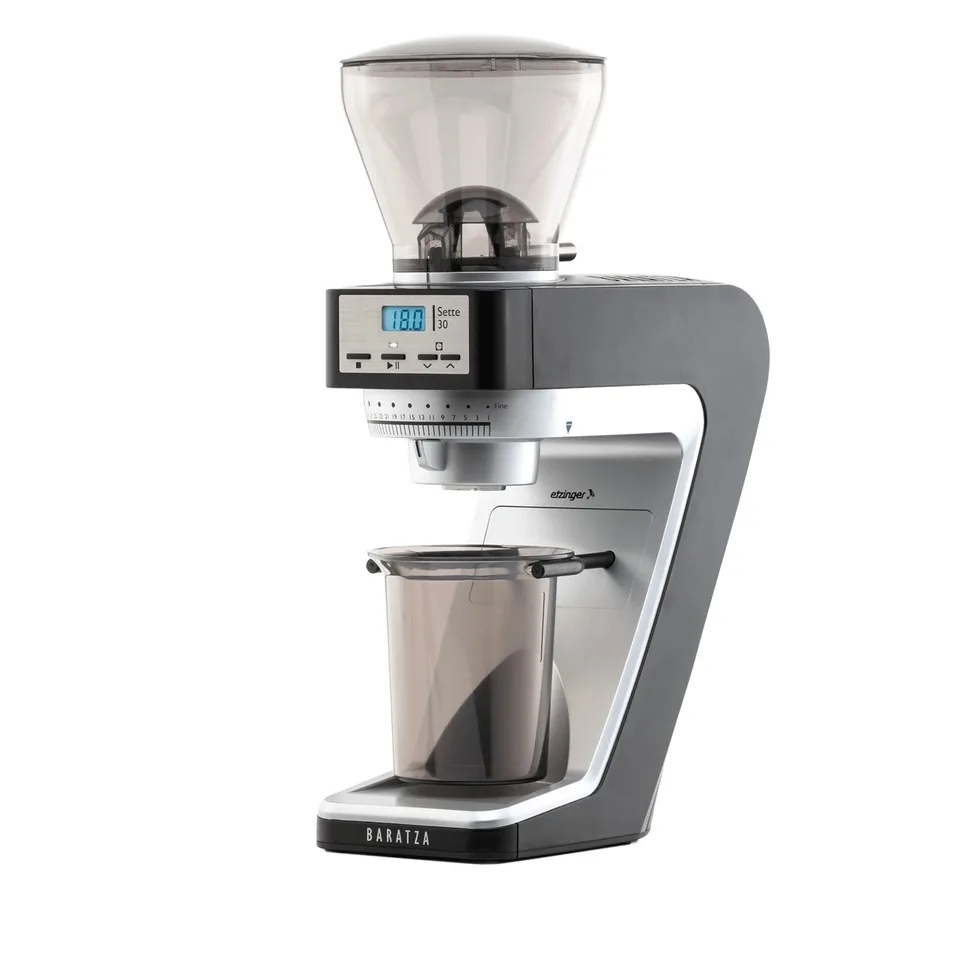
The layout is the reason it works. In most grinders the burrs sit above the motor and the grounds travel sideways through a chute. Baratza shaped the Sette like the numeral seven: the motor sits behind and above the burrs, and the grounds drop straight down into the portafilter. Coffeeness notes that this keeps motor heat away from the coffee and is what makes the near-zero retention possible. Coffee Chronicler simply calls it a zero-retention grinder. Switching beans does not mean purging.
Speed follows from the same layout. Baratza rates it at 3.5 g per second at espresso settings and 5.5 g per second for manual brewing, and Coffeeness quotes the same espresso figure from its own use. The DF54 takes about 24 seconds for a 14 g dose in Coffee Chronicler's timing; the Sette does that dose in about four.
The holder is a small idea that matters daily. Two arms can be removed and turned so they support a portafilter or hold the supplied grounds bin, and the timer presets can be set to a tenth of a second on a backlit display. Coffeeness found the controls simple, then recommended a scale anyway, because timed dosing drifts as the hopper level changes.
It is a Baratza, which means spare parts, tool-free burr removal for cleaning, and a one-year warranty on parts and labor that includes ground shipping to and from the repair center in the US and Canada. The burrs are steel sets made by Etzinger, the same Swiss maker behind the Sette 270's.
Where it falls short
Thirty steps is the compromise the name announces. The Sette 270 divides each macro step into nine micro positions; the Sette 30 does not. Coffeeness put the change per step at roughly 24 microns and found that only three or four settings landed inside the usable espresso window, so tuning a shot became a matter of changing the dose rather than the grind. Coffee Chronicler makes the same point: dialing in is harder than on the pricier Sette. For a medium roast that lands between two steps, adjust the dose by half a gram; for a light roast that needs a fine, precise setting, this is the wrong grinder, and Coffeeness expects serious espresso drinkers to outgrow it.
It is loud and the sound is unpleasant. Coffeeness measured 85 to 90 dB and described a crushing noise that made the reviewer jump. The Breville Smart Grinder Pro, at 70 to 80 dB in the same reviewer's hands, is noticeably gentler.
The portafilter arms are supports, not clamps. Coffeeness found they did not hold the portafilter, so you grip the handle with one hand while the other presses the button. That is a minor annoyance against a five-second grind, but it undercuts the hands-free promise.
The housing is glass-filled plastic, the rubber base mat did not sit properly on Coffeeness's unit, and the whole thing looks less expensive than it is. The tall, narrow shape also needs about 16 inches of clearance under a cabinet.
How it compares
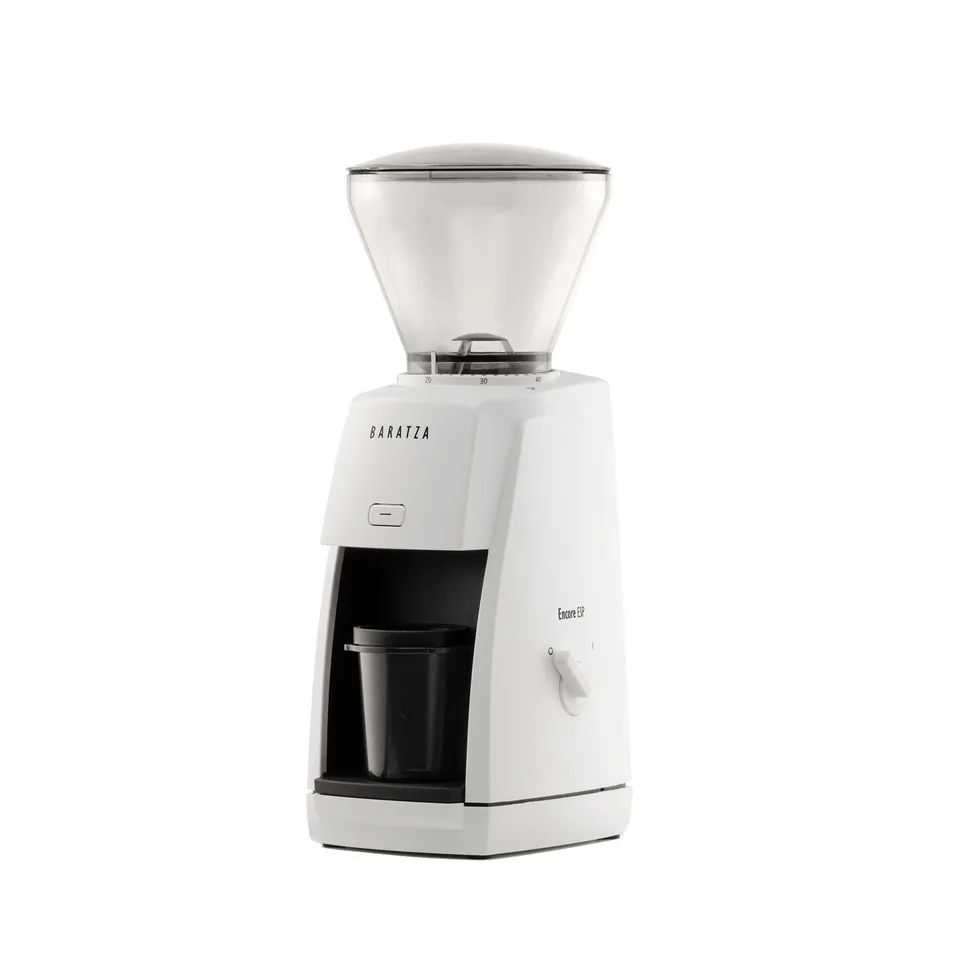
The Baratza Encore ESP costs less and has 20 steps inside the espresso range alone, so it dials in more precisely, but it has no timer, needs a WDT tool for clumps and holds 1 to 3 g of grounds between doses in CoffeeGeek's measurements. Coffeeness's comparison comes down to precision versus workflow: the Encore ESP for fine control, the Sette for speed and cleanliness.
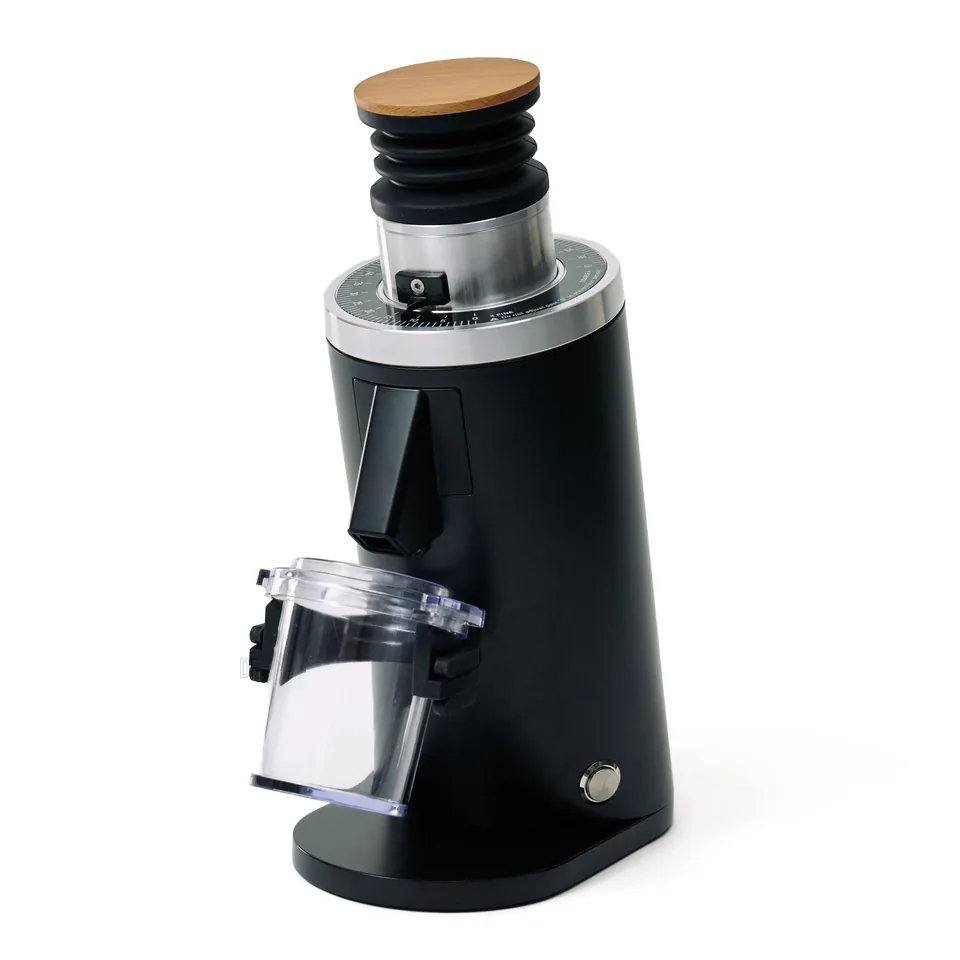
The DF54 is the coffee-quality alternative: flat burrs, stepless adjustment and single dosing with bellows. It is slower and has no hopper, timer or portafilter holder. If you switch beans often and taste the difference between grind settings, the DF54; if you drink one coffee and want it in the basket fast, the Sette. For the full side-by-side on speed, retention and adjustment, see our Baratza Sette 30 vs DF54 comparison.
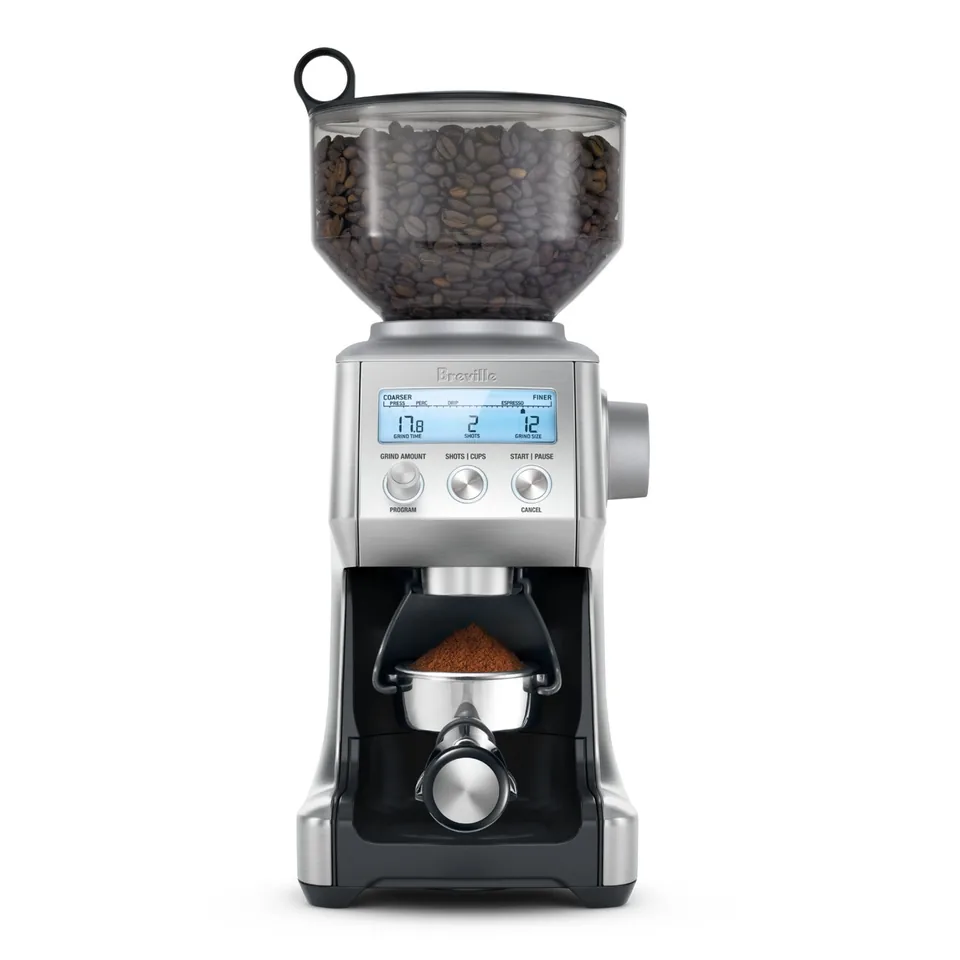
The Breville is the hopper-and-timer grinder for someone who splits time between espresso and drip; it is quieter and has twice the settings, but not the Sette's retention or speed.
Head to head: vs DF54 Single-Dose Coffee Grinder (V4)
| Feature | Baratza Sette 30 | DF54 Single-Dose Coffee Grinder (V4) |
|---|---|---|
| Burrs | Baratza Sette 30: 40 mm conical steel AP burrs by Etzinger (Roastmasters spec sheet) | DF Grinders DF54, better: 54 mm flat, stainless steel, uncoated or TiCN-coated (DF Grinders) Better |
| Adjustment | Baratza Sette 30: 30 macro steps, no micro-adjust; about 24 microns per step, 3 to 4 usable for espresso (Coffeeness) | DF Grinders DF54, better: Stepless collar; stock indicator cannot be re-zeroed (Coffee Chronicler) Better |
| Grind speed | Baratza Sette 30, better: 3.5 g/s at espresso (Baratza spec); 3.87 g/s measured (Whole Latte Love) Better | DF Grinders DF54: About 14 g in 24 s at espresso (Coffee Chronicler) |
| Retention | Baratza Sette 30: About 0.5 g (Whole Latte Love) | DF Grinders DF54, better: 0.2 to 0.3 g without bellows, 0.0 to 0.1 g with (Coffee Chronicler) Better |
| Dosing style | Baratza Sette 30: 10 oz hopper, one timed preset, arms for portafilter or bin | DF Grinders DF54: Single dose, 25 g chamber, bellows, 58 mm dosing cup |
| Dose consistency (timed) | Baratza Sette 30: 18 g average over five grinds, max spread 0.54 g (Whole Latte Love) | DF Grinders DF54: No timer; you weigh each dose |
| Noise | Baratza Sette 30: "Incredibly loud" (Coffeeness); louder than a Baratza Vario (Whole Latte Love) | DF Grinders DF54: Not quiet, milder than the DF64 Gen 2 (Coffee Chronicler); no published dB |
| Size and weight | Baratza Sette 30: 13 x 40 x 24 cm (W x H x D), 7 lb (Roastmasters spec sheet) | DF Grinders DF54: 11 x 19 x 29.7 cm (W x D x H), 10.4 lb (DF Grinders) |
| Coffee Chronicler guide (Sep 2026) | Baratza Sette 30: Dedicated espresso on a budget | DF Grinders DF54, better: Top overall pick Better |
| Warranty | Baratza Sette 30, better: 1 year, parts and labor, free ground shipping both ways in the US and Canada (Baratza) Better | DF Grinders DF54: 1 year, serviced in-house in Texas; paid 2- and 3-year extensions, continental US only (DF Grinders) |
Bottom line. Buy the Sette 30 if you pull the same medium or dark roast every morning, want a hopper and a timer, and care most about getting a clean dose into the basket in seconds with Baratza's US repair support behind it. Buy the DF54 if you rotate beans, drink lighter roasts, want one grinder for espresso and pour-over, and are happy to weigh beans and wait about 24 seconds per shot.
Verdict
The Sette 30 does one thing better than anything else in this class: it gets a fresh, uncontaminated dose into the portafilter in seconds. You pay for it with noise, plastic and a coarse ladder of settings that pushes you to tune by dose. For a daily medium-roast espresso habit that trade is worth it; for a light-roast tinkerer it is not.
All 6 sources
- baratza.com /en-us/product/settetm-30-zcg1130
- coffeeness.de /en/baratza-sette-30-review
- coffeechronicler.com /gear/grinders
- roastmasters.com /sette30.html
- stonecreekcoffee.com /products/baratza-sette-30-grinder
- baratza.com /en-us/legal/warranty
The other picks in Espresso Grinders Under $300
Compare all 4-
Best overall
DF54 Single-Dose Coffee Grinder (V4)
Check price on Amazon(paid link) for DF54 Single-Dose Coffee Grinder (V4) (opens in a new tab) -
Best budget
Baratza Encore ESP
Check price on Amazon(paid link) for Baratza Encore ESP (opens in a new tab) -
Best for switching between espresso and drip
Breville Smart Grinder Pro (BCG820)
Check price on Amazon(paid link) for Breville Smart Grinder Pro (BCG820) (opens in a new tab)