Every inflator on this list does the same basic thing: it pumps air through a hose, reads the pressure and stops at the number you set. What separates them is where the power comes from, how much air they move, and how long they can keep going. Match those three to your tires and the rest is detail.
01Cordless, 12 V socket or battery clamps
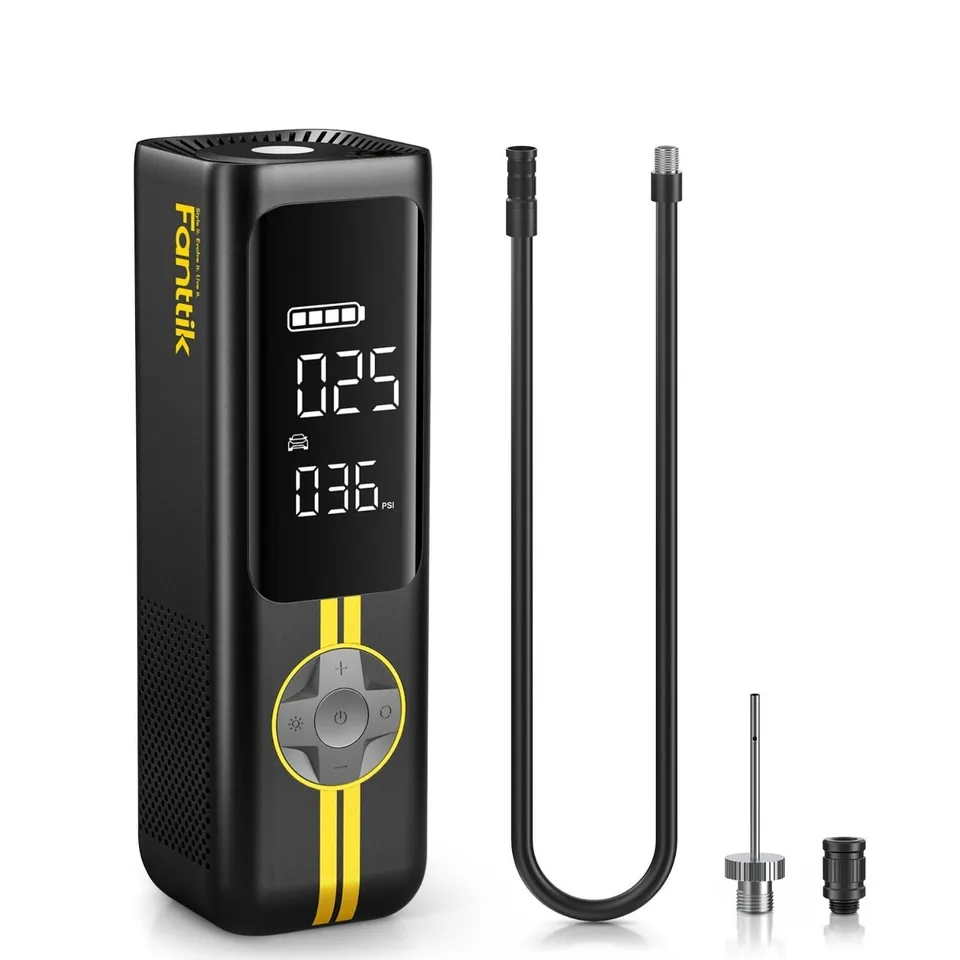
A cordless pump like the Fanttik X8 Apex is the most convenient: no cord, no open hood, and it works on a bike or a wheelbarrow as easily as a car. The catch is that it only works if you have kept it charged, and its battery sets a hard limit on how much air it can deliver. Outdoor Life's truck-tire comparison showed that clearly: the cordless compacts it tried ran out of battery or cut out before reaching 50 psi.
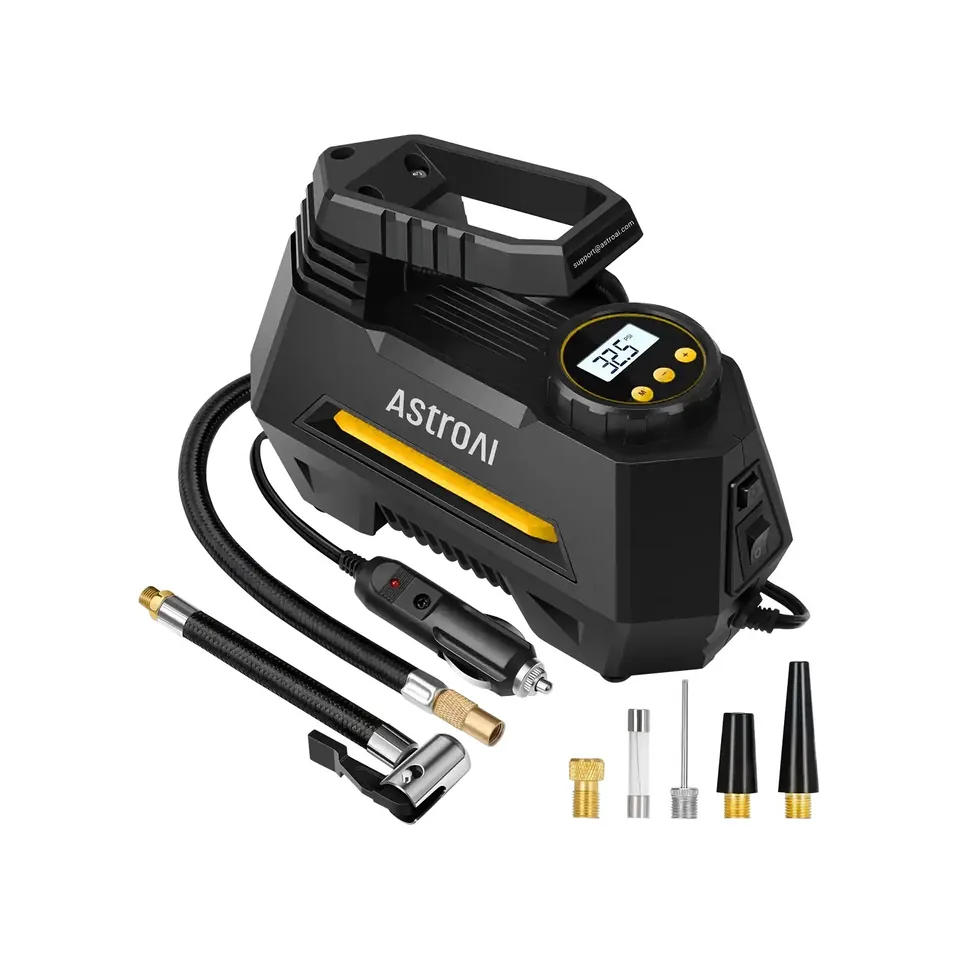
A 12 V socket pump such as the AstroAI AIRUN H never goes flat, because it runs from the car. It is limited instead by what the accessory socket can supply and by the pump's own duty cycle.
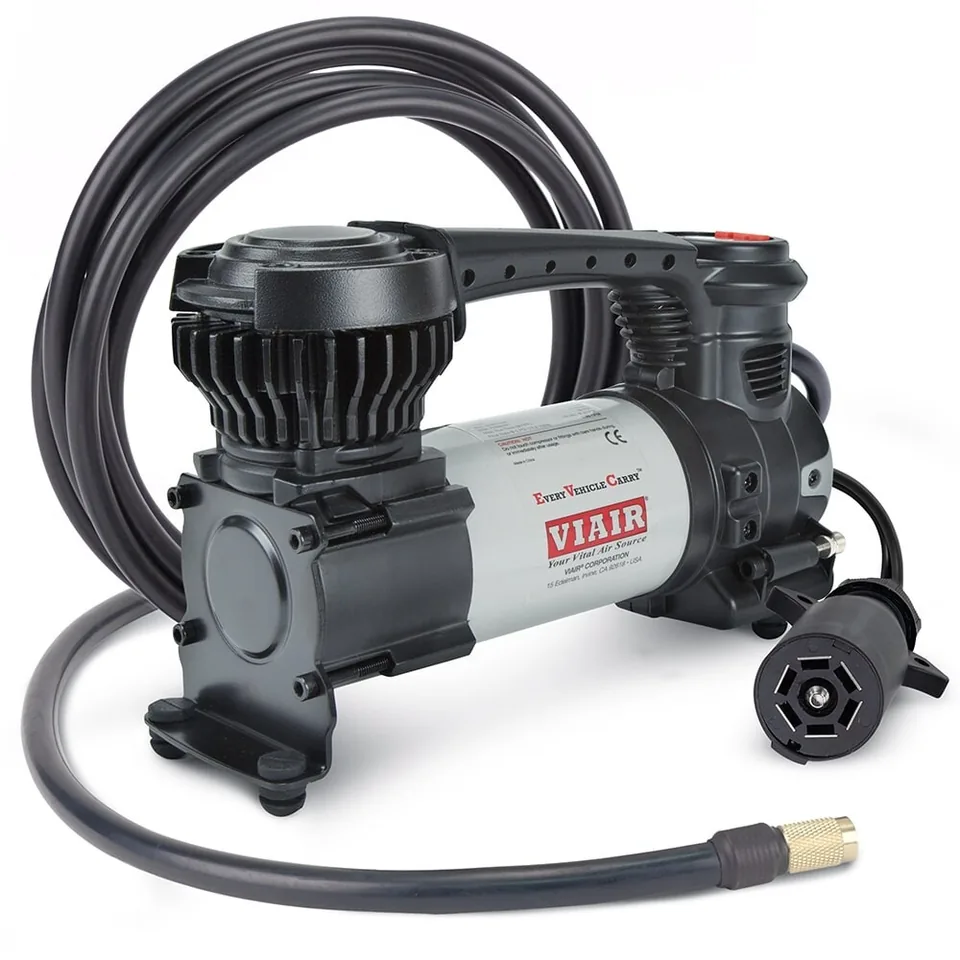
A battery-clamp compressor like the VIAIR EVC88P connects straight to the vehicle battery. VIAIR lists a 20-amp draw, more than many accessory sockets are meant to carry continuously, and that extra power is what fills big tires quickly. A tool-battery inflator such as the DeWalt DCC020IB sits in between: cordless when you want it, with a 12 V cord as a backup.
02Inflation speed: read claims and tests differently
Manufacturers quote small top-offs. Fanttik rates the X8 Apex at 52 seconds to take a 25 in tire from 30 to 35 psi; VIAIR rates the EVC88P at 31 seconds from 27 to 35 psi on a 26.5 in tire. Independent tests start lower and take minutes. Tom's Guide needed 3 minutes 43 seconds with the Fanttik and 3 minutes 40 seconds with the AstroAI to bring a let-down car tire to 30 psi. Road & Track filled a roadster tire to 38 psi in about two and a half minutes with the VIAIR.
Tire volume dominates everything. A pickup's tire can hold twice the air of a compact car's, so the same pump takes more than twice as long, and a small battery may run out first. If you drive a truck, weigh airflow and duty cycle above convenience.
03Auto shutoff and gauge accuracy
All four picks let you preset a target and stop automatically, which is the feature that makes an inflator easy to use: set it, walk to the next wheel, come back. Fanttik claims accuracy within 1 psi; Tom's Guide found the AstroAI's gauge steady while pumping and its shutoff dependable. Whatever you buy, check the result against a separate gauge the first few times.
Two habits matter more than the spec. Set pressure with the tires cold, using the figure on the driver's door placard, not the maximum on the sidewall. And expect a warm tire to read a few psi higher after a drive.
04Max psi is the least useful number
Handheld pumps advertise 150 psi because that is what they can reach in a tiny bike tire. It says little about how they cope with a car or truck tire, where airflow and heat decide the result; Outdoor Life makes the same point in its test. The figures that matter for big tires are airflow (VIAIR lists 1.97 CFM at 0 psi for the EVC88P) and duty cycle. Max pressure does matter in two cases: road-bike tires, and light-truck tires set near 80 psi, where the AstroAI's 100 psi ceiling is tight and the DeWalt's 160 psi leaves room.
05Battery, runtime and duty cycle
Fanttik rates the X8 Apex at about 40 minutes of running per charge, enough for roughly four fills from zero on a 25 in tire or many small top-offs. The AstroAI's label limits it to 15 minutes before a 10-minute rest. The VIAIR is rated for 25 minutes at 30 psi. The DeWalt runs as long as the pack you fit. Lithium pumps lose charge in storage and dislike hot trunks, so top them up every couple of months, the same routine as a jump starter.
06Reach, noise and storage
Hose length decides how awkward a pump is to use. The Fanttik's built-in hose is only about 13 in, so the pump hangs on the valve. The AstroAI has about 12.8 ft of cord and hose combined, and the VIAIR pairs a 16 ft hose with a 10 ft power cord. The DeWalt is the bulkiest at about 13 x 10 x 5.5 in. VIAIR rates its pump at 80 dB; Outdoor Life measured the Fanttik at 72.5 dB.