
Rated lawn size
Manufacturer rating, acres · Higher is better
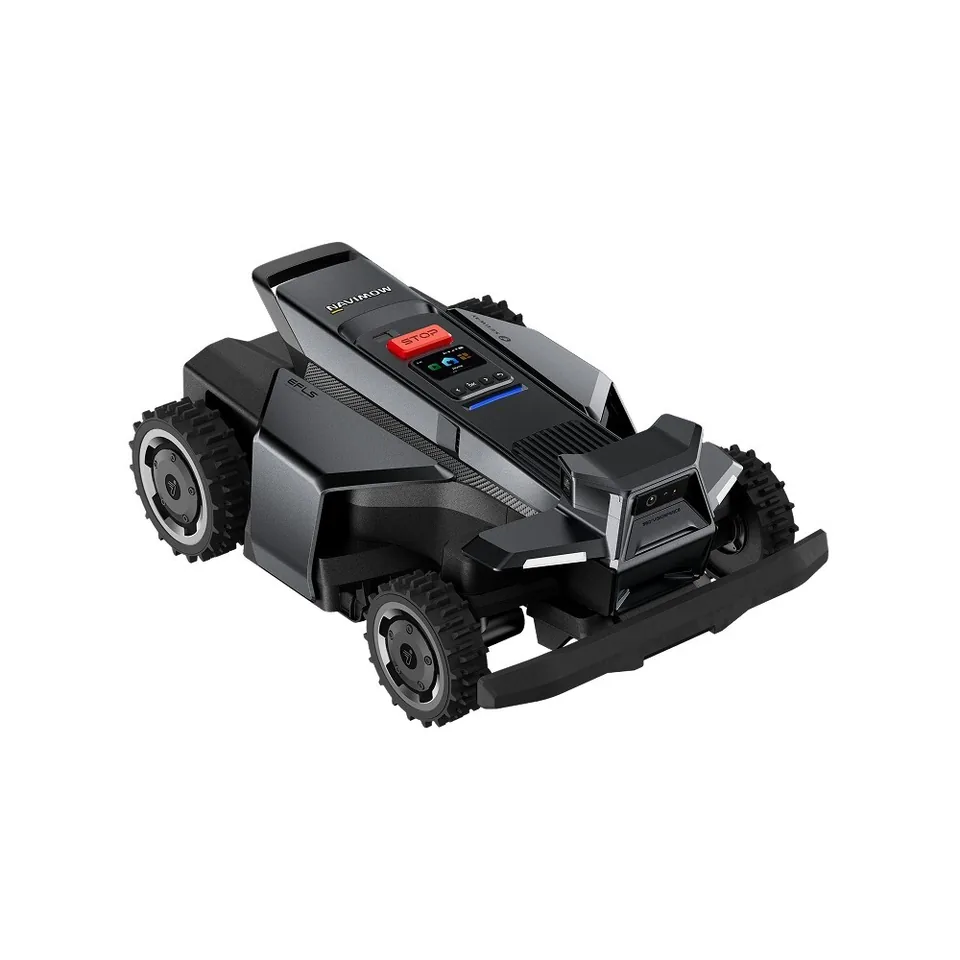
- Segway Navimow X4301 acre
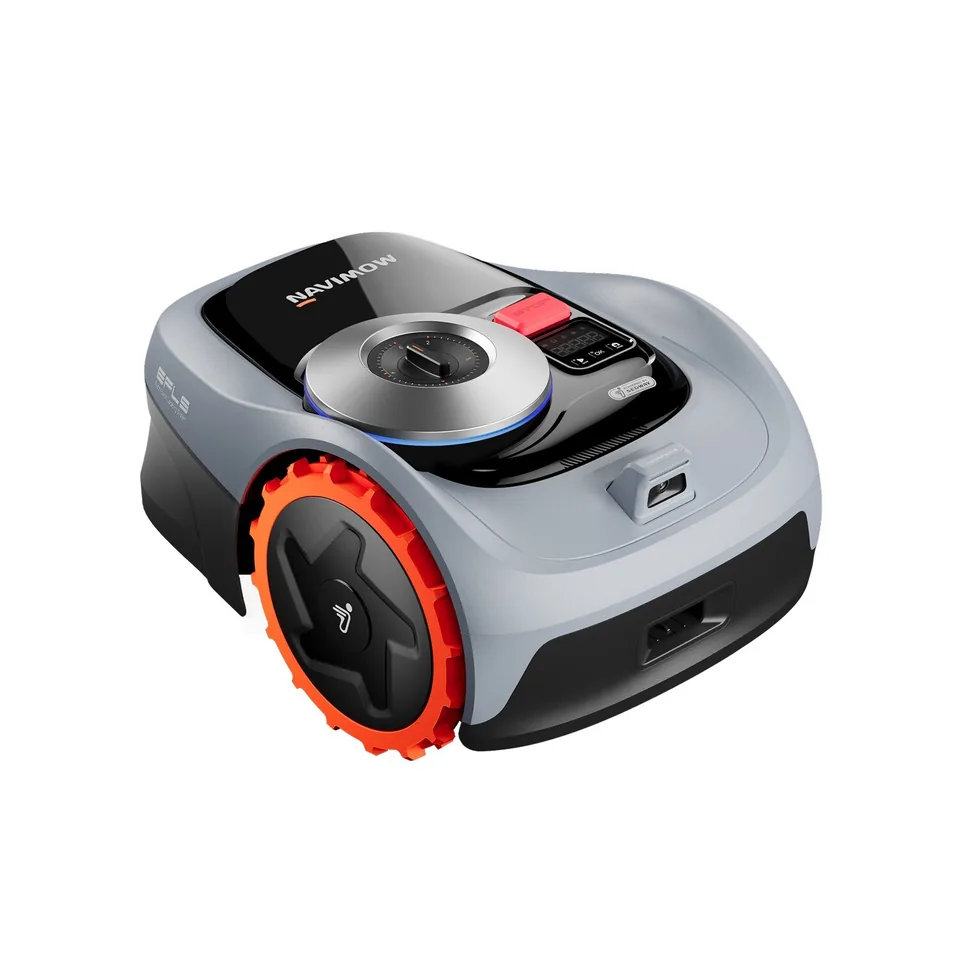
- Segway Navimow i105N1/8 acre
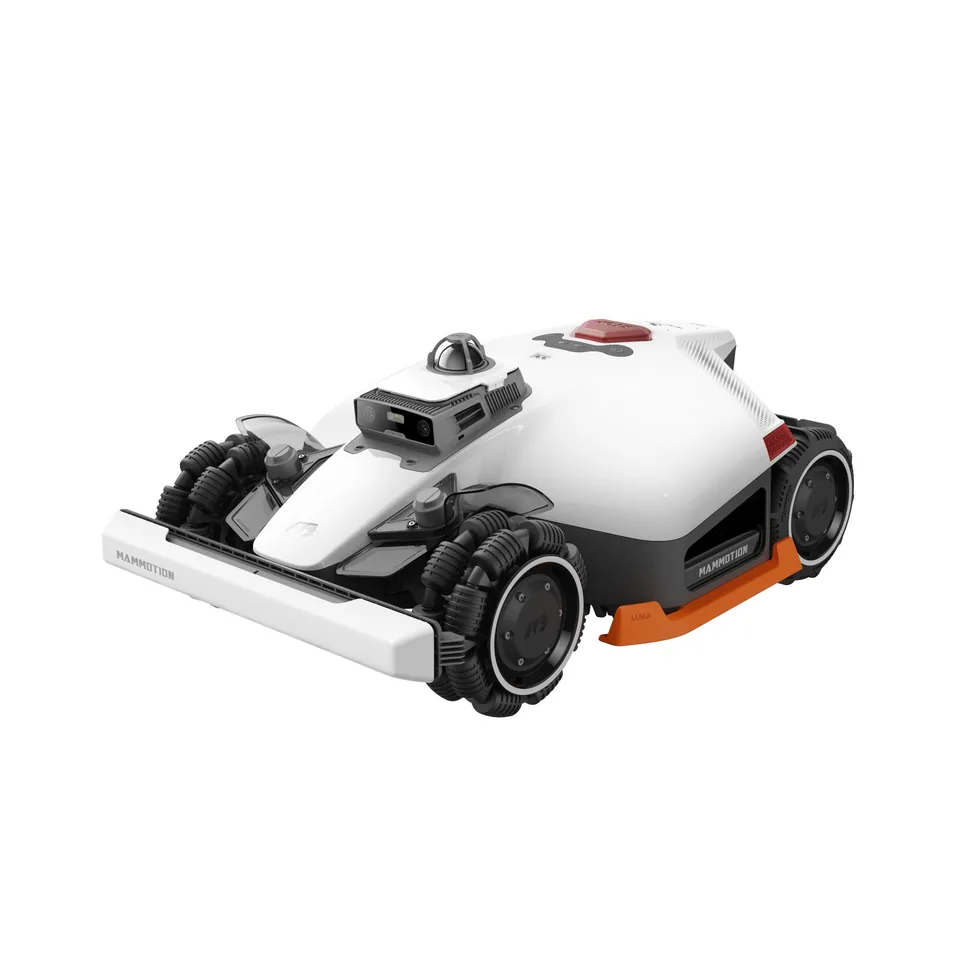
- Mammotion LUBA 3 AWD 50001.25 acres
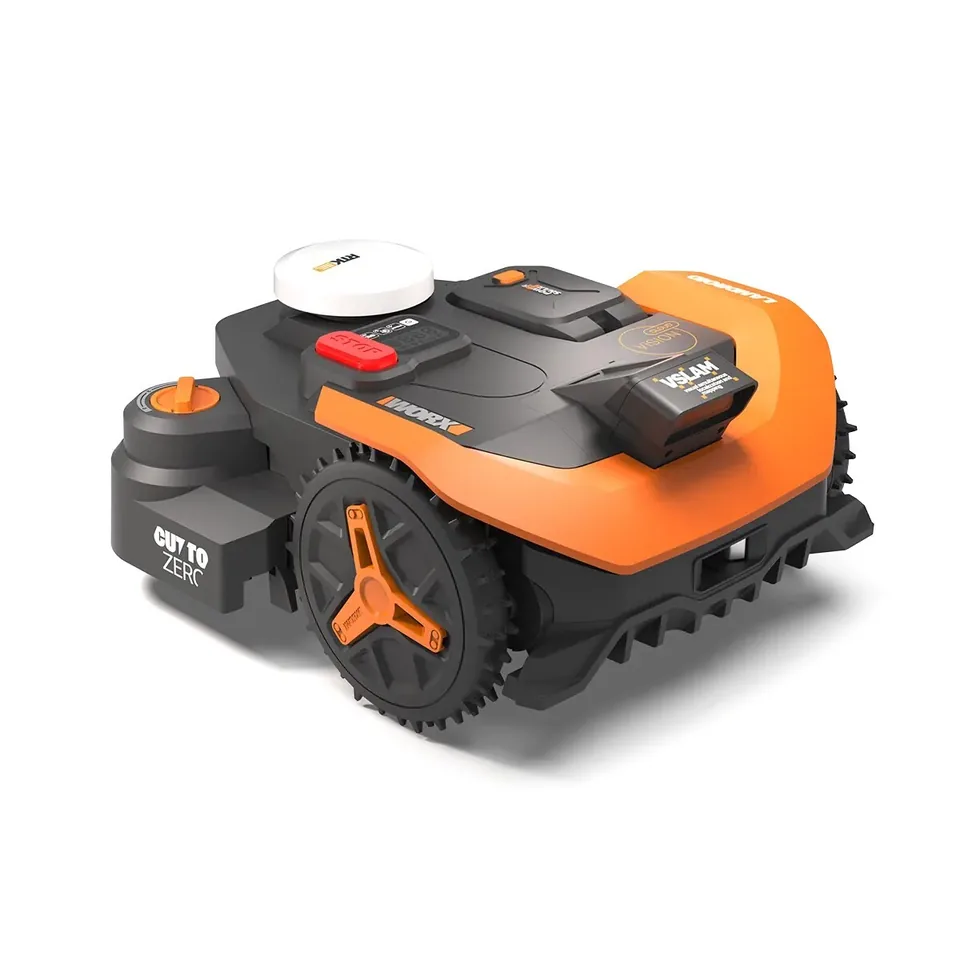
- Worx Landroid Vision Cloud WR3201/2 acre
We compared wire-free robot mowers that navigate by RTK, LiDAR or cameras, judged on lawn size, slope rating, how they cope with trees and fences, cutting deck, drive, obstacle detection, noise and running costs.
Ad disclosure: we earn a commission on Amazon links, at no cost to you. It never decides our picks. How this works
Best overall
Suits Half-acre to 1-acre lawns with slopes and fences
Best budget
Suits Small, flat, open lawns up to 1/8 acre
Best premium
Suits Large wooded or steep lots near an acre or more
Best for easy setup
Suits Flat lawns to 1/2 acre, no antenna wanted
From spec sheets and independent tests. The best result in a row is tagged.
| Feature | Segway X430Best overall | Segway i105NBest budget | Mammotion LUBA 3 AWD 5000Best premium | Worx WR320Best for easy setup |
|---|---|---|---|---|
| Rated lawn sizemanufacturer | 1 acre | 1/8 acre | 1.25 acres Best | 1/2 acre |
| Slope ratingdrive type | 84%, AWD Best | 30%, 2WD | 80%, AWD | 30%, 2WD |
| RTK correctionssetup and service | Partly: Network RTK, 4G paid after yr 1 | Partly: Staked antenna needed | Yes: Network RTK, 4G free 3 years | Yes: RTK Cloud, lifetime free Best |
| Shade and tree fallbackwhen satellites drop out | 360° cameras + VIO | Forward camera V-SLAM | 360° LiDAR + cameras Best | Stereo-camera V-SLAM |
| Cutting width | 17 in Best | 7.1 in | 15.7 in | 8.7 in |
| Cutting heightadjustment | 0.75-4 in, electric Best | 2.0-3.6 in, manual | 1.0-2.7 in (5000H: 2.2-4.0) | 1.57-3.54 in, electric |
| Run time per charge | About 110 min | About 60 min | Up to 215 min Best | Not published |
| NoisedB(A) | Up to 68 (listings) | 58 Best | 64-70 listed, no maker figure | Not published |
| Weight | 63.7 lb | 24 lb Best | 41 lb | 31 lb |
| On Amazon | Check price on Amazon(paid link) for Segway Navimow X430 (opens in a new tab) | Check price on Amazon(paid link) for Segway Navimow i105N (opens in a new tab) | Check price on Amazon(paid link) for Mammotion LUBA 3 AWD 5000 (opens in a new tab) | Check price on Amazon(paid link) for Worx Landroid Vision Cloud WR320 (opens in a new tab) |
Who each one is for, and what to know before you buy.
01Best overall
The most complete wire-free mower for lawns up to an acre with slopes, thick grass or awkward layouts. It sits in the premium class, but it is the one independent testers found finishing difficult lawns without rescue trips.
Pick it ifHalf-acre to one-acre lawns with real slopes, thick warm-season grass, fences and scattered trees, where the owner wants the mower to finish on its own
Skip it ifSmall flat lawns under half an acre, heavily wooded lots where LiDAR is the safer choice, and yards with narrow side gates
Why it made the list. Bob Vila's 2026 best overall: rated for 1 acre and 84 percent slopes with all-wheel drive, a 17 in twin-disc deck cutting 0.75 to 4 in, antenna-free network RTK backed by 360-degree cameras, and the same hardware as the larger X450.
02Best budget
The lowest-cost wire-free mower from a major brand, and a good one for a small, flat, open lawn with a clear sky. Shade, slopes or anything much over 1/8 acre push it past its limits.
Pick it ifSmall, flat suburban lawns up to 1/8 acre with an open view of the sky, a level spot for the dock and an owner willing to trim a few edges by hand
Skip it ifLawns with heavy tree cover, slopes over 30 percent, narrow strips beside tall fences, or more than about 0.15 acre
Why it made the list. The lowest-cost wire-free mower from a major brand: RTK plus visual SLAM, 58 dB, a three-year warranty and a 7.1 in cut, but strictly for flat, open lawns up to 1/8 acre without heavy shade.
03Best premium
The mower for large, wooded or steep lots. Tri-Fusion positioning with 360-degree LiDAR keeps it on course under trees where RTK-only mowers lose their fix, and it runs 215 minutes per charge. Overkill for a small flat lawn.
Pick it ifLots close to an acre or more with tree canopy, slopes, gravel paths or hardscape, where the owner wants three years of 4G and lifetime network RTK included
Skip it ifSmall, flat, simple lawns, yards with side gates narrower than about 28 in, and owners who cut above 2.7 in unless they choose the 5000H version
Why it made the list. For wooded or steep lots up to 1.25 acres: 360-degree LiDAR plus network RTK and dual cameras keep it on course under trees, with all-wheel drive for 80 percent slopes, 215 minutes per charge, 50 zones and three years of 4G included.
04Best for easy setup
The easiest wire-free mower to set up and live with on a flat suburban lawn up to half an acre. Two-wheel drive and a 30 percent slope limit rule it out for hills and thick grass.
Pick it ifFlat to gently rolling lawns up to 1/2 acre, owners who want mapping done from the app in minutes, and anyone who refuses to mount an antenna or pay a subscription
Skip it ifSlopes over 30 percent, thick warm-season grass, yards with abrupt bed-to-lawn drops, and anyone who expects the mower to replace the string trimmer
Why it made the list. The quickest path from box to mowing: antenna-free RTK Cloud with lifetime free service, auto mapping, V-SLAM for shade and electric height adjustment; two-wheel drive and a 30 percent slope limit keep it to flat half-acre lawns.
The right mower depends less on brand than on your lawn: size, slope, shade and how it is broken up by fences, beds and hardscape. The criteria below are in the order that usually decides the purchase.
| Model | Rated lawn | Slope | Drive | Cut width | Cut height | Positioning fallback | Run time | Fees |
|---|---|---|---|---|---|---|---|---|
| Navimow X430 | 1 acre | 84% | AWD | 17 in | 0.75-4 in | 360-degree cameras + VIO | ~110 min | 4G paid after year 1 |
| Navimow i105N | 1/8 acre | 30% | 2WD | 7.1 in | 2.0-3.6 in | Forward camera V-SLAM | ~60 min | None (staked antenna) |
| LUBA 3 AWD 5000 | 1.25 acres | 80% | AWD | 15.7 in | 1.0-2.7 in (H: 2.2-4.0) | 360-degree LiDAR + cameras | ~215 min | 4G free 3 years |
| Landroid Vision Cloud WR320 | 1/2 acre | 30% | 2WD | 8.7 in | 1.57-3.54 in | Stereo-camera V-SLAM | Not published | None, lifetime |
Manufacturer ratings assume the mower runs several days a week on a reasonably open lawn; our picks run from 1/8 acre (i105N) to 1.25 acres (LUBA 3 AWD 5000).
Run time shows how the rating was earned: about 60 minutes for the i105N on a 2.55 Ah pack, about 110 for the X430 on 12.8 Ah per Lawn Care Guides, and up to 215 for the LUBA on 15 Ah (Gardobot measured closer to 180). Worx publishes no run time for the WR320. The X430 and LUBA both quote roughly 5,400 sq ft per hour, so they cover an acre in a few sessions while the 7.1 in i105N needs most of the week for a fraction of that.
Buy one size class up if the lawn is split into several zones, has many obstacles, or you want to mow only two or three days a week.
All four mowers use RTK, satellite positioning with correction data that brings accuracy down to a few centimeters. The differences are where the corrections come from and what happens when the sky is blocked.
The i105N ships with an RTK antenna on a stake that Top Ten Reviews says must sit more than 2 m from buildings under open sky. The X430, WR320 and LUBA 3 receive network RTK over the internet, so there is nothing to mount; Bob Vila and PCWorld both ran the X430 without touching its included antenna.
Under tree canopy or beside a tall fence, satellites drop out, and the fallback sensor takes over. The i105N and WR320 use visual SLAM from cameras; the X430 adds 360-degree cameras and visual-inertial odometry; the LUBA 3 adds a 360-degree LiDAR that maps the surroundings and needs neither light nor sky. EasyLawnMowing found the LUBA held its course under dense trees, Robot Review Desk credits the WR320's V-SLAM with staying oriented in shade, and MowScout tells i105N buyers with heavy tree cover to look elsewhere. Solid fences cause the same problem on a narrow side strip: PCWorld watched the X430 hold a raised edge that a smaller Navimow had slipped off, while i105N owner reports collected by Bikman Tech mention weak signal.
The dock is part of the navigation system. How-To Geek moved the X430's station three times to find sky, and Top Ten Reviews learned the i105N's dock has to sit on perfectly level ground.
The two-wheel-drive mowers, the i105N and WR320, are rated to 30 percent (17 degrees). The all-wheel-drive X430 is rated to 84 percent (40 degrees) and the LUBA 3 to 80 percent (38.6 degrees). Ratings assume dry grass; Bob Vila's tester watched the WR320 lose traction in thick St. Augustine along edges, so give a two-wheel-drive mower some margin.
All-wheel drive has costs. The X430 weighs 63.7 lb and the LUBA 41 lb, against 24 lb for the i105N and 31 lb for the WR320. Reviewed also found the LUBA 3 AWD could scalp turf and dig divots on tight turns, a known habit of aggressive tires on soft ground.
Width sets speed: 7.1 in (i105N), 8.7 in (WR320), 15.7 in (LUBA, two discs) and 17 in (X430, two discs with 12 blades). Height range sets which grasses you can keep. The X430 covers 0.75 to 4 in with electric adjustment, the WR320 1.57 to 3.54 in electric, the US i105N 2.0 to 3.6 in manual. The LUBA comes in two non-overlapping versions, 1.0 to 2.7 in or 2.2 to 4.0 in, so decide your cut height before you pick the variant. If you keep tall fescue at 3.5 in or more, only the X430 and the LUBA 5000H qualify.
None of them replace a string trimmer. Segway says the X430 trims to within 2 in of edges; Robot Review Desk and Lawn Craft Supply report the WR320 leaves a strip along hard borders; Specslib notes the LUBA leaves a ring around trunks and corners.
All four recognize objects with cameras before contact. Segway lists more than 150 object types for the i105N and more than 200 for the X430, which adds time-of-flight sensors; Mammotion claims more than 300 for the LUBA, with LiDAR backing the cameras; Worx instead treats anything that is not grass or leaves as an obstacle. Cameras need light: How-To Geek saw the X430 miss spots on night runs, so schedule daytime mowing.
Noise separates the small mowers from the big ones. The i105N is rated at 58 dB(A). Spec listings for the X430 give up to 68 dB(A), though PCWorld lists 60. Mammotion publishes no figure for the LUBA and third-party listings range from 64 to 70 dB(A); Worx publishes none for the WR320.
Network RTK is free for the life of the mower on the X430, WR320 and LUBA 3. Cellular data is the variable: Worx includes it for life, Mammotion for three years, and Segway for one year on the X430, after which PCWorld and Residential Tech Today report a paid annual plan. The i105N needs no data plan, only the staked antenna cabled to its dock.
Blades are consumables: three on the i105N and WR320 (Worx includes eight spare kits), 12 on the LUBA and X430, replaced each season on a large lawn. A garage is optional on all four; Segway sells the X430 bundled with one, and the LUBA garage is a separate listing.
Models we considered, and why each one did not make the list.
Reviewed's best overall, but every Ecovacs robot is excluded from this site because of documented Bluetooth security flaws.
Capable mowers, but Husqvarna's support pages state that wire-free operation requires the separately sold EPOS plug-in accessory, plus either a reference station or cloud corrections with connectivity across the whole lawn. Not wire-free out of the box.
Near-identical hardware under two brands, per Bob Vila, which liked both. Reviewed gave the Dreame an avoid rating after mapping stalled for weeks and the mower overshot boundaries into mulch beds. With expert findings that far apart, we are waiting.
Bob Vila's value pick, but its tester hit connectivity trouble during setup and navigation problems in narrow sections.
Bob Vila found the design dated and saw it struggle on steeper sections despite a 42 percent rating.
Bob Vila's pick for complex yards, but rated for only 0.37 acre; the LUBA 3 AWD 5000 handles the same terrain with three times the capacity.
The Navimow X450 and X490, the LUBA 3 AWD 10000 and the Worx WR340 are the same platforms with more capacity than most buyers need, and Reviewed found the WR340 weak at handling debris.
Not always. The X430, WR320 and LUBA 3 receive RTK corrections over the network, so nothing is mounted; the X430 includes an antenna for areas without coverage. The i105N uses a staked antenna that needs open sky.
It depends on the fallback sensor. LiDAR (LUBA 3) is the most robust; 360-degree cameras with visual-inertial odometry (X430) and stereo V-SLAM (WR320) come next; the i105N is the least tolerant of heavy canopy.
Network RTK is free on all three network mowers. Cellular data is free for life on the WR320, three years on the LUBA 3 and one year on the X430, after which it is a paid annual plan.
For a flat or gently rolling lawn, yes. Anything with a real slope, thick grass or wet ground favors the all-wheel-drive X430 or LUBA 3.
Prime Big Deal Days run October 6-7, 2026, near the end of the mowing season in most of the US, and Black Friday is November 27. Those are the two windows where robot mowers are most often discounted; if the lawn needs cutting now, all four picks are current 2026 models.
We compared wire-free robot mowers that navigate by RTK, LiDAR or cameras, judged on lawn size, slope rating, how they cope with trees and fences, cutting deck, drive, obstacle detection, noise and running costs. The short answer: the Segway Navimow X430 for most large lawns, the Navimow i105N for small flat ones, the Mammotion LUBA 3 AWD 5000 for wooded or steep acres, and the Worx Landroid Vision Cloud WR320 for the easiest setup.
This is a research-based shortlist; we have not used these mowers ourselves. We started from Bob Vila's 2026 seven-mower field test and Reviewed's real-yard guide (updated July 2026), then checked each finalist against the manufacturer's spec sheet and at least two independent reviews (PCWorld, How-To Geek, EasyLawnMowing, Robot Review Desk, Lawn Craft Supply, MowScout, Top Ten Reviews). Mowers that need boundary wire or a separately sold positioning kit were excluded, as were all Ecovacs models under our safety rules and models with sharply conflicting expert verdicts.