Every rice cooker is a pan, a heater and a controller that decides when to stop, and the controller matters more than wattage or the number of buttons.
A thermal-switch cooker has one heating plate under a mechanical thermostat. It runs flat out until the water is absorbed, then trips to warm: no soak, no controlled simmer, no rest. That is fine for occasional white rice and poor for brown.
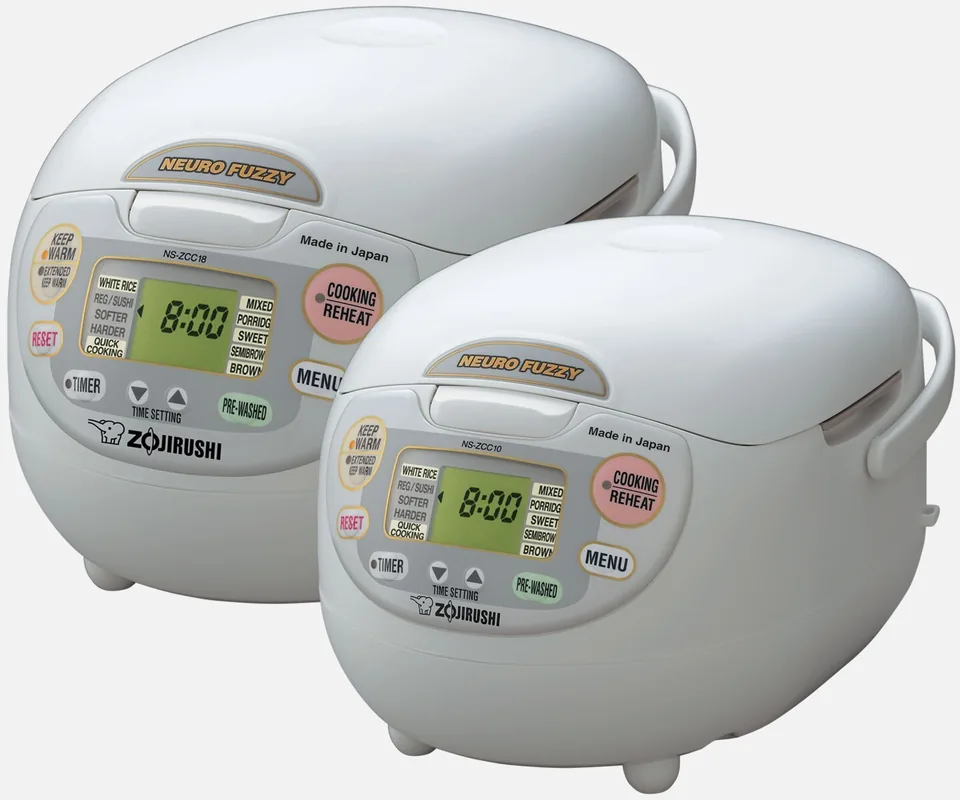
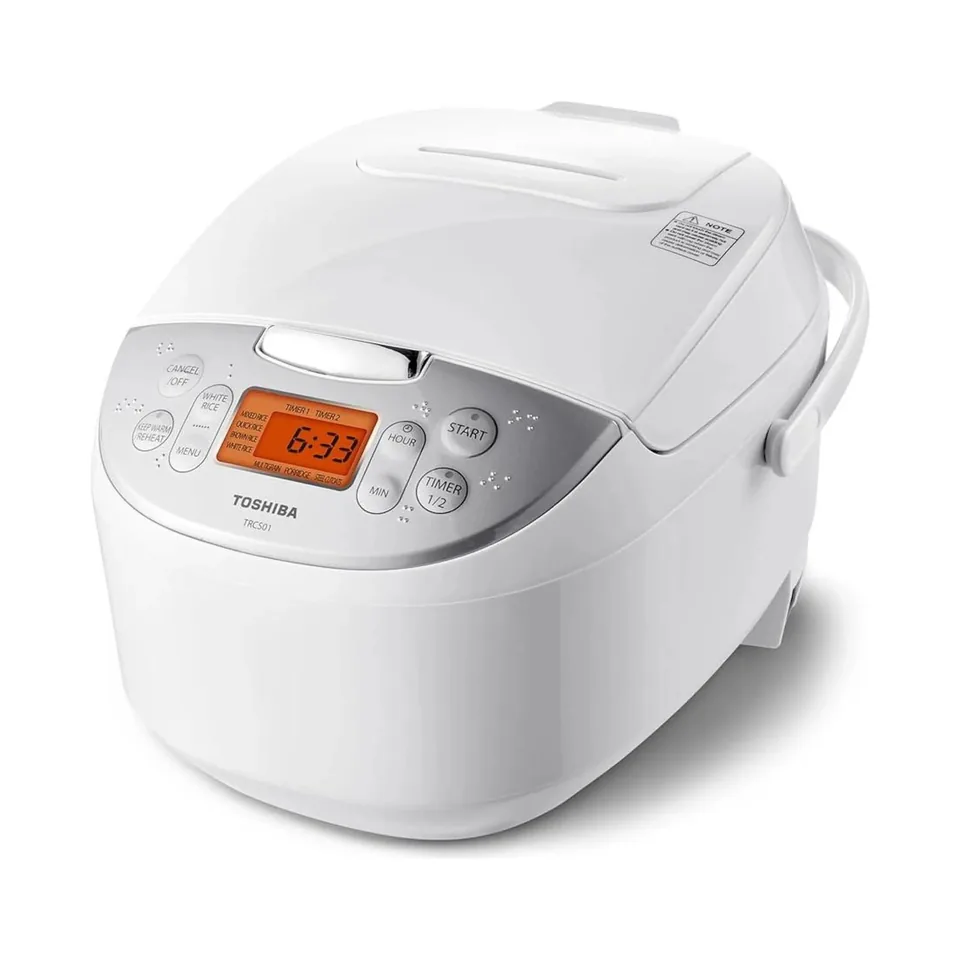
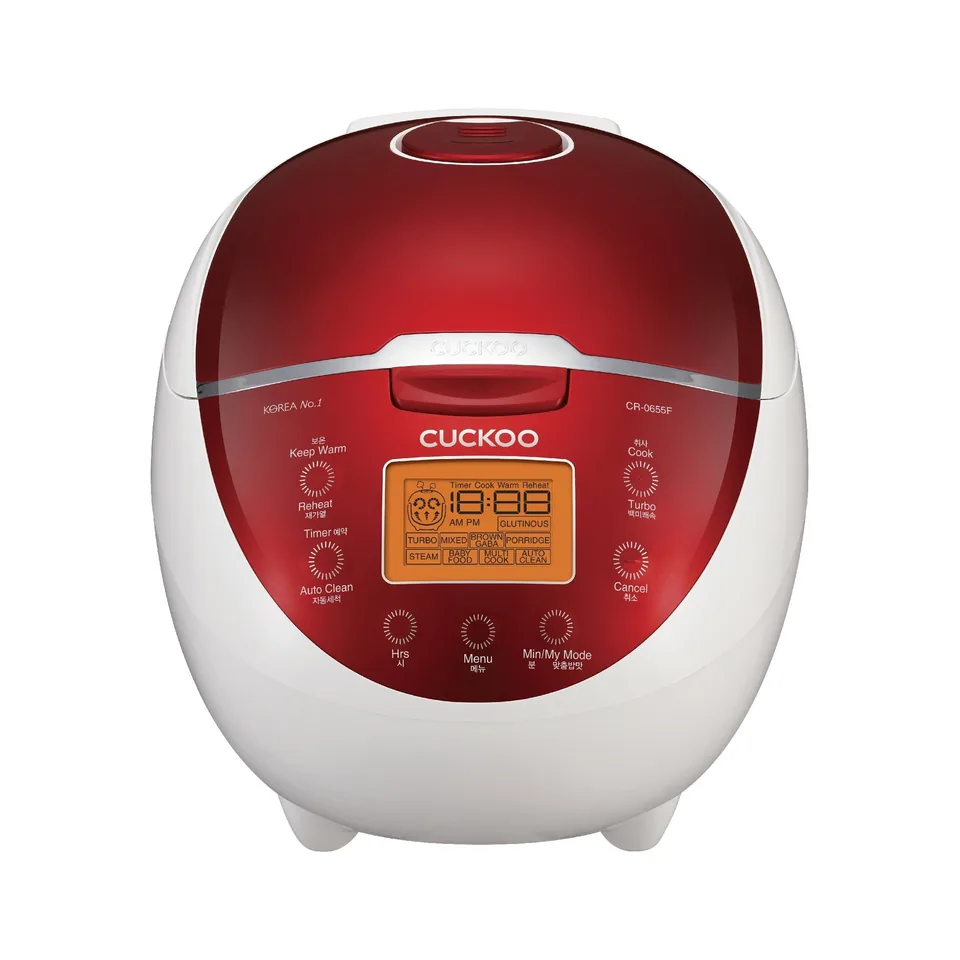
A micom cooker still heats from a plate, but a microcomputer reads a temperature sensor and moves the pan through soak, boil, steam and rest phases. Micom, fuzzy logic and Zojirushi's Neuro Fuzzy are three names for the same idea, and it is why white rice takes 45 to 50 minutes instead of 20. Three of our picks are micom: the Zojirushi NS-ZCC10, the Toshiba TRCS01 and the Cuckoo CR-0655F.
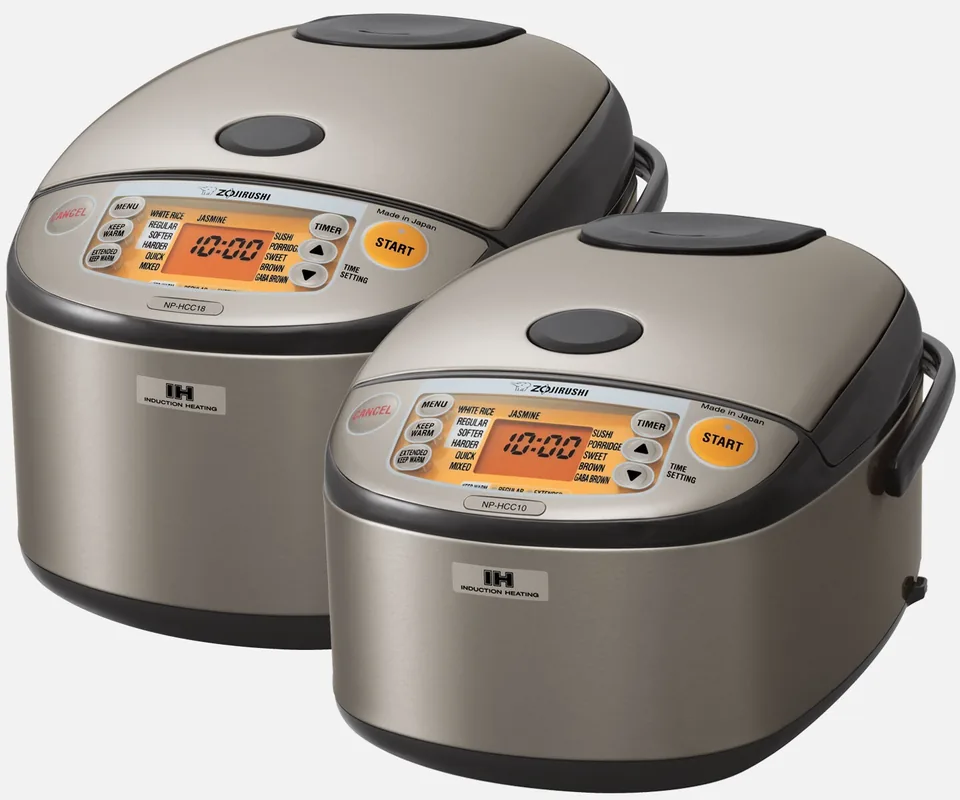
Induction heating (IH) removes the plate: a coil induces current in the pan itself, so the pan is the heat source and temperature changes are faster. The Zojirushi NP-HCC10 adds heaters in the side wall and the lid, which Zojirushi calls a triple heater, and draws 1,230 watts against 680 for the NS-ZCC10. Reviewed's October 2025 test found its batches evenly cooked throughout, and Steamy Kitchen credits the all-around heat for avoiding the crunchy patches a bottom-only heater can leave. The costs are a higher price class, 9 pounds on the counter and, in Reviewed's timing, a white-rice cycle five minutes longer than the Neuro Fuzzy's.
02Count capacity in rice cups, not US cups
Zojirushi and Toshiba measure in the 180 ml Japanese rice cup, which Zojirushi's FAQ puts at about three quarters of a US measuring cup; raw rice roughly doubles when cooked. Zojirushi's 5.5-cup models hold 1.0 liter of dry rice, and Cuckoo lists its 6-cup model at 1.0 liter in the manual and 1.08 liters at Cuckoo Mall USA, so all four sit in the same range: enough for two to six people, the size most households should buy.
Use the cup that comes with the cooker and the pan's water lines; a US cup overfills by about a third with every scoop. Usable capacity also drops on the harder menus: Cuckoo's manual rates the CR-0655F at two to six cups of white rice but two to four on turbo, mixed or brown and GABA, and one to one and a half on porridge, because those grains foam and swell.
03Brown rice, GABA and how long each menu takes
Cycle length is the trade-off buyers most often misjudge. Makers' and testers' figures:
GABA brown rice is brown rice held warm and wet before cooking so that its gamma-aminobutyric acid content rises and the grain softens, and the two brands mean different things by the menu. Zojirushi's FAQ says its setting soaks the rice at 104°F for two hours before cooking and notes that the rice does not actually germinate, so plan on more than three hours in total on the NP-HCC10. Cuckoo's manual treats the menu as germination: soak the rice for up to 16 hours beforehand, set a warm hold of 0, 2, 4 or 6 hours, then run the 83- to 91-minute cook; at zero it simply cooks brown rice. The NS-ZCC10 has semi-brown and brown menus but no GABA, and the Toshiba has a single brown program. One caveat from Cuckoo's manual: brown and mixed rice keep poorly on warm and are best eaten fresh.
04Keep warm, reheat and the inner lid
A rice cooker spends more hours holding rice than cooking it, and all four picks switch to keep warm automatically. Zojirushi's FAQ puts the recommended maximum at 12 hours; both Zojirushi picks add an extended keep warm that holds at a lower temperature, and the NS-ZCC10 also has a reheat cycle. Sizzle and Sear's long-term review says the NP-HCC10 held rice at a safe serving temperature for hours without overcooking it. Cuckoo's manual recommends under 12 hours and limits its 9-minute reheat to once or twice a day because it dries the rice. Toshiba rates the TRCS01 for 15 hours.
The inner lid, which catches condensation, is what you wash after every brown-rice or porridge run. Zojirushi lists the NP-HCC10's as detachable stainless steel; the NS-ZCC10's is detachable, material unstated. The Cuckoo's inner cover detaches with a lever, and a dew dish at the back needs emptying after each run. Toshiba lists a removable steam vent but does not say whether the inner lid comes off.
05Japanese short-grain versus Korean mixed grains
Zojirushi builds its menus around short and medium grain: white at regular, softer or harder texture, sushi, sweet rice for mochi, and on the NS-ZCC10 semi-brown and rinse-free; the NP-HCC10 swaps those two for jasmine. Reviewed found the NP-HCC10's short-grain white slightly umami and the NS-ZCC10 fluffy across short-grain white, brown and jasmine.
Cuckoo's default menu on the CR-0655F is labeled glutinous, which on a Korean cooker means everyday white rice with the glossier, stickier finish that bibimbap and banchan expect, and its mixed menu is built for japgokbap, white rice cooked with barley, beans or black rice. Mashable's 2022 test found its rice slightly stickier than the Neuro Fuzzy's and much faster to cook. Engadget found it especially good with long-grain basmati; America's Test Kitchen got great long-grain white rice but found short-grain white and brown a little wet at Cuckoo's recommended water ratios, so plan to adjust the water for Japanese-style rice. The manual also calls the light yellow layer at the bottom of the pot intentional.
Toshiba's TRCS01 is the generalist: white, brown, mixed and quick rice, porridge, soup and stew, with a steamer basket.
06Timers, cords and cleaning
Both Zojirushi models have two delay-timer presets; the Toshiba's two presets run up to 24 hours according to Rice Cooker Junkie; the Cuckoo's preset runs 1 to 13 hours ahead but not on turbo, or on GABA with a germination hold. The NS-ZCC10 has a retractable cord, the Toshiba a detachable one, the Cuckoo a fixed 3.9-foot cord. The Cuckoo is the only pick with a steam auto-clean cycle, about 25 minutes by its manual; Engadget cautions that its lid springs open hard enough to rock the unit.
Nonstick wear is the long-term cost on all four. Cuckoo's manual warns that the coating wears with long use, Rice Cooker Advice collects owner reports of peeling, and Rice Cooker Junkie relays a report of wear on the Toshiba after about a year of heavy use. Fuzzy Logic Rice Cooker expects six to eight years before the NS-ZCC10's coating shows wear and cites owner surveys of 10 to 15 years for the cooker. Would I Buy It Again's February 2026 review adds a caveat: its clock battery is soldered to the board and usually dies after five to eight years, after which the clock blanks whenever the unit is unplugged.