A countertop oven is a box with heating elements above and below the rack and, in most current models, a fan. What separates the good ones is how evenly that heat lands, how much fits inside and how much counter the box takes. Preset counts and marketing names for fans matter far less.
01Capacity: count slices and measure your pans
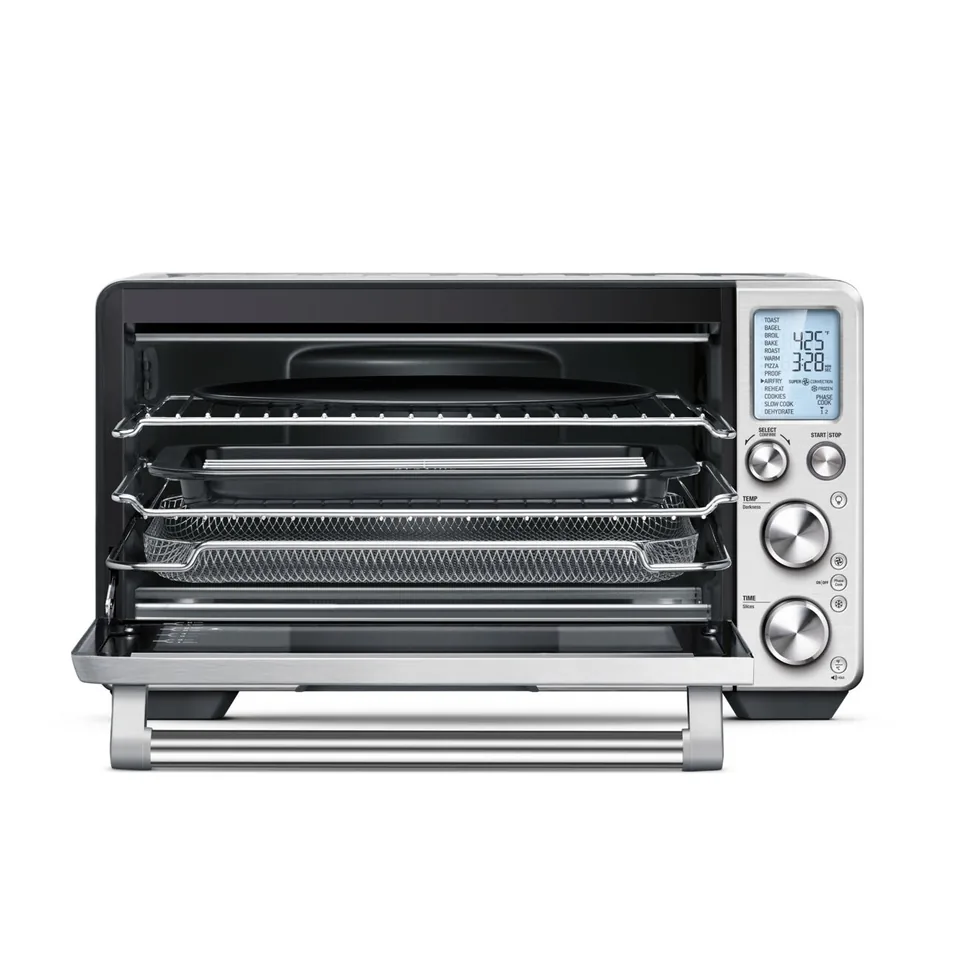
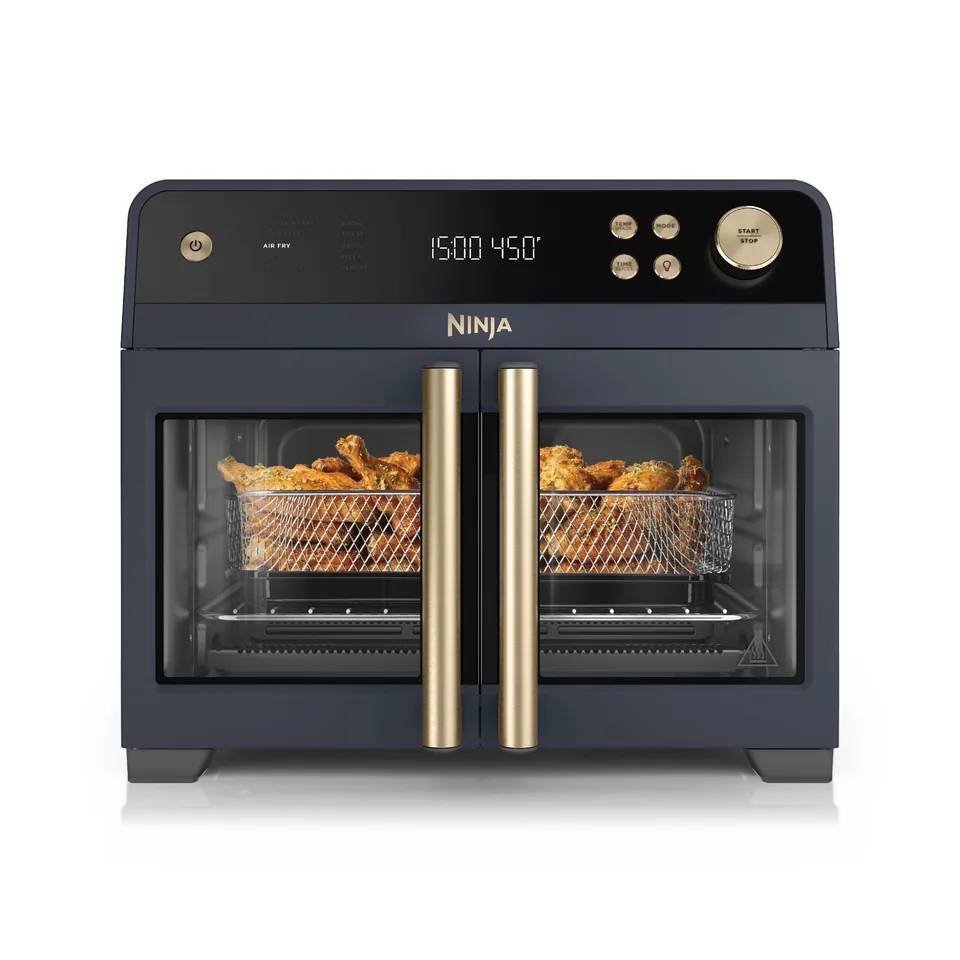
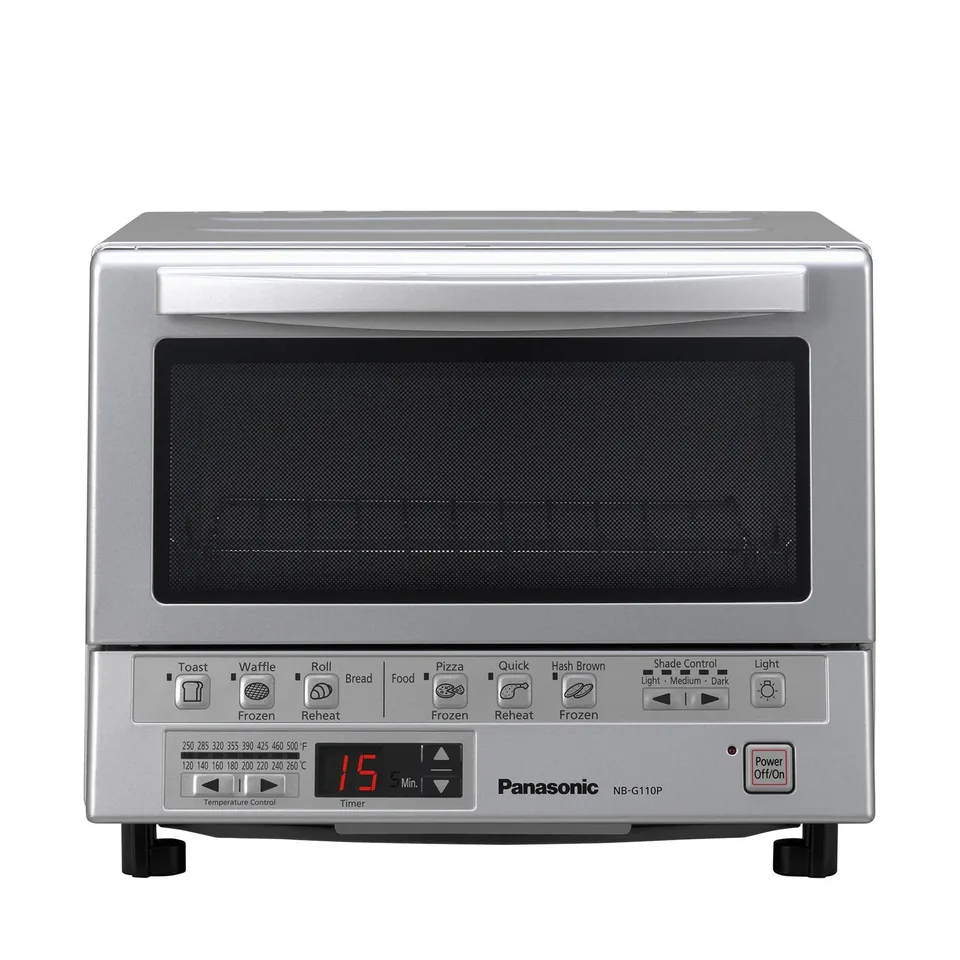
Manufacturers describe capacity in slices of bread, pizza diameter and sometimes cubic feet. The practical test is the pan you use most. The Breville Smart Oven Air Fryer Pro takes nine slices, a 13-inch pizza and most 9 x 13 inch pans, per Breville, which makes it a real stand-in for a wall oven. The Cuisinart TOA-70 and the Ninja French Door Premier take six slices; Cuisinart rates the TOA-70 for a 12-inch pizza, though TechGearLab listed 11 inches as its practical limit. The Panasonic FlashXpress holds four slices on a 9-inch tray under a 4.1-inch ceiling.
02Even toast: the job most combo ovens do worst
Large air fryer ovens are often mediocre toasters, because a big cavity and a strong fan are designed for roasting, not for browning bread quickly. TechGearLab's scores show the pattern: the Cuisinart and the compact Panasonic tied at 8.3 out of 10 for toasting, while the Breville scored 6.8. The Panasonic was also quick, making medium toast in 2.5 minutes against 4.8 for the Breville and 5.0 for the Cuisinart.
Reviewers disagree about the Breville. America's Test Kitchen called its toast excellent, while Tom's Guide found a full nine-slice batch uneven, with pale slices at the edges. ATK also found pale toast common among air fryer ovens, including Instant's Omni Pro 18L and Instant Oven 18L. If toast is most of what you make, the Panasonic or the Cuisinart is the safer choice.
03Air frying in an oven versus a basket
Air fry mode in an oven is convection with a strong fan and a mesh basket that lets hot air reach the underside of the food. An oven spreads food wider than a basket fryer, so fries for four can sit in one layer, but a large cavity usually crisps more slowly than a compact basket machine. ATK found the Breville's fries and chicken Parmesan on par with its favorite basket air fryer, while Tom's Guide found its results good but a step below dedicated air fryers, with less crisp wings.
The Ninja is built around air frying, with a 5-quart basket that Ninja says holds up to 5 pounds of fries; Tom's Guide found cubed sweet potatoes crisp outside and fluffy inside. The Panasonic has no fan and does not air fry at all. If you only want crisp food and never toast, a basket model from our air fryer list, such as the Cosori TurboBlaze, is smaller and cheaper.
Measure before you buy, including the space above the oven, because tops and doors get hot: Tom's Guide measured 252°F on top of the Breville's glass and 270°F on the door of Ninja's Double Oven (DCT401). Breville lists the Smart Oven Air Fryer Pro at 21.4 inches wide and 17.3 deep. The Ninja is about 16.5 by 15.8 inches, TechGearLab measured the Cuisinart at about 16.5 by 15.1, and the Panasonic is 13 by 12 inches. Leave room on every side for venting, keep the oven clear of cabinets and curtains, and follow the clearances in the manual.
05Controls and temperature accuracy
Digital controls give exact times and temperatures; analog dials are simpler but coarser. The Cuisinart's four dials suit people who dislike menus, and Shouldit liked their directness. For baking, accuracy matters more than the interface. In TechGearLab's 30-minute test at 350°F, the Breville averaged about 5°F off, the Cuisinart ran about 22°F hot and the Panasonic about 24°F cool, so with those two an inexpensive oven thermometer pays for itself.
Preheat time is the other number to check. The Panasonic reached 350°F in 1.6 minutes and the Cuisinart in 2.0, while the Breville took 5.4. Ninja claims 90 seconds for the French Door Premier, which Tom's Guide matched in its test.