Wusthof · Chef's knife
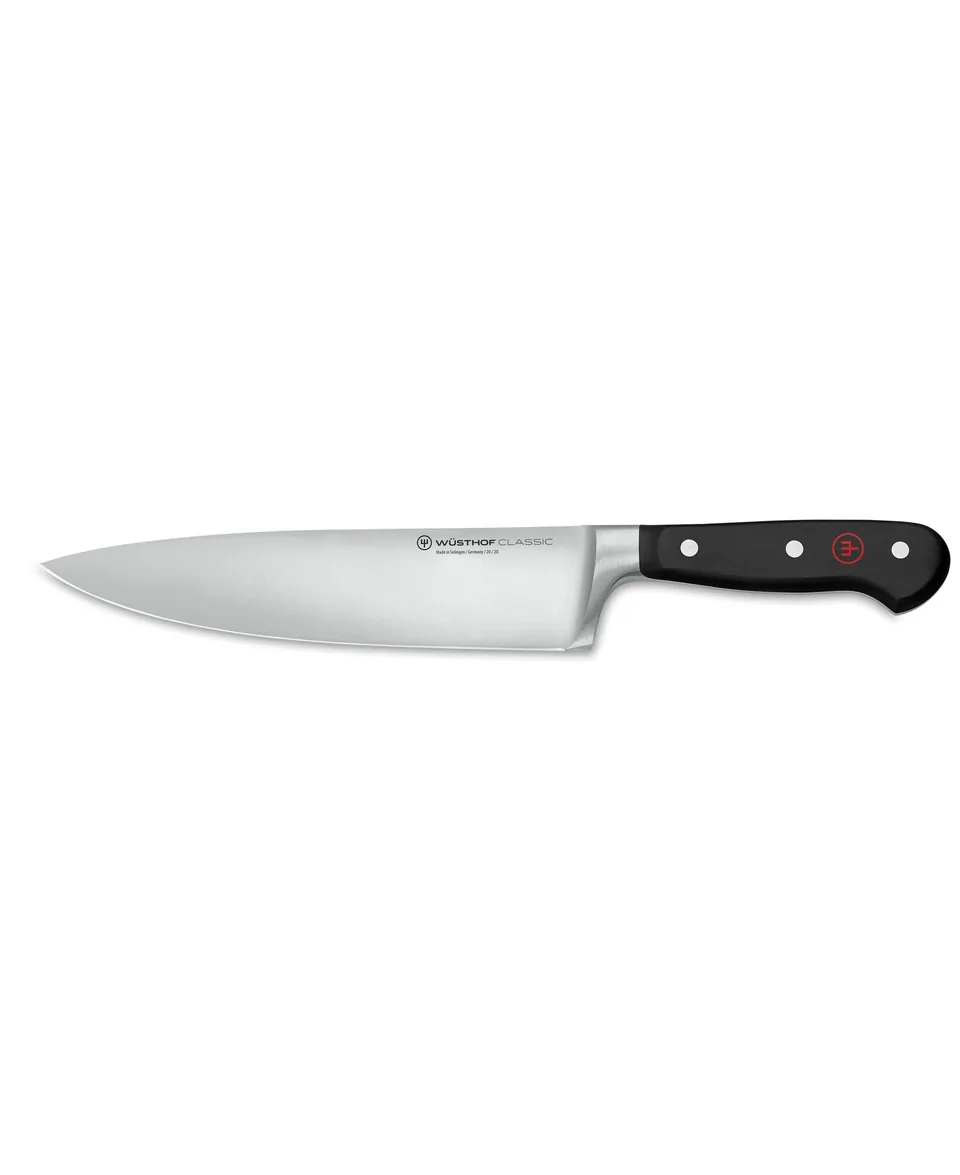
Wusthof Classic 8-Inch Chef's Knife (1040100120)
The Classic is the heavy, forgiving German knife to buy if you want decades of service with ordinary care and never want a mistake punished. Its edge is sharper than its reputation. Cooks with small hands, or anyone who wants a light blade, should look at the MAC or the Tojiro.
Ad disclosure: we earn a commission on Amazon links, at no cost to you. It never decides our picks. How this works
Photos
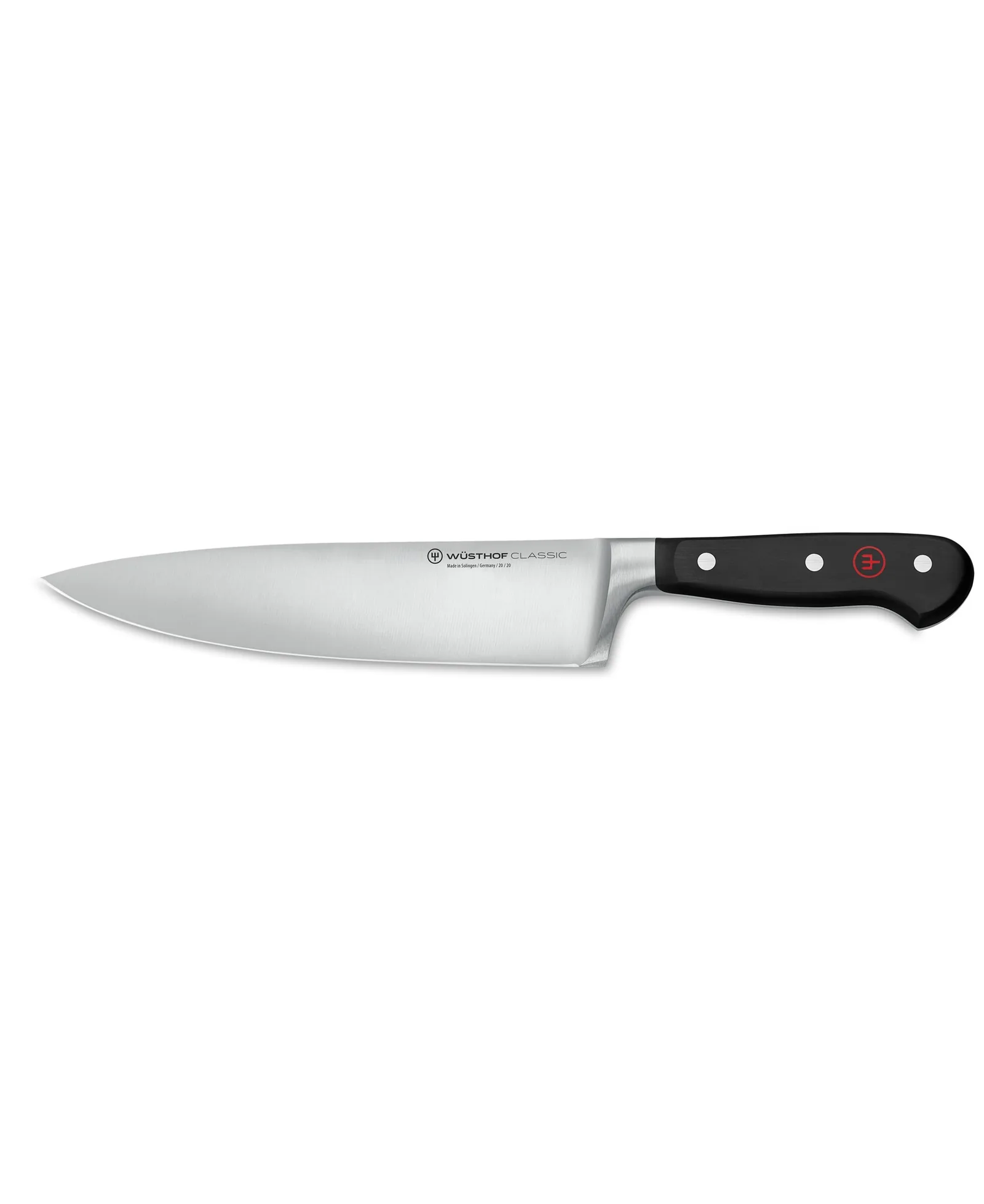
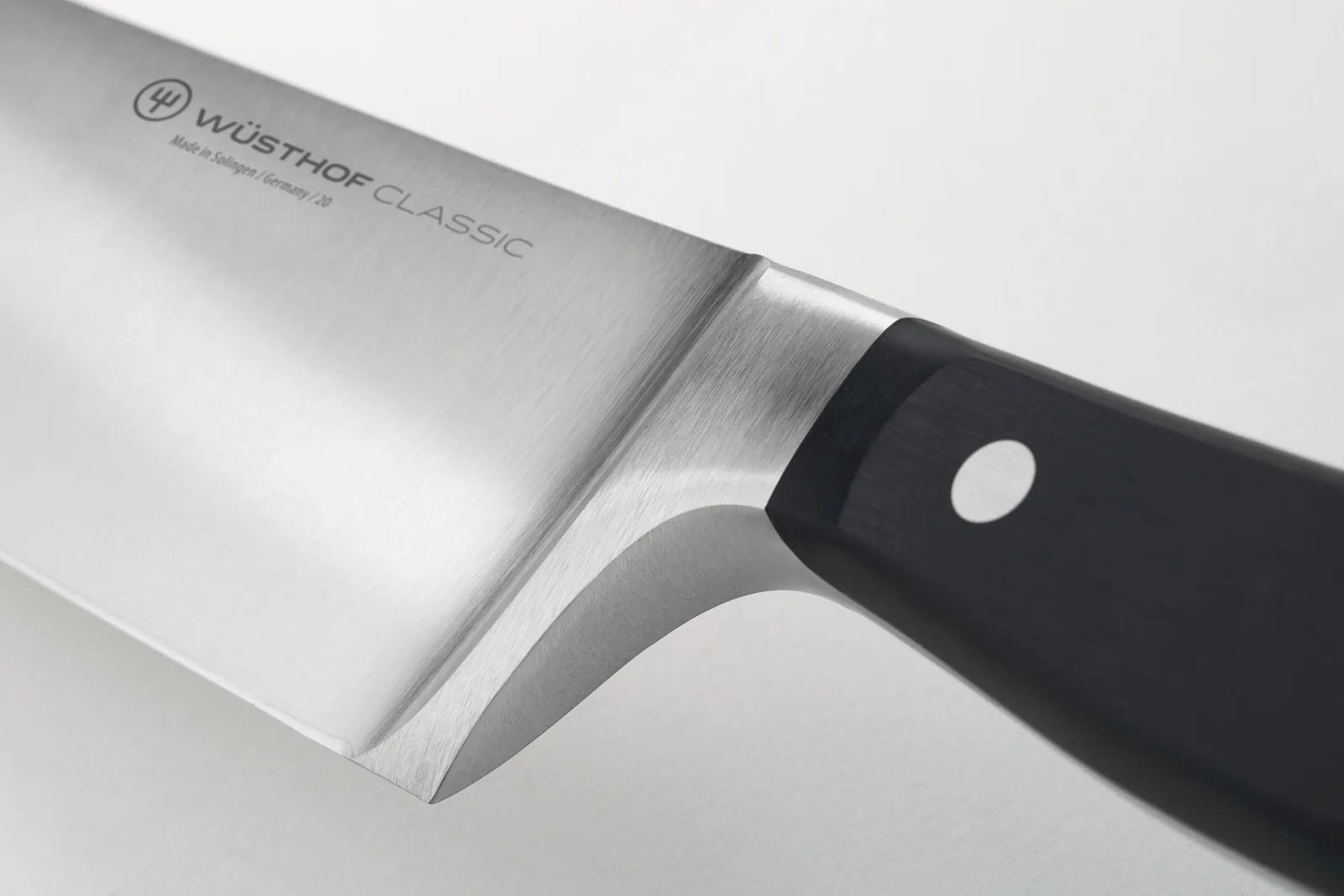
Pick it ifCooks who like heft, rock the blade, occasionally break down a chicken, and want a knife that tolerates any sharpener and a honing steel
Skip it ifCooks with smaller hands who tire during long prep, or anyone who wants a thin, light blade that slices rather than pushes
At a glance
What stands out
- Forged from a single piece of X50CrMoV15 stainless and hardened to 58 HRC in Solingen, with a full tang and three stainless rivets
- TechGearLab's Editors' Choice and best overall chef's knife, 91 of 100, first of 13 knives tested
- Factory edge measured at 140 BESS by TechGearLab, keener than the MAC's 187, with edge retention that held through a months-long test
- Full bolster with a finger guard pulls the balance back into the hand and protects the heel grip
- Handle scored 9.5 of 10 for ergonomics and stayed secure when wet in TechGearLab's testing; limited lifetime warranty
Flaws to know
- 258 g (9.1 oz) measured, the heaviest knife on our list; TechGearLab's smaller-handed testers found it tiring at times
- 2.60 mm spine wedges in dense vegetables more than the Japanese picks
- Full bolster blocks the heel on a whetstone, so the edge recedes unevenly over years of stone sharpening
- TechGearLab measured 54 HRC on its sample against the stated 58
Key specs
- Blade length
- 8.0 in (Wusthof)
- Blade width
- 1.9 in at the heel (Wusthof); handle 4.5 in
- Weight
- 258 g / 9.1 oz measured by TechGearLab
- Blade thickness
- 2.60 mm at the spine measured by TechGearLab
- Steel
- X50CrMoV15 high-carbon stainless, forged from a single blank (Wusthof)
- Hardness
- 58 HRC (Wusthof); 54 HRC measured on one sample by TechGearLab
- Edge
- PEtec, 14 degrees per side (Wusthof FAQ) or 14.5 (product page); 15.75 degrees measured by TechGearLab
- Handle and bolster
- Black synthetic (POM) handle, three stainless rivets, full tang, full bolster with finger guard
- Made in
- Solingen, Germany; limited lifetime warranty
Who it's for
The Classic is the forged German chef's knife that the others are measured against. It suits a cook who likes heft, rocks the blade through onions and herbs, occasionally goes through a chicken carcass, and wants a knife that tolerates any sharpener without complaint. TechGearLab made it the Editors' Choice in its chef's knife test, updated February 2025, with 91 of 100 points, the highest of 13 knives; Wirecutter lists it as the upgrade pick, per Kitchen Knife Scout's June 2026 summary, and The Sharp Kitchen's 2026 guide names it best overall.
It is the premium pick on our list of the best chef's knives not because it is the sharpest but because it is the most forgiving high-end knife: tough steel, a full bolster, a secure handle and a Solingen warranty.
What stands out
Wusthof forges each blade from a single piece of its X50CrMoV15 stainless, the alloy its FAQ calls the company's steel formula, and hardens it to 58 HRC. Forging and the full tang give the knife its weight: TechGearLab weighed 258 g, or 9.1 oz, and measured 2.60 mm at the spine, both the highest figures among the picks on our list. The full bolster with its finger guard adds mass at the heel and moves the balance point back toward the hand, which Wusthof's FAQ gives as the bolster's purpose and which makes a heavy knife feel steady rather than tiring.
The factory edge is better than the German reputation suggests. Wusthof's PEtec process puts the edge on with a computer-controlled machine, and the company claims 20 percent more sharpness and twice the edge retention of its older edges. The stated angle is 14 degrees per side in the FAQ and 14.5 on the product page; TechGearLab measured 15.75 degrees and a factory edge of 140 on the BESS scale, keener than the MAC's 187. Over a test that ran many months, TechGearLab found the edge kept its chopping ability from start to finish and found no manufacturing flaws. Ergonomics scored 9.5 of 10, the best of the group, with a grip that stayed secure when wet.
The handle is a black synthetic (POM, according to The Sharp Kitchen) fixed with three stainless rivets to the full tang. Wusthof dates the design to 1886, makes the knife in Solingen and covers it with a limited lifetime warranty. Its care advice is to hand-wash and dry at once, hone regularly and avoid glass or metal surfaces.
Where it falls short
Weight is the recurring complaint. At just over 9 oz the Classic is 2.7 oz heavier than the MAC or the Victorinox, and TechGearLab reported that testers with smaller hands or shorter stature found it overly heavy at times, though the roundup also found it comfortable across many hand sizes. Kitchen Knife Scout's summary of Wirecutter calls it heavier and bulkier than the MAC, which some cooks prefer and others find fatiguing, with slightly softer steel that loses its edge sooner.
Hardness is harder to pin down than the spec sheet suggests. TechGearLab measured 54 HRC on its sample against the stated 58, and found wider gaps on the MAC and the Tojiro, so this is a caution about manufacturer numbers in general rather than about Wusthof alone.
The full bolster helps balance but gets in the way of sharpening. Because it extends down to the edge, the heel cannot reach a whetstone, and after years of stone sharpening the edge in front of the bolster recedes and leaves a step. The Sharp Kitchen lists the trickier heel sharpening among the Classic's weaknesses, and it is why Zwilling's Pro line uses a curved bolster and Misen a sloped one. If you sharpen with a rod, a hand-held or an electric sharpener, all of which Wusthof endorses, the point is moot.
How it compares
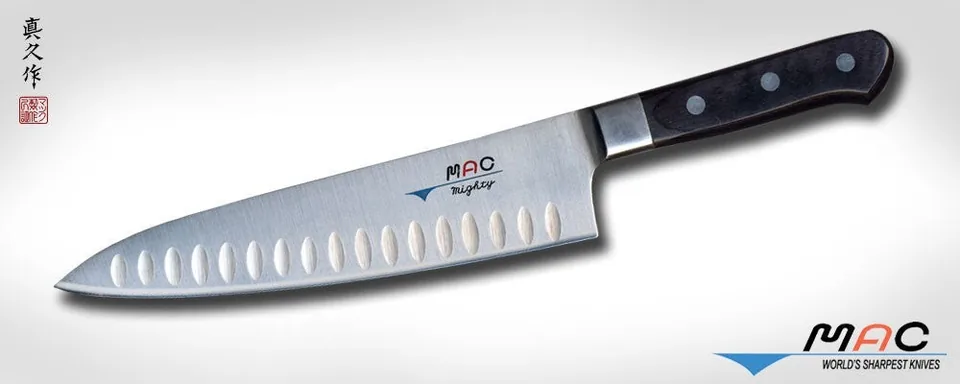
Against the MAC MTH-80, the Wusthof is heavier, thicker and softer on paper, which means more wedging in dense vegetables and somewhat more frequent sharpening, but also more tolerance of hard use and of every kind of sharpener. TechGearLab ranked the Wusthof higher overall on ergonomics and practicality while giving the MAC the better cutting score.
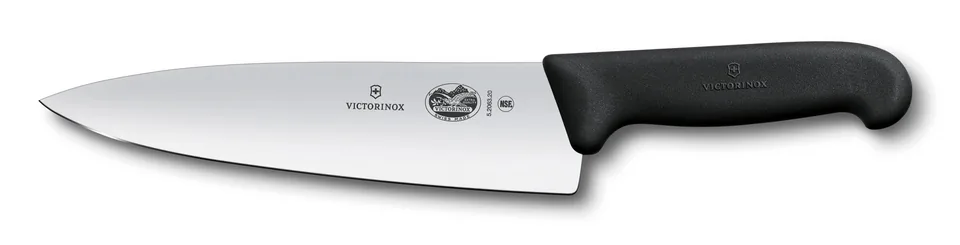
Against the Victorinox Fibrox Pro, the Wusthof is the same style of knife made heavier and stiffer: forged instead of stamped, a full bolster, a full tang and longer edge life. Wusthof's FAQ puts the general difference at more than forty production steps and a bolster for forged against fourteen and no bolster for stamped; whether that is worth the jump in price class depends on how much you value heft and finish.
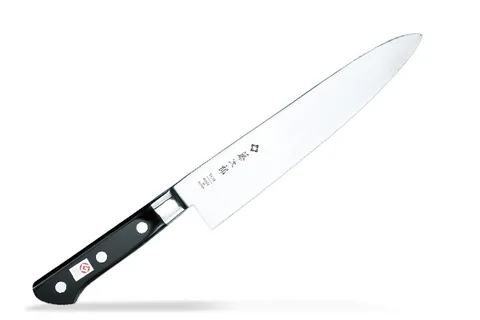
Against the Tojiro DP F-808, the two are opposites. The Tojiro is thin, hard and light; the Wusthof is thick, tough and heavy. The Tojiro cuts better, the Wusthof survives more.
TechGearLab also notes that the Zwilling Professional S offers similar forged German construction in a lower price class.
Verdict
Buy the Classic if you want a heavy, forgiving knife that will last decades with ordinary care and never punish a mistake. Its edge is sharper than its reputation and its handle suits most hands. Skip it if you have small hands, prefer a light blade, or plan to sharpen on a whetstone and want the whole edge to reach the stone.
All 7 sources
- wusthof.com /products/wusthof-classic-8-cooks-knife-1040100120
- wusthof.com /pages/classic
- wusthof.com /pages/faq
- techgearlab.com /reviews/kitchen/chef-knife/wusthof-classic-8
- techgearlab.com /topics/kitchen/best-chef-knife
- kitchenknifescout.com /wirecutter-kitchen-knives
- thesharpkitchen.com /best-chef-knives
The other picks in Chef's Knives
Compare all 4-
Best overall
MAC Professional Series 8-Inch Chef's Knife with Dimples (MTH-80)
Check price on Amazon(paid link) for MAC Professional Series 8-Inch Chef's Knife with Dimples (MTH-80) (opens in a new tab) -
Best budget
Victorinox Fibrox Pro 8-Inch Chef's Knife (5.2063.20)
Check price on Amazon(paid link) for Victorinox Fibrox Pro 8-Inch Chef's Knife (5.2063.20) (opens in a new tab) -
Best for thin-edge Japanese cutting on a mid budget
Tojiro DP Gyuto 210 mm (F-808)
Check price on Amazon(paid link) for Tojiro DP Gyuto 210 mm (F-808) (opens in a new tab)