MAC · Chef's knife
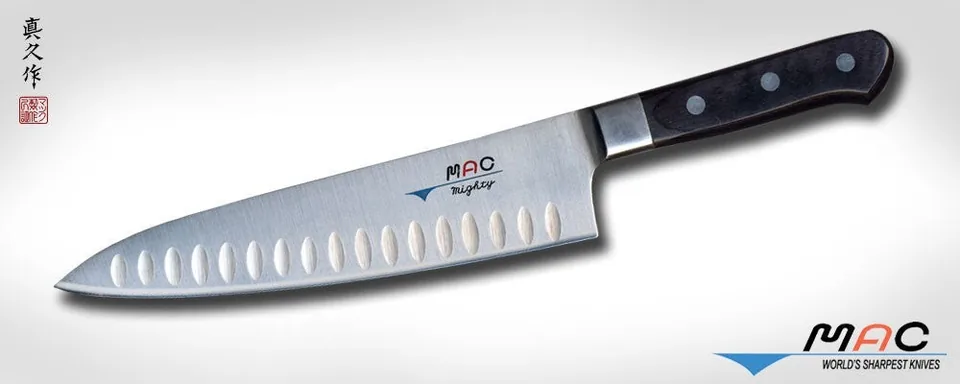
MAC Professional Series 8-Inch Chef's Knife with Dimples (MTH-80)
The MTH-80 is the one chef's knife to buy if you cook most days, own or will buy a whetstone, and want Japanese thinness without a Japanese handle. Heavy-handed cooks and anyone who sharpens with a carbide pull-through should look at the Wusthof or the Victorinox instead.
Ad disclosure: we earn a commission on Amazon links, at no cost to you. It never decides our picks. How this works
Photos
Pick it ifFrequent cooks who want a thin, light, very sharp 8-inch blade with a familiar Western handle and are willing to maintain it on a whetstone
Skip it ifCooks who chop hard, twist through squash and bones, or want a knife that tolerates a carbide pull-through sharpener and the dishwasher
At a glance
What stands out
- Thin blade: 2.5 mm at the spine per MAC, 2.10 mm as measured by TechGearLab, so it wedges less than a forged German knife
- Sub-zero tempered molybdenum high-carbon stainless; MAC states 57 to 61 HRC for its knives and Wirecutter cites 59 to 61 HRC for this model
- 6.5 oz listed, 181 g measured by TechGearLab, about 2.7 oz lighter than the Wusthof Classic, with the balance close to a pinch grip
- Dimples on both faces stop potato, apple and squash slices from sticking to the blade
- Wirecutter's top chef's knife pick since 2013 and the highest cutting-performance score, 9.5 of 10, in TechGearLab's 13-knife test
Flaws to know
- Short handle: TechGearLab found it crowds larger hands and forces a pinch grip
- The hard, thin edge should be sharpened on a whetstone or a ceramic pull-through; carbide pull-throughs can damage it
- TechGearLab measured 53 HRC on its sample against a claimed 60, so the hardness figure is a manufacturer claim
- Plain black Pakkawood handle and a small bolster; no decorative finish for the price class
Key specs
- Blade length
- 7.88 in (MAC); sold as 8 in
- Overall length
- 12.63 in (MAC)
- Weight
- 6.5 oz (MAC); 181 g / 6.4 oz measured by TechGearLab
- Blade thickness
- 2.5 mm at the spine (MAC); 2.10 mm measured by TechGearLab
- Steel
- Sub-zero tempered high-carbon molybdenum stainless (MAC); Cutlery and More lists a molybdenum-vanadium alloy
- Hardness
- 57 to 61 HRC (MAC's stated range); 59 to 61 HRC (Wirecutter, via Kitchen Knife Scout); 53 HRC measured on one sample by TechGearLab
- Edge
- About 15 degrees per side, double bevel, slightly off-center (MAC)
- Handle
- Triple-riveted black Pakkawood with a small stainless bolster (Cutlery and More)
- Made in
- Seki City, Japan (MAC); 25-year warranty (Cutlery and More)
Who it's for
The MTH-80 suits a cook who prepares food most days and has noticed that a thick German blade splits a carrot rather than slicing it. MAC lists the blade at 2.5 mm and gives the steel a sub-zero tempering step that its cheaper Chef series goes without, so the edge stays keen longer and the blade drops through dense vegetables with less wedging. The handle, though, is a plain riveted Western one. That mix is why Wirecutter has named the MTH-80 its main chef's knife pick since 2013, a history MAC's own site recounts in a March 2025 post, and Kitchen Knife Scout's June 2026 summary of Wirecutter's picks shows it still holds.
It is the best overall pick on our list of the best chef's knives because it asks the least compromise of a serious home cook: Japanese thinness and hardness, a grip that needs no adjustment, and a dimpled face that keeps potato slices from riding up the blade.
What stands out
Geometry does most of the work. MAC lists 2.5 mm at the spine, and TechGearLab measured its sample at 2.10 mm; either figure is well under the 2.60 mm TechGearLab found on the Wusthof Classic. MAC describes its edge as a hybrid of the single-bevel Japanese chisel edge and the Western V, ground slightly off-center at about 15 degrees per side. In TechGearLab's 13-knife test, updated February 2025, the MTH-80 took the highest cutting-performance score, 9.5 of 10, and the reviewers said it is the knife they reach for when a cut has to be precise.
The steel is a high-carbon molybdenum stainless (Cutlery and More adds vanadium to the description) that MAC hardens to somewhere between 57 and 61 HRC across its lines. Wirecutter, per Kitchen Knife Scout, puts this model at 59 to 61, and Cutlery and More lists 61. The sub-zero tempering is a cold treatment after hardening meant to improve edge retention, and MAC's page for the Chef series TH-80 names that step and the bolster as the two things the cheaper knife lacks.
Weight is the other half of the appeal. MAC lists 6.5 oz and TechGearLab weighed 181 g, against 258 g for the Wusthof Classic. The small stainless bolster puts enough mass behind the heel that the knife balances close to a pinch grip, and TechGearLab praised the balance for such a light knife.
The dimples are scallops ground into both faces above the edge. They break the suction between a wet slice and the blade; MAC names potatoes, apples and summer squash as the foods they help with. Cutlery and More lists a 25-year warranty, and MAC says its knives are made in Seki City.
Where it falls short
The handle is short. TechGearLab called it surprisingly so and found that it pushes you toward a pinch grip whether you want one or not, so cooks with large hands or a hammer grip may find it cramped. The same review warned that the thin, keen edge digs into a cutting board if you lean on it, and called the knife a step up that assumes some technique.
Hardness is a claim you cannot easily check. TechGearLab measured 53 HRC on its sample against a claimed 60 and a wider bevel than the stated 15 degrees, yet still rated edge retention excellent; treat the HRC figure as a manufacturer number, not a defect.
Maintenance is stricter than with a German knife. Kitchen Knife Scout's summary of Wirecutter's advice is a whetstone, or a pull-through with ceramic wheels only; carbide pull-throughs can damage the harder steel. The Sharp Kitchen adds that the thin edge rewards good technique and is less forgiving of abuse. The finish is plain: black Pakkawood, a small bolster and a satin blade, with none of the layered cladding Shun or Miyabi offer in the same price class; Bevel and Bone's 2026 guide notes that past this level you pay for looks, not cutting.
How it compares
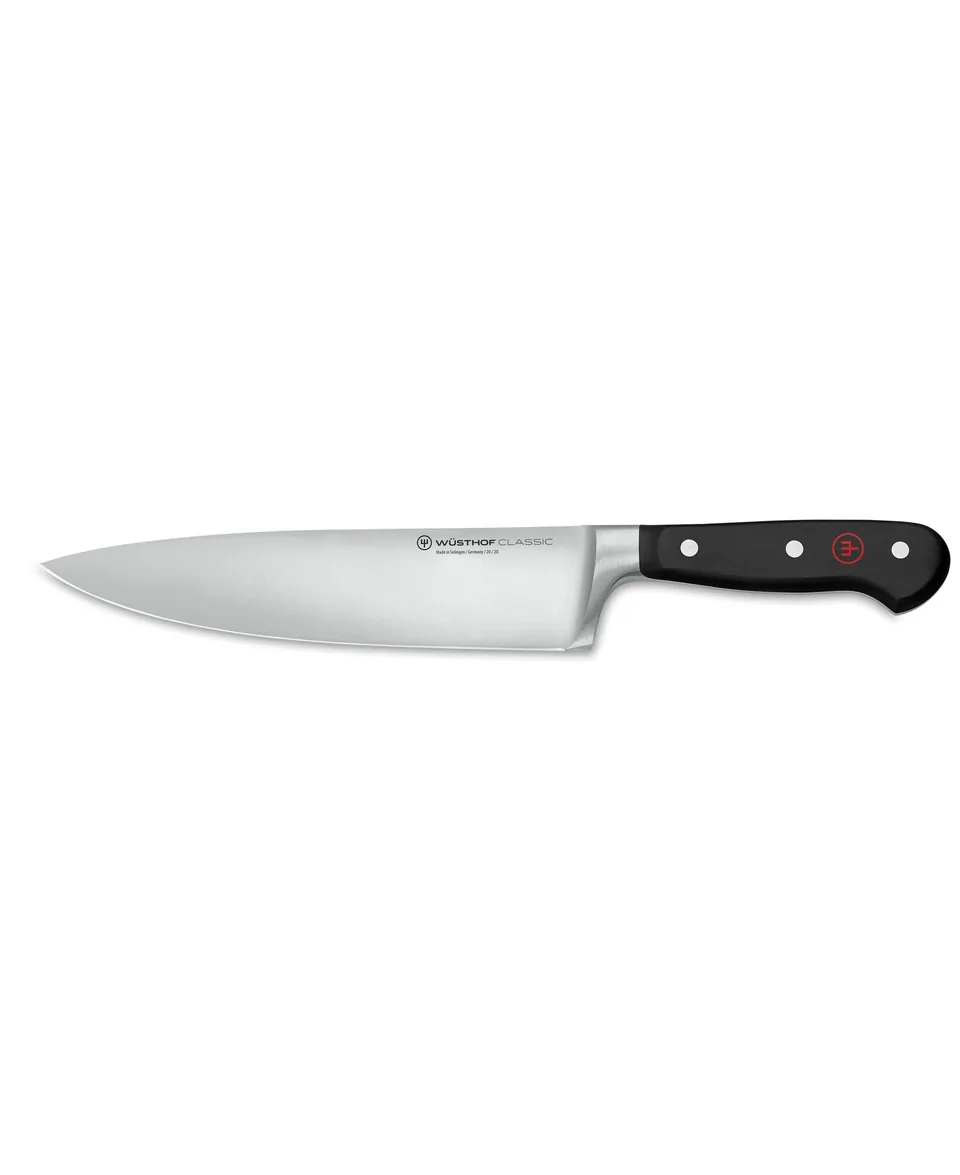
Against the Wusthof Classic, the MTH-80 is about 2.7 oz lighter and half a millimeter thinner, so it slices with less effort but rewards care. The Wusthof tolerates rough handling, sharpens on anything and scored higher overall at TechGearLab (91 against 85) on ergonomics and practicality, not on cutting.
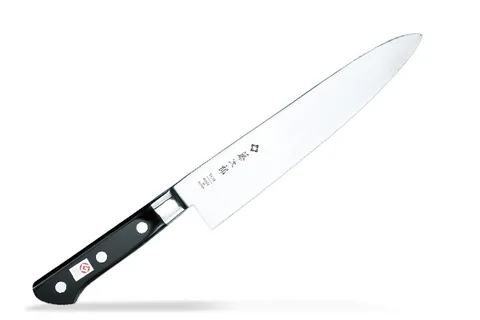
Against the Tojiro DP F-808, the MAC sits a price class higher for a similar thin, hard blade on a Western handle. TechGearLab found the Tojiro's factory edge keener, 124 against 187 on the BESS scale, but rated its edge retention and handle control lower, and owners on Kitchen Knife Forums describe the Tojiro's finish as functional rather than refined. The MAC is the more polished tool; the Tojiro is the better value.
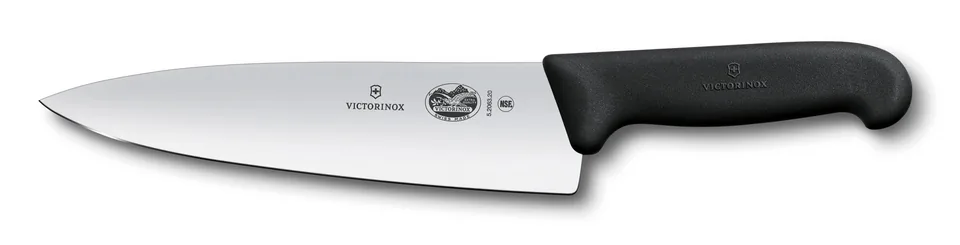
Against the Victorinox Fibrox Pro, the difference is edge life and stiffness. The Victorinox is softer, easier to sharpen and grips better wet, but it needs touching up far more often.
Verdict
If you cook often, will learn a whetstone, and want a knife you buy once, the MTH-80 is the one. It is light, thin and sharp in a way no forged German knife matches, and the Western handle means there is nothing to get used to. Skip it if you chop hard, want dishwasher tolerance, or if a plain-looking knife in this price class bothers you.
All 10 sources
- macknife.com /products/professional-series-8-chefs-knife-with-dimples-mth-80
- macknife.com /pages/about-us
- macknife.com /products/chef-series-8-chefs-knife-with-dimples-th-80
- macknife.com /blogs/news/the-new-york-times-wirecutter-the-best-chefs-knife
- cutleryandmore.com /products/mac-professional-mth80-chefs-knife-8060
- techgearlab.com /reviews/kitchen/chef-knife/mac-professional-series-8-with-dimples-mth-80
- techgearlab.com /topics/kitchen/best-chef-knife
- kitchenknifescout.com /wirecutter-kitchen-knives
- thesharpkitchen.com /best-chef-knives
- bevelandbone.com /blog/best-chef-knives-2026
The other picks in Chef's Knives
Compare all 4-
Best budget
Victorinox Fibrox Pro 8-Inch Chef's Knife (5.2063.20)
Check price on Amazon(paid link) for Victorinox Fibrox Pro 8-Inch Chef's Knife (5.2063.20) (opens in a new tab) -
Best premium
Wusthof Classic 8-Inch Chef's Knife (1040100120)
Check price on Amazon(paid link) for Wusthof Classic 8-Inch Chef's Knife (1040100120) (opens in a new tab) -
Best for thin-edge Japanese cutting on a mid budget
Tojiro DP Gyuto 210 mm (F-808)
Check price on Amazon(paid link) for Tojiro DP Gyuto 210 mm (F-808) (opens in a new tab)